One Character, Many Moods: How to Use 好 (hǎo) in Chinese
Learn what hao means in Chinese and how to use it as good, so, ready and okay. Compare hao de, hao a and hao ba with clear examples and tone tips.
Ask any Mandarin learner to name the first word they learned and there's a good chance it was 你好. Then they land in China, order a coffee, and hear 好的, 好嘞, 好吧, 好啦, and wonder if they were taught the right thing.
They were. 好 is just one of those characters that does a lot of jobs. Once you see the pattern, it stops feeling like five different words and starts feeling like one word wearing different outfits.
The basic meaning: good
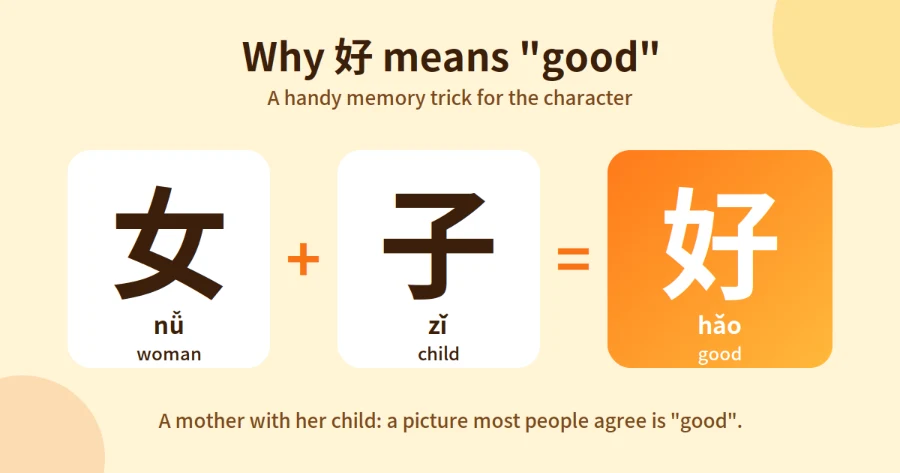
Start here. 好 means "good," and it works the way you'd expect.
- 好人 (hǎo rén): a good person
- 好朋友 (hǎo péngyou): a good friend
- 今天天气很好。(Jīntiān tiānqì hěn hǎo.): The weather is good today.
One small trap before we move on. If you want to say "I'm fine," say 我很好, not just 我好. Chinese adjectives like a degree word in front of them, and 很 is the default. It doesn't really mean "very" in this case. It just keeps the sentence from sounding unfinished.
好 as "so" or "really"
In casual speech, 好 can sit in front of an adjective and crank up the volume. Think of it as the Chinese version of "so" in "it's so cold."
- 好冷啊!(Hǎo lěng a!): It's so cold!
- 这家店好贵。(Zhè jiā diàn hǎo guì.): This shop is so expensive.
- 好久不见!(Hǎo jiǔ bú jiàn!): Long time no see!
- 好多人 (hǎo duō rén): so many people
Notice that nothing here is about being good. The meaning has drifted to "very," and native speakers use it constantly.
好 plus a verb: nice to do
Put 好 in front of certain verbs and you get words that mean "pleasant to" or "easy to."
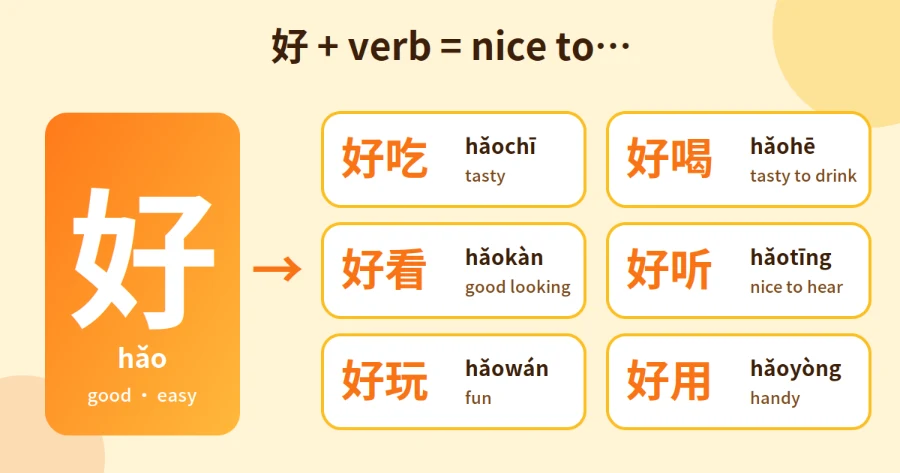
- 好吃 (hǎochī): tasty
- 好喝 (hǎohē): tasty to drink
- 好看 (hǎokàn): good looking, or good to watch
- 好听 (hǎotīng): nice to listen to
- 好玩 (hǎowán): fun
- 好用 (hǎoyòng): handy, works well
This is one of the most useful patterns in the language. Once you know it, you can build compliments on the spot. Tried a new dumpling place? 好吃! Heard a great song? 好听! The same trick works for "easy to" something, like 好找 (easy to find) or 好学 (easy to learn).
好 as a result: done properly
Here's a use that surprises people. After a verb, 好 can mean the action was completed the right way, or completed fully.
- 我准备好了。(Wǒ zhǔnbèi hǎo le.): I'm ready.
- 作业写好了吗?(Zuòyè xiě hǎo le ma?): Is the homework finished?
- 饭做好了。(Fàn zuò hǎo le.): Dinner is ready.
If you've ever wondered how to say "I'm ready" in Chinese, this is it. 准备好了 is one of the most practical phrases you can learn.
好 as a reply: where the real fun starts
This is the part that confuses everyone. When someone makes a suggestion, you can answer with 好, but the little sound you add at the end changes how you come across.
好 (hǎo) is plain and quick. Sure, okay.
好的 (hǎo de) is polite and neutral. You'll hear it from customer service staff, colleagues, and anyone being professional. It tells you the message was received, but not how the person feels about it.
好啊 (hǎo a) is warm and willing. "Want to get hotpot tonight?" 好啊! means you're happy to.
好呀 (hǎo ya) is a softer, more playful cousin of 好啊. It has a friendly lilt and often shows up in relaxed chats between friends.
好吧 (hǎo ba) is the reluctant one. It's the sound of someone giving in. If you suggest a plan and hear a slow 好吧, the person probably has doubts but won't fight you on it. Be careful using this at work, since it can sound like you're grumbling.
好嘞 (hǎo lei) is bright and energetic. Picture a waiter calling back your order or a delivery rider confirming an address. It means "got it, on it!" and carries a lot of cheerful efficiency. You'll hear it most in northern China.
好了 / 好啦 (hǎo le / hǎo la) are a different animal. These usually don't mean "yes." They mean "okay, that's enough" or "all done." A parent comforting a crying child says 好了好了,别哭了. Two friends finishing a task say 好啦,搞定了. The tone is gentle, with a hint of "let's wrap this up."
Hearing the difference beats reading about it
The gap between a cheerful 好啊 and a grudging 好吧 is almost entirely tone of voice, and that is hard to pick up from a page. If you are in Beijing, you will hear 好嘞 from waiters and delivery riders every day. If you are not, a tutor can play these out with you in real time. Connect Mandarin offers private 1-on-1 classes, online or in person, so you can practice replies like these until they feel natural.
Asking for agreement: 好吗 and 好不好
Add 好吗 or 好不好 to the end of a sentence and you turn it into a request for approval.
- 我们明天再说,好吗?(Wǒmen míngtiān zài shuō, hǎo ma?): Let's talk about it tomorrow, okay?
- 你帮我一下,好不好?(Nǐ bāng wǒ yíxià, hǎo bu hǎo?): Can you help me out, please?
It feels softer and more polite than a flat command, which is why it's so common when asking favors.
Doubling up: 好好
Repeat the character and you get 好好 (hǎohǎo), which means doing something properly, seriously, or with care.
- 好好休息 (hǎohǎo xiūxi): get some proper rest
- 好好学习 (hǎohǎo xuéxí): study hard
- 好好吃饭 (hǎohǎo chīfàn): eat properly
Friends say it as a kind sendoff. If someone is sick or stressed, 好好休息 is a small way of saying "take care of yourself."
A note on pronunciation
好 is third tone, and when two third tones meet, the first one shifts up to a second tone. That's why 你好 sounds like "ní hǎo" in real speech. Same idea with 很好, which comes out as "hén hǎo." It trips people up at first, but your mouth will find it naturally with practice. For more on this, see our guide to Chinese tones.
Putting it together
Here's a short conversation using several of these.
A: 周末一起去吃火锅,好不好?
(Zhōumò yìqǐ qù chī huǒguō, hǎo bu hǎo?)
Want to go for hotpot this weekend?
B: 好啊!我好久没吃了。
(Hǎo a! Wǒ hǎo jiǔ méi chī le.)
Yes! I haven't had it in so long.
A: 那我订位子,你准备好了就告诉我。
(Nà wǒ dìng wèizi, nǐ zhǔnbèi hǎo le jiù gàosu wǒ.)
Then I'll book a table. Tell me when you're ready.
B: 好的,没问题。
(Hǎo de, méi wèntí.)
Okay, no problem.
Four lines, and 好 shows up in almost every sense we covered.
The takeaway
Don't try to memorize every version of 好 as a separate item. Instead, listen for the feeling behind it. Is the speaker excited, polite, reluctant, or wrapping something up? The sound at the end usually tells you. Start using 好啊 and 好的 in your own conversations this week, then add the others as they start to feel natural.
Want more everyday Mandarin explained without the textbook stiffness? Keep exploring the Connect Mandarin blog, and try a few of these phrases with your tutor or language partner.
Frequently asked questions
What does 好 mean in Chinese?
Its core meaning is "good," but it does much more. It can mean "very" (好冷, so cold), "nice to" when placed before a verb (好吃, tasty), "finished" after a verb (准备好了, ready), and "okay" as a reply.
What is the difference between 好的, 好啊 and 好吧?
好的 is a polite, neutral yes. 好啊 is an enthusiastic yes. 好吧 is a reluctant yes, the sound of someone giving in. The ending you add is what carries the feeling.
Is 好 only used to agree with someone?
No. As a reply it means "okay," but 好了 and 好啦 usually mean "that's enough" or "all done," and 好 also works as an adjective, an intensifier and a result marker.
Why does 你好 sound like "ní hǎo"?
When two third-tone syllables sit next to each other, the first one rises to a second tone. The written pinyin stays nǐ hǎo, but in speech it comes out as ní hǎo.
How do I say "I am fine" in Chinese?
Say 我很好 (wǒ hěn hǎo). Adjectives in Mandarin normally need a degree word like 很 in front of them, so 我好 on its own sounds unfinished.
Can saying 好吧 sound rude?
It can sound grudging, especially at work or with a boss or client. In those settings 好的 is the safer, more professional choice.
Is 好 the same as 对, 可以 or 行?
Not quite. 好 accepts a plan or suggestion. 对 means "correct." 可以 and 行 mean "that is allowed" or "that works," and are often used when giving permission.
What is the best way to practice using 好 naturally?
Listen to real conversations and answer out loud, because tone matters so much. Working with a native-speaking teacher gives you instant feedback on how your reply sounds. A free trial class is an easy way to try it.
Ready to start speaking Mandarin with confidence?
Not sure where to begin? Try a class first. Book a free trial class with Connect Mandarin and our team will help you pick the right path, whether you like learning in a small group or one-on-one with a teacher.
About the Author
Connect Mandarin Team
We are built by a team of native-speaking teachers and language educators who focus on real, usable Chinese - not just textbook phrases. With 15+ years of combined teaching experience.
Continue Reading
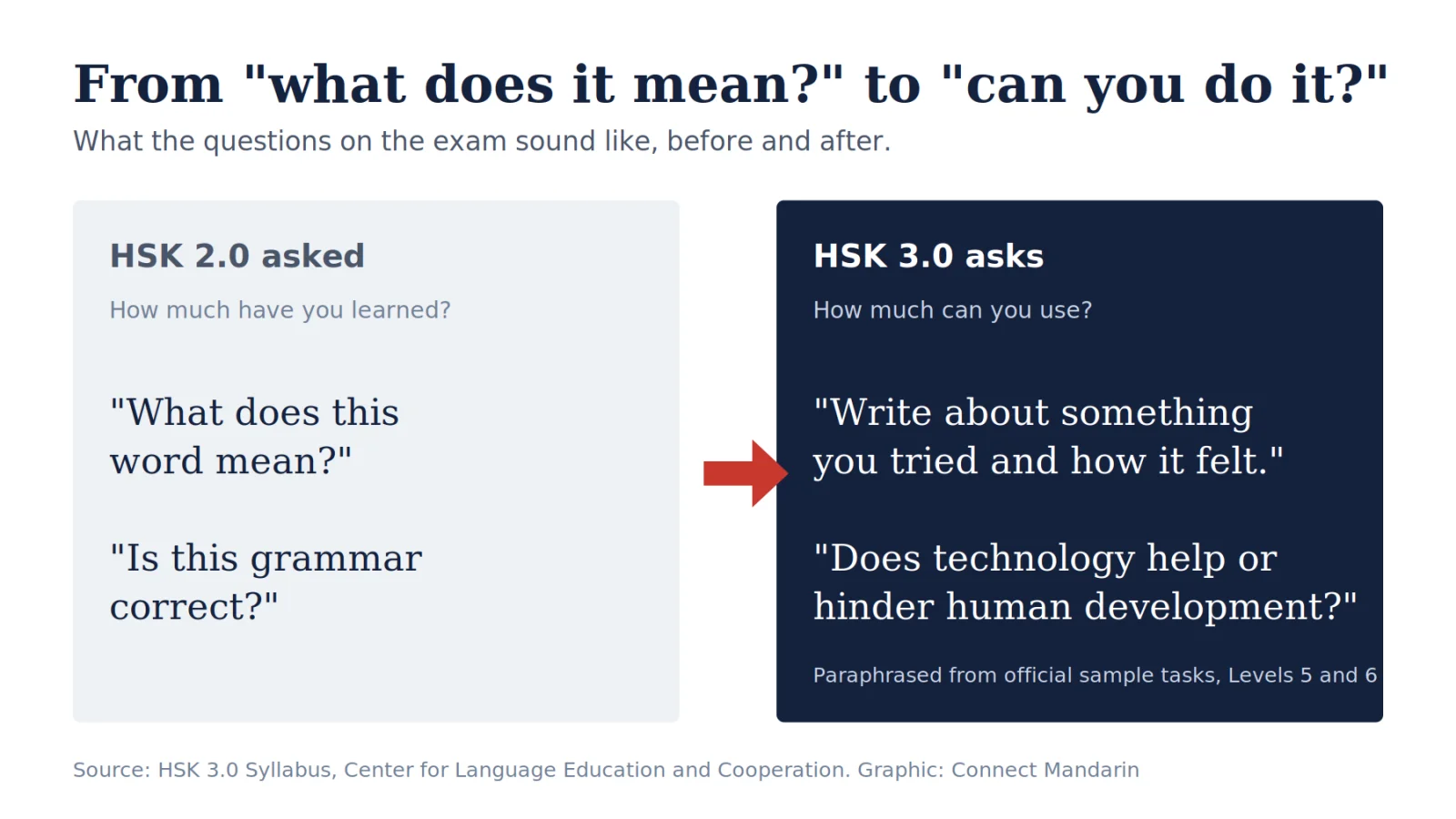
HSK 3.0: What Changed and What It Means for Your Mandarin
HSK 3.0 moves from six levels to nine and tests what you can do in Chinese. See the 5 key changes, from vocabulary to translation, and how to study.
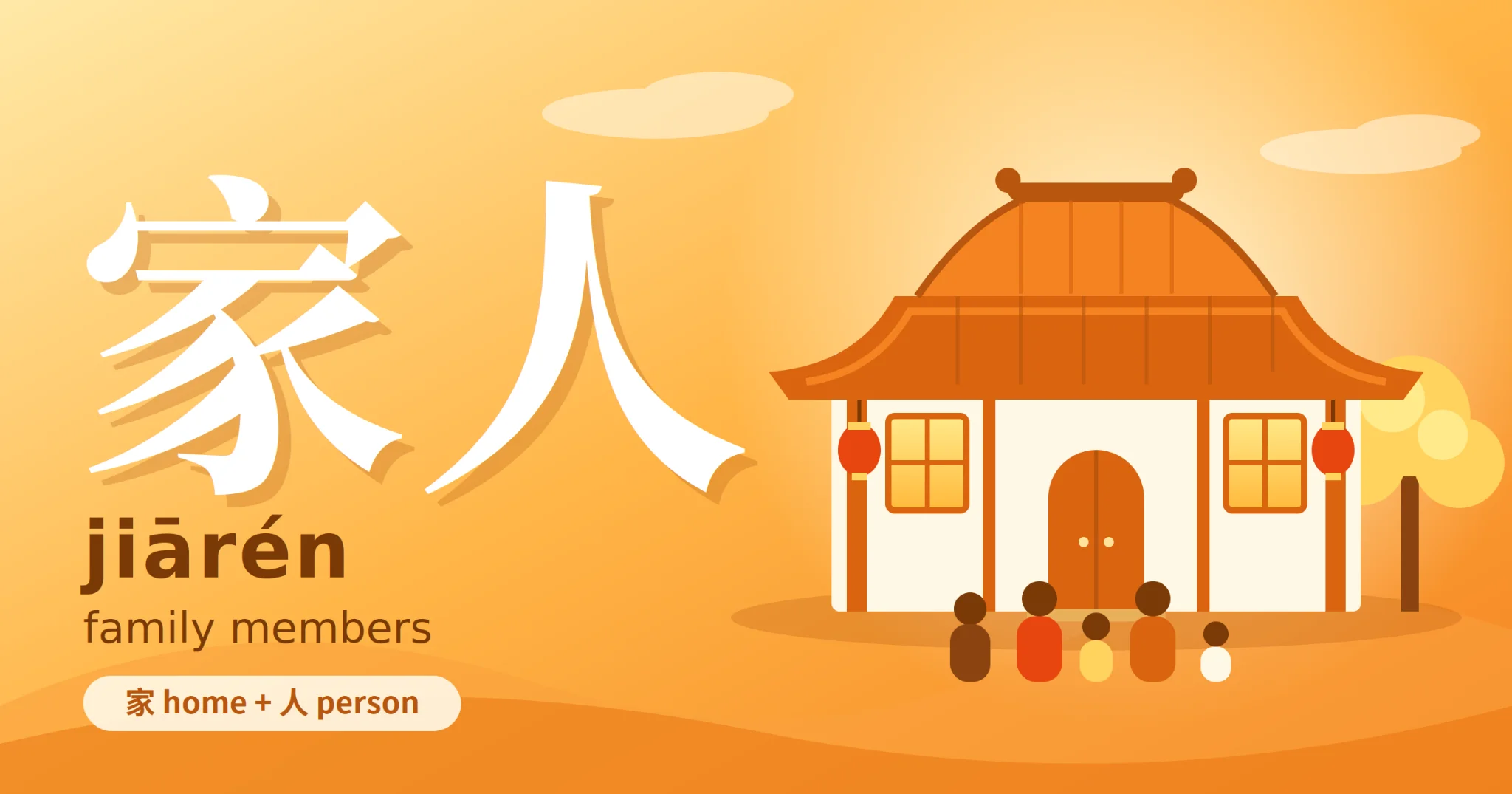
Family in Chinese Letters: 家人 (Jiārén) and Family Words in Characters
Learn family in Chinese letters: jiārén is the most common word. See characters for mom, dad, grandparents, aunts and cousins, plus Beijing vs Shanghai terms.
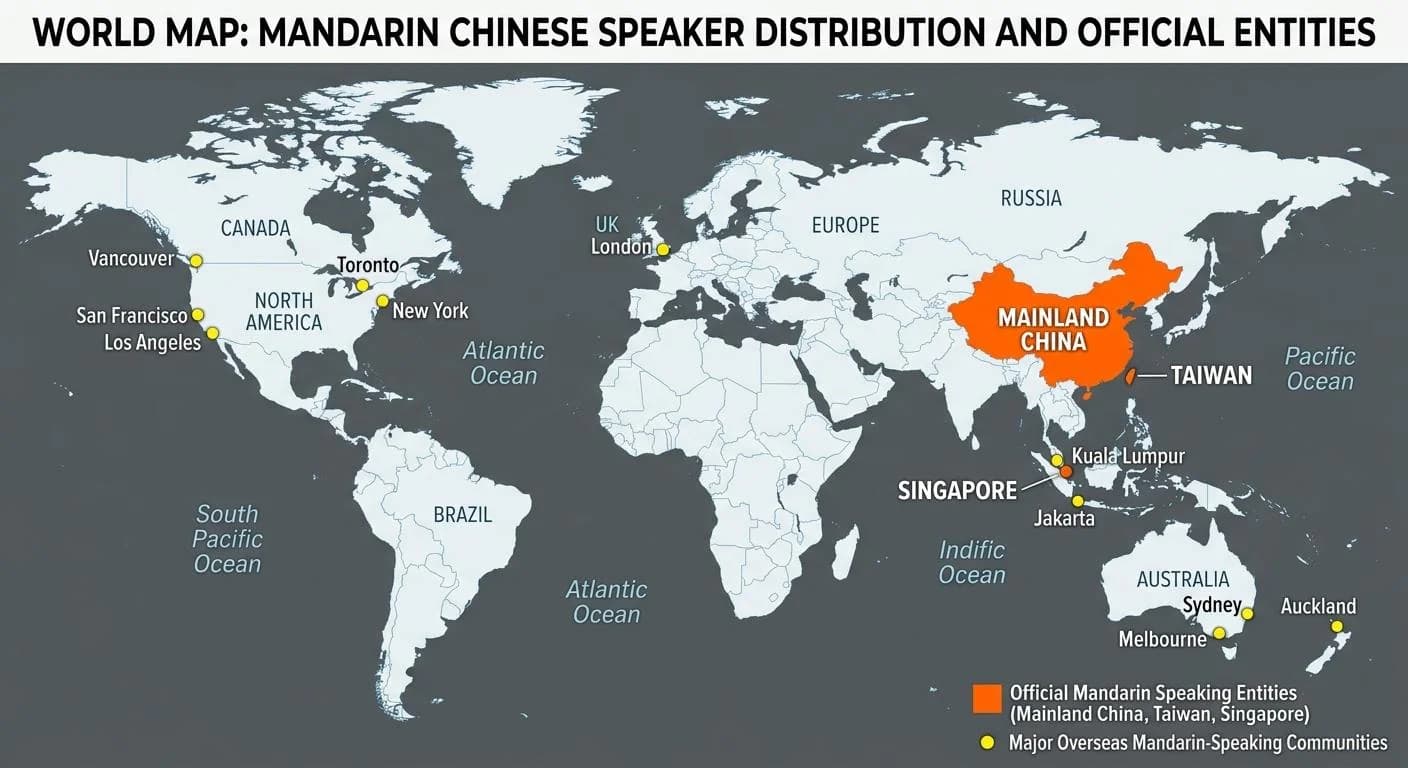
What Countries Speak Mandarin? Official Languages and Where It Is Spoken Worldwide
Which countries speak Mandarin? See where it's official (China, Taiwan, Singapore), where it's widely spoken, and which version to learn first.