Family in Chinese Letters: 家人 (Jiārén) and Family Words in Characters
Learn family in Chinese letters: jiārén is the most common word. See characters for mom, dad, grandparents, aunts and cousins, plus Beijing vs Shanghai terms.
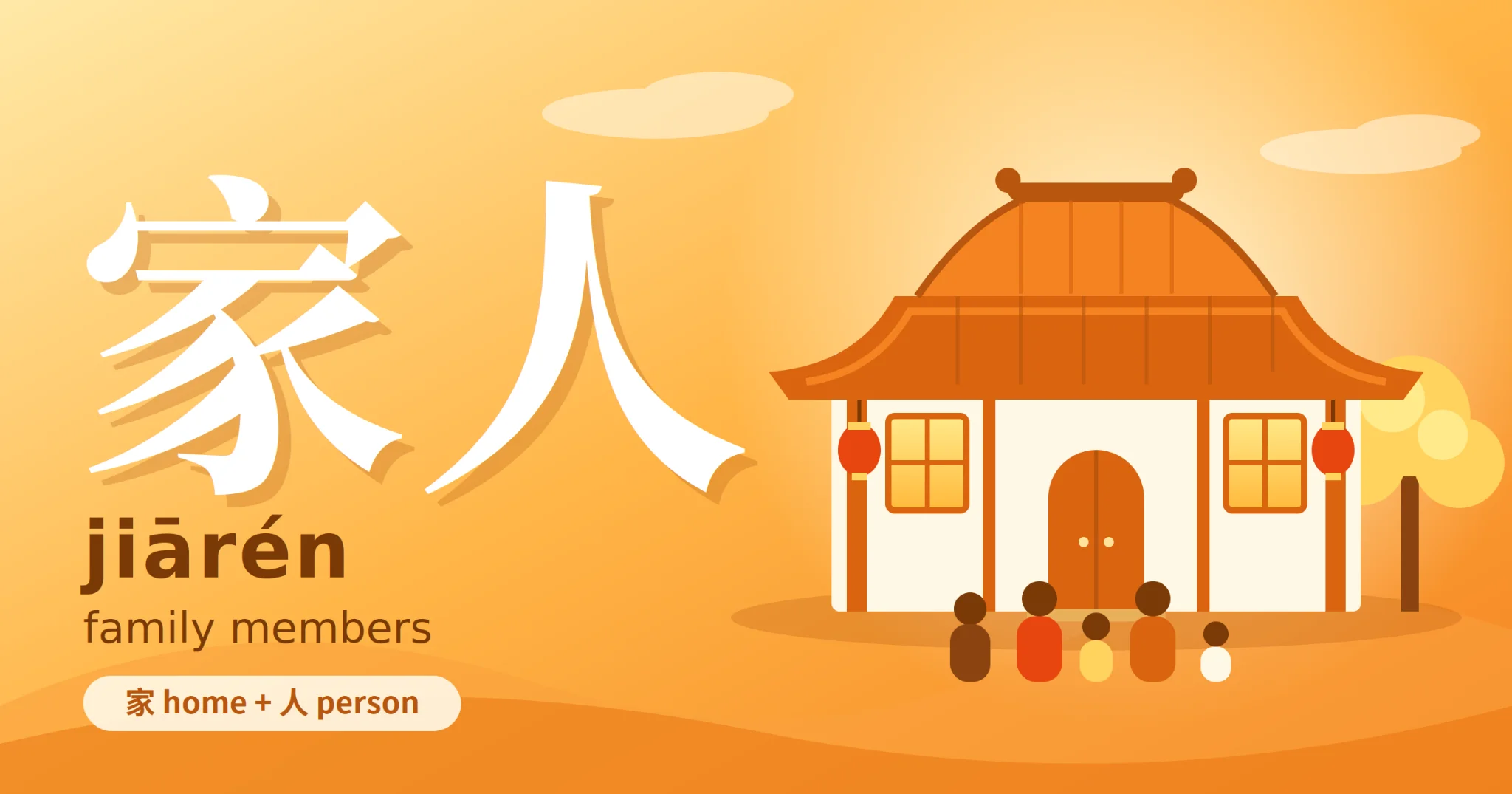
Chinese doesn't have letters. It uses characters, and each one stands for a sound and a meaning. So when people search for "family in Chinese letters," they want the characters. The most common word is 家人 (jiārén), meaning family members. The single character 家 (jiā) covers both "family" and "home."
In this guide you'll learn how to write and say family words in Chinese, from mom and dad to grandparents, aunts and cousins. You'll also see why 家 looks the way it does, which words Beijing families use, and a few common mistakes to avoid.
How Do You Write Family in Chinese Characters?
The most common way to write family in Chinese is 家人 (jiārén), meaning family members. The single character 家 (jiā) means both "family" and "home." For a household or family unit, use 家庭 (jiātíng). All three are written the same in simplified and traditional Chinese.
Here are the core terms to know:
| Characters | Pinyin | Meaning | Notes |
|---|---|---|---|
| 家 | jiā | family; home | Same in traditional |
| 家人 | jiārén | family members | The most common answer |
| 家庭 | jiātíng | family; household | More formal, used in writing |
| 家里人 | jiālǐ rén | people in the household | Spoken |
| 一家人 | yì jiā rén | one family; "we are family" | Warm, everyday |
| 全家 | quánjiā | the whole family | Used in 全家福 (quánjiāfú), a family photo |
| 亲戚 (親戚) | qīnqi | relatives | Extended family |
| 亲属 (親屬) | qīnshǔ | relatives (formal) | Official or written use |
The difference between the three main words is simple. 家人 points to the people, as in "my family members." 家庭 describes the family as a unit, like a household. 家 is the big, general word that can mean either family or home.
The Character 家 (Jiā): A Roof Over a Pig
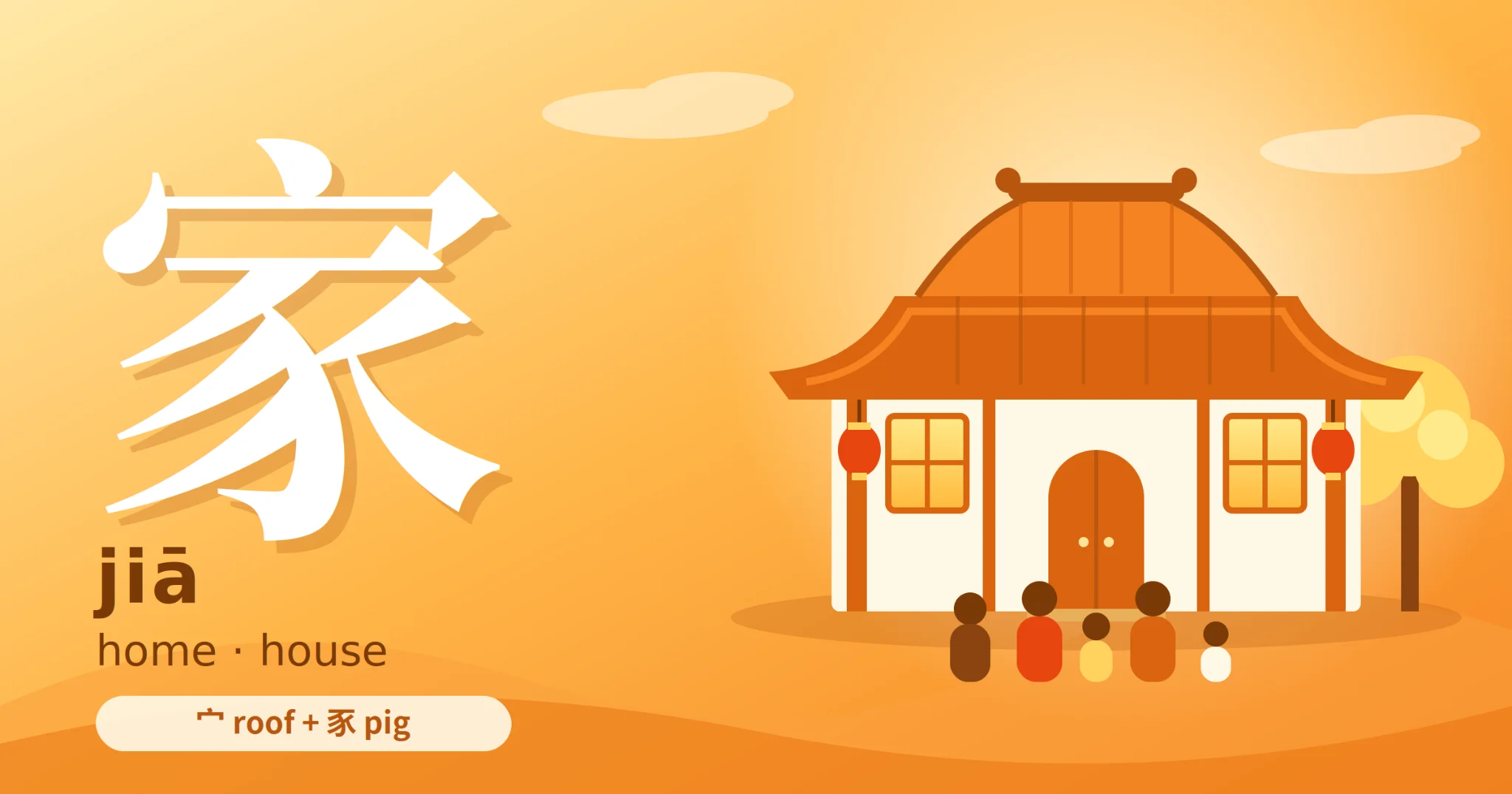
家 (jiā) means family, home and house. It is pronounced with the first tone, takes 10 strokes to write, and looks the same in simplified and traditional Chinese.
Look at the character in two parts. On top is a roof. Underneath is the character for pig. The common explanation is that families once kept pigs under their roof, which made a pig a sign of a settled home. Scholars still debate the real origin, so treat it as a helpful memory trick rather than settled fact.
Once you know 家, you'll start spotting it everywhere:
- 回家 (huíjiā): to go home
- 大家 (dàjiā): everyone
- 国家 (guójiā): country
- 专家 (zhuānjiā): expert
Notice how 国家 pictures a country as one big family. That idea runs deep in Chinese culture, and we'll come back to it below.
Immediate Family Words in Chinese Characters
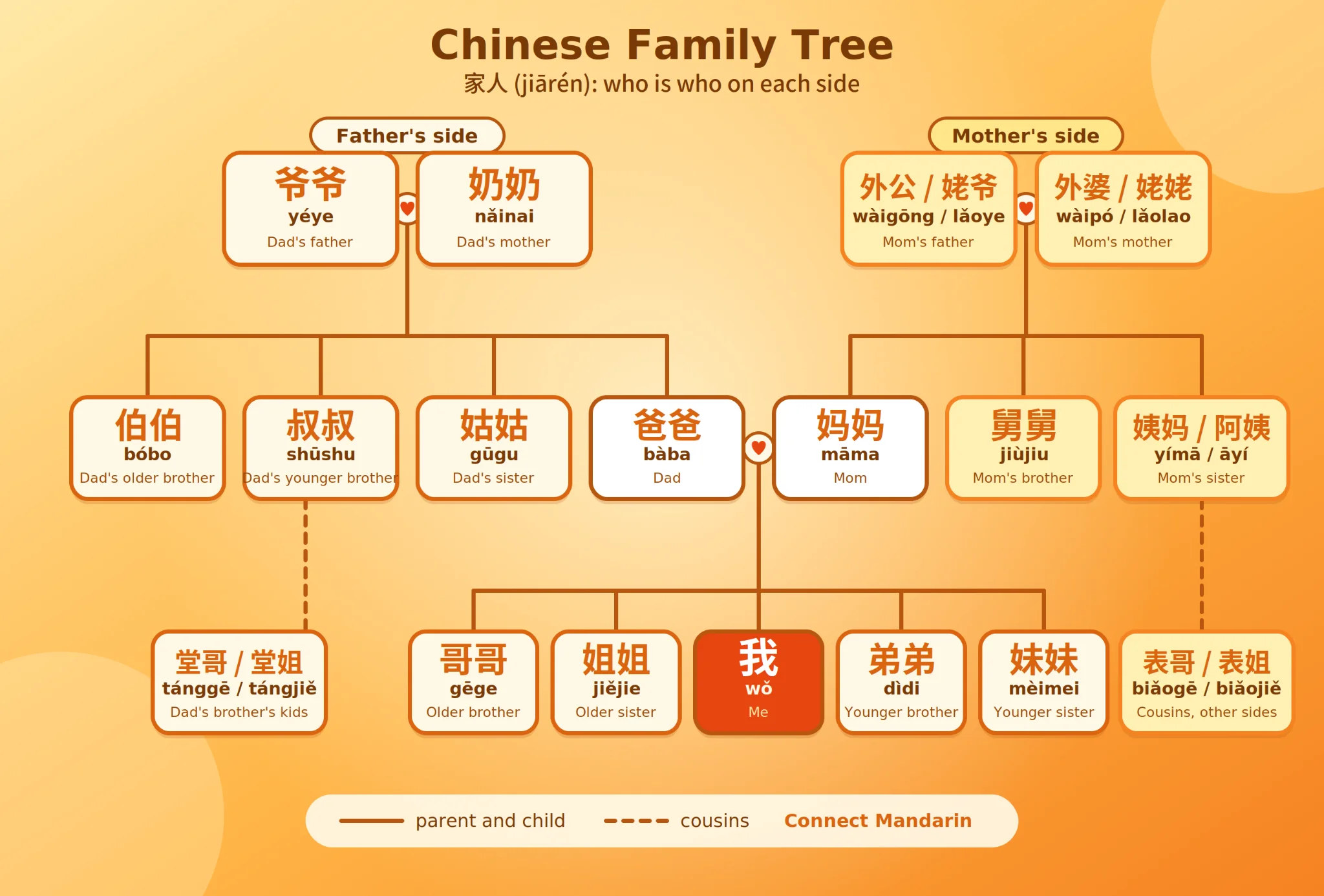
Immediate family words are the ones you'll use first and most often: 爸爸 (bàba) for dad, 妈妈 (māma) for mom, 哥哥 (gēge) for older brother and 妹妹 (mèimei) for younger sister. Most of them are doubled syllables, which makes them easy to remember and say.
| English | Spoken | Pinyin | Formal | Traditional |
|---|---|---|---|---|
| Father | 爸爸 | bàba | 父亲 (fùqin) | 父親 |
| Mother | 妈妈 | māma | 母亲 (mǔqin) | 媽媽 / 母親 |
| Parents | 父母 | fùmǔ | none | same |
| Son | 儿子 | érzi | none | 兒子 |
| Daughter | 女儿 | nǚ'ér | none | 女兒 |
| Husband | 老公 | lǎogōng | 丈夫 (zhàngfu) | same |
| Wife | 老婆 | lǎopo | 妻子 (qīzi) | same |
| Older brother | 哥哥 | gēge | none | same |
| Older sister | 姐姐 | jiějie | none | same |
| Younger brother | 弟弟 | dìdi | none | same |
| Younger sister | 妹妹 | mèimei | none | same |
| Siblings | 兄弟姐妹 | xiōngdì jiěmèi | none | same |
| Child | 孩子 | háizi | none | same |
Formal vs Spoken Words (爸爸 vs 父亲)
Chinese has a spoken word and a formal word for many family members. 爸爸 (bàba) is what you say at the dinner table. 父亲 (fùqin) is what you'd see in a school form, a speech or a news article. The same goes for 妈妈 (māma) and 母亲 (mǔqin).
If you're chatting with friends or family, stick with the spoken words. Save the formal ones for writing.
Pronunciation and Tone Tips
Words like 爸爸 (bàba), 妈妈 (māma), 哥哥 (gēge) and 姐姐 (jiějie) repeat a syllable. The first syllable keeps its full tone. The second one is short and light, almost like a quiet echo.
So 妈妈 sounds like "MA-ma," not "MA-MA." Say the first part clearly, then let the second part drop. Getting this right is one of the quickest ways to sound natural.
Grandparents and Extended Family in Chinese
Chinese families name grandparents by which side of the family they come from. Your father's parents are 爷爷 (yéye) and 奶奶 (nǎinai). Your mother's parents are 外公 (wàigōng) and 外婆 (wàipó). English uses one word for both sides, but Chinese keeps them apart.
Paternal vs Maternal Grandparents
| English | Characters | Pinyin | Side |
|---|---|---|---|
| Grandfather | 爷爷 | yéye | Father's side |
| Grandmother | 奶奶 | nǎinai | Father's side |
| Grandfather | 外公 / 姥爷 | wàigōng / lǎoye | Mother's side |
| Grandmother | 外婆 / 姥姥 | wàipó / lǎolao | Mother's side |
Beijing vs Shanghai: 姥姥 / 姥爷 and 外婆 / 外公
Both pairs mean the same thing: your mother's parents. The difference is where you hear them. 姥姥 (lǎolao) and 姥爷 (lǎoye) are common in Beijing and northern China. 外婆 (wàipó) and 外公 (wàigōng) are widely used in other regions, including Shanghai.
Neither is wrong. If you're learning Standard Mandarin in Beijing, you'll hear 姥姥 and 姥爷 all the time, so it helps to know both.
Aunts, Uncles and Cousins
Aunts and uncles also depend on which side of the family they're on, and on age. Here are the most common ones:
| English | Characters | Pinyin | Note |
|---|---|---|---|
| Father's older brother | 伯父 / 伯伯 | bófù / bóbo | Father's side |
| Father's younger brother | 叔叔 | shūshu | Father's side |
| Father's sister | 姑姑 | gūgu | Father's side |
| Mother's brother | 舅舅 | jiùjiu | Mother's side |
| Mother's sister | 姨妈 / 阿姨 | yímā / āyí | Mother's side |
| Cousin (father's brother's child) | 堂哥 / 堂姐 | tánggē / tángjiě | 堂 means same surname side |
| Cousin (other sides) | 表哥 / 表姐 | biǎogē / biǎojiě | 表 means aunt's or mother's side |
A handy shortcut for cousins: 堂 (táng) is for your father's brother's children, who share your surname. 表 (biǎo) is for everyone else.
Family in Chinese Culture
Family is one of the most important values in Chinese culture. The character 家 (jiā) shows up in words for home, country and even expert, which tells you how central the idea is. Families stay close, often across several generations, and that closeness shapes everyday language.
You can see it in old Beijing. Traditional courtyard homes called 四合院 (sìhéyuàn) were built around a shared open space, and grandparents, parents and children often lived together. Many of these homes still stand in the city's hutong lanes.
You can also see it at Spring Festival. Families travel across the country to share 团圆饭 (tuányuánfàn), the reunion dinner. Everyone sits at the same table, and it's often the biggest meal of the year.
Another thing you'll notice is that relatives are called by role, not first name. You'd say 姑姑 (gūgu) to your father's sister instead of using her name. It's a small habit that shows respect and keeps the family connection front and center.
If you have kids who'd love to experience this kind of culture first-hand, take a look at our Mandarin summer camps.
Example Sentences: Talking About Family in Chinese
The best way to remember new words is to use them. These eight sentences cover the most common ways to talk about your family. Once you're comfortable with them, you can start with common phrases and questions like What are you doing (in Chinese).
| Characters | Pinyin | English |
|---|---|---|
| 这是我的家人。 | Zhè shì wǒ de jiārén. | These are my family members. |
| 你家有几口人? | Nǐ jiā yǒu jǐ kǒu rén? | How many people are in your family? |
| 我家有四口人。 | Wǒ jiā yǒu sì kǒu rén. | There are four people in my family. |
| 你有兄弟姐妹吗? | Nǐ yǒu xiōngdì jiěmèi ma? | Do you have siblings? |
| 我爸爸是老师。 | Wǒ bàba shì lǎoshī. | My dad is a teacher. |
| 我每周给妈妈打电话。 | Wǒ měi zhōu gěi māma dǎ diànhuà. | I call my mom every week. |
| 我姥姥住在北京。 | Wǒ lǎolao zhù zài Běijīng. | My grandma (mother's side) lives in Beijing. |
| 春节我们全家一起吃团圆饭。 | Chūnjié wǒmen quánjiā yìqǐ chī tuányuánfàn. | At Spring Festival, our whole family eats the reunion dinner together. |
One tip: when you ask about family size, Chinese uses 口 (kǒu), a counting word for people in a family. That's why the question is 几口人 (jǐ kǒu rén), not just "how many people."
Common Mistakes With Family Words
Most mistakes with family words come from mixing up similar terms or using the wrong level of formality. Here are the ones we hear most from beginners:
- Mixing up 家人 and 家庭. Use 家人 (jiārén) for the people, and 家庭 (jiātíng) for the household or family unit.
- Using 爸 alone when talking about someone. In conversation, say 爸爸 (bàba). Use the short 爸 (bà) only when you're calling out to your dad directly.
- Using formal 祖母 in casual chat. 祖母 (zǔmǔ) sounds stiff and written. In everyday speech, say 奶奶 (nǎinai).
- Mixing up paternal and maternal grandparents. 爷爷 and 奶奶 are your father's parents. 外公 and 外婆 (or 姥爷 and 姥姥) are your mother's parents.
FAQs About Family in Chinese
How do you write family in Chinese characters?
The most common way to write family in Chinese is 家人 (jiārén), meaning family members. The single character 家 (jiā) means both "family" and "home." For a household or family unit, use 家庭 (jiātíng). All three are written the same in simplified and traditional Chinese.
What is the difference between 家, 家人 and 家庭?
家 (jiā) is the broad word for family or home. 家人 (jiārén) refers to the people in your family, as in "my family members." 家庭 (jiātíng) is more formal and describes the family as a unit or household, often used in writing, surveys, and discussions about family background or structure.
How do you say mom and dad in Chinese characters?
Dad is 爸爸 (bàba) and mom is 妈妈 (māma) in everyday speech. The formal written forms are 父亲 (fùqin) for father and 母亲 (mǔqin) for mother. Together, "parents" is 父母 (fùmǔ). In traditional characters, mom is written 媽媽, while 爸爸 stays the same.
How do you say grandparents in Chinese?
Paternal grandparents are 爷爷 (yéye) for grandfather and 奶奶 (nǎinai) for grandmother. Maternal grandparents are 外公 (wàigōng) and 外婆 (wàipó), or 姥爷 (lǎoye) and 姥姥 (lǎolao), which are common in Beijing and northern China. Chinese distinguishes the father's and mother's side.
What does the character 家 mean and how is it built?
家 (jiā) means family, home, and house. It has 10 strokes and combines a roof radical on top with the pig character below. A common explanation is that pigs were kept under the family's roof, though scholars debate the exact origin.
Learn Family Vocabulary With Connect Mandarin
Now you know how to write and say family in Chinese, from 家 to 姥姥. The next step is practicing out loud with someone who can correct your tones. Our Beijing-based teachers help new learners build speaking confidence from day one in our beginner Mandarin course. Come learn with us at Connect Mandarin.
About the Author
Connect Mandarin Team
We are built by a team of native-speaking teachers and language educators who focus on real, usable Chinese - not just textbook phrases. With 15+ years of combined teaching experience.
Continue Reading
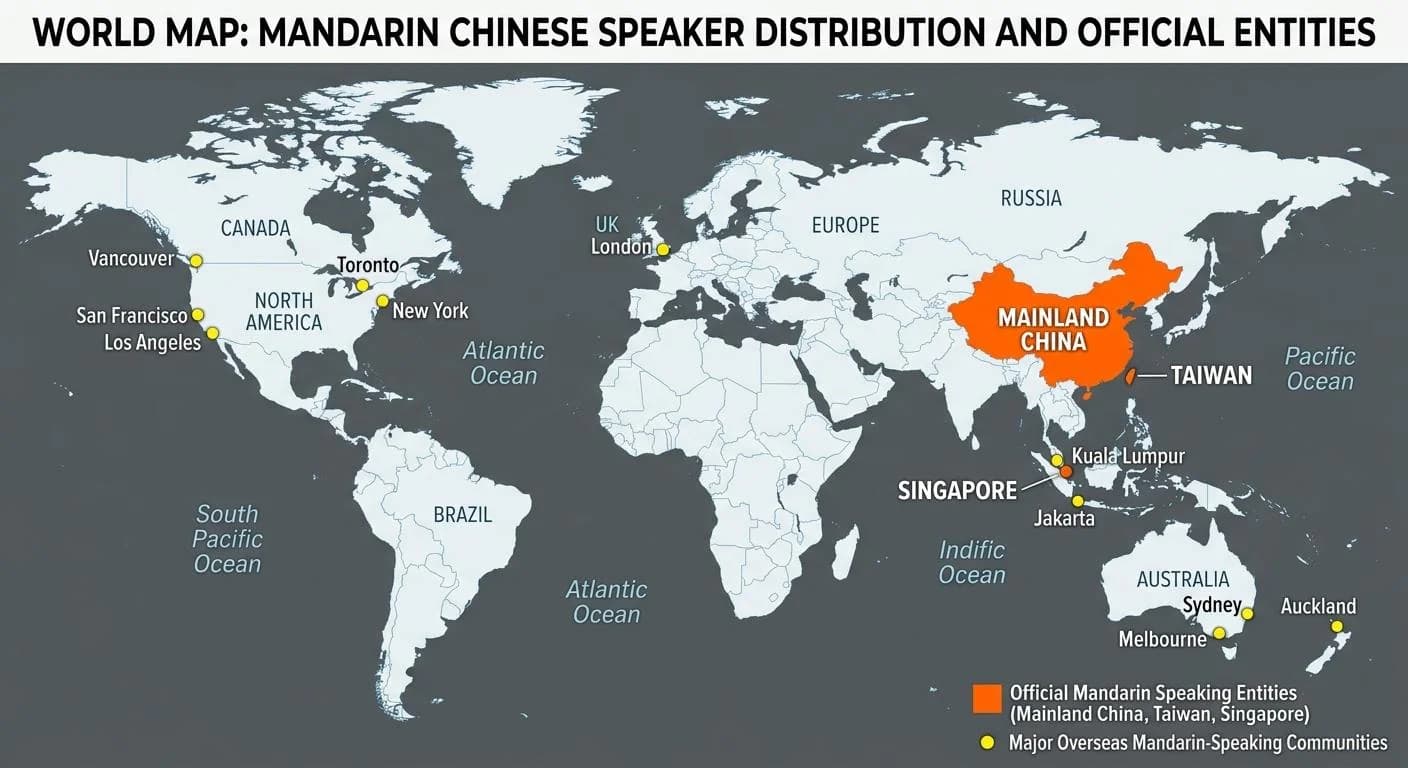
What Countries Speak Mandarin? Official Languages and Where It Is Spoken Worldwide
Which countries speak Mandarin? See where it's official (China, Taiwan, Singapore), where it's widely spoken, and which version to learn first.
What Are You Doing in Chinese? 你在做什么 (Nǐ Zài Zuò Shénme) Explained
Learn how to say "what are you doing" in Chinese, from the textbook-standard 你在做什么 to the casual Beijing favorite 你在干嘛, with pinyin, tone tips, and real dialogues.
Where Are You From in Chinese? (5 Natural Ways to Ask in Mandarin)
Learn 5 natural ways to ask "where are you from" in Chinese, from the everyday nǐ shì nǎlǐ rén to the formal nǐ láizì nǎlǐ, with pinyin and real conversation examples.