
Friendship in Chinese Culture: Key Words, Customs and Sayings
Learn friendship in Chinese with key words for friend, everyday customs and classic sayings, all with pinyin. Explained by Beijing-based Mandarin teachers.
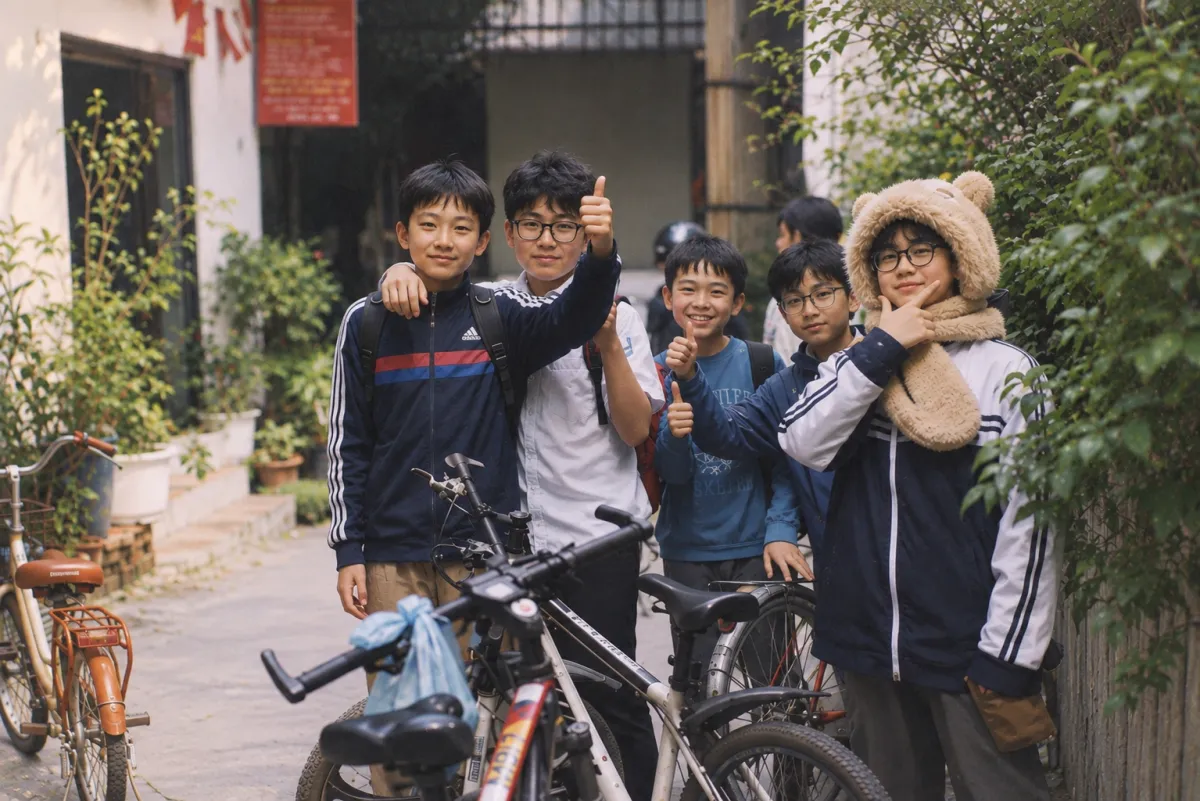
Imagine you have just arrived in Beijing. A new colleague insists on paying for dinner, and a week later he is calling you 老张 (Lǎo Zhāng) and asking if you can help him move apartments. Is that friendship, or something else? Friendship in Chinese culture (友谊, yǒuyì) is seen as a long-term bond of trust, loyalty and mutual help. It grows slowly, through shared meals, returned favors and honest talk. In this guide, you will learn the key words for "friend," the customs that shape close friendships, and classic sayings, all with pinyin.
What Friendship Means in Chinese Culture (友谊, yǒuyì)
In Chinese culture, friendship is often understood as a lasting relationship where people trust each other, stay loyal through hard times, and help each other without keeping a strict score. It is less about how often you chat and more about whether you can rely on each other when it counts.
It helps to separate two words. 友谊 (yǒuyì) is the abstract idea of friendship, the kind you would write about in an essay. 朋友 (péngyou) is the everyday word for an actual friend, the person you text on a Friday night. You will hear 朋友 far more often in daily life.
You will also hear about 关系 (guānxi), which means personal connections and the mutual obligations that come with them. Friendship is one kind of guānxi, built on trust and favors that are returned over time. But guānxi is wider than friendship, because it also covers family, colleagues, classmates and business contacts. Not every guānxi is a friendship, though the best friendships are rich in it.
One note before we go further: everything in this article describes tendencies, not rules. Younger people and city dwellers often keep friendships that feel more casual and closer to what you may know from the West. Treat these customs as helpful background, not a checklist.
Chinese Words for Friend, From Casual to Closest
Chinese has many ways to say "friend," and the word you choose signals how close you are. Here are the essentials at a glance.
| Chinese | Pinyin | English |
|---|---|---|
| 朋友 | péngyou | friend |
| 好朋友 | hǎo péngyou | good friend |
| 闺蜜 | guīmì | female best friend |
| 哥们儿 / 铁哥们儿 | gēmenr / tiě gēmenr | buddy / very close buddy |
| 发小 | fàxiǎo | childhood friend |
| 老友 | lǎoyǒu | old friend |
| 知己 | zhījǐ | kindred spirit |
| 酒肉朋友 | jiǔròu péngyou | fair-weather friend |
Everyday Words (日常说法)
朋友 (péngyou) is the all-purpose word, and the best place to start. It covers everyone from classmates to close companions. To step up the closeness, say 好朋友 (hǎo péngyou), a good friend.
Very Close Friends
闺蜜 (guīmì) describes a female best friend, someone you share secrets with. It is also used playfully for close male friends, as in 男闺蜜 (nánguīmì). For a deeper bond, 知己 (zhījǐ) means a kindred spirit, a friend who truly understands you.
Beijing Slang (北京话)
In Beijing, you will often hear 哥们儿 (gēmenr), a buddy, and 铁哥们儿 (tiě gēmenr), literally an "iron buddy," meaning a very close friend. The -r ending is typical Beijing speech, known as erhua. It gives these words a warm, easygoing feel that you will not find in a textbook.
Long-Time Friends
发小 (fàxiǎo) means a friend since childhood, and it is very common in Beijing speech. 老友 (lǎoyǒu) is an old friend, someone with a long history behind you.
Fair-Weather Friends
Not every friend sticks around. 酒肉朋友 (jiǔròu péngyou) literally means "wine and meat friend," someone who shows up for the party but not for the hard times.
A Connect Mandarin Beijing teacher puts it this way: "A 发小 is someone who knew you before you had anything to show off. With a 铁哥们儿, you do not need to explain yourself."
How Chinese Friends Show They Care
Close friends in China rarely rely on big speeches. Care is shown in small, repeated habits.
Sharing Meals and Who Pays (请客, qǐngkè)
Food is the heart of friendship. Friends gather around shared dishes, and the host often pays, saying 我请客 (wǒ qǐngkè), "my treat." Next time, the other person will usually pick up the bill. Over months and years, this back-and-forth keeps the friendship balanced without anyone counting out loud. Fighting over the check is common, and it is usually a friendly sign of care.
Dropping the Formalities (咱们谁跟谁啊)
When friends are close, they skip the polite phrases. If you thank a good friend too much, they may answer 咱们谁跟谁啊 (zánmen shéi gēn shéi a), meaning "we're close, no need for that." Politeness can create distance, so skipping it is a way of saying, "You are one of us."
Nicknames Like 老张 and 小王
Friends often drop full names for friendly titles. Adding 老 (lǎo, "old") before a surname, as in 老张 (Lǎo Zhāng), shows respect and warmth. Adding 小 (xiǎo, "little") before a surname, as in 小王 (Xiǎo Wáng), is common for someone younger. Being given a nickname is often a quiet sign that you have been accepted.
Honest Talk Between Close Friends
Close friends tend to speak frankly. They may tell you that a haircut looks odd or that a plan is risky. This directness is seen as care, since a real friend is expected to tell you the truth instead of only saying nice things.
What Friends Expect From Each Other

Closeness in Chinese culture often comes with quiet expectations. Here are three common ones.
Returning Favors
Favors are rarely forgotten. If a friend helps you find an apartment, you might later introduce them to a useful contact or bring a gift when you visit. The aim is not to "pay off" a debt but to keep the relationship alive and balanced over time.
Saving Face (面子, miànzi)
面子 (miànzi) is a person's public dignity and reputation. Good friends protect it. For example, if a friend makes a mistake at a dinner with colleagues, you would correct them privately afterward, not in front of everyone.
Showing Up When It Counts
Friends are expected to appear in difficult moments. If someone falls ill or loses a job, friends visit, bring food and offer help without being asked. Many people say a friend is measured by what they do in a crisis, not by how often they chat.
Chinese Sayings About Friendship
Chinese has a long tradition of sayings about friends, many drawn from classic texts. Here are five favorites.
| Saying | Pinyin | Meaning | When to use it |
|---|---|---|---|
| 有朋自远方来,不亦乐乎 | yǒu péng zì yuǎnfāng lái, bú yì lè hū | Isn't it a joy to have a friend visit from afar? | Welcoming a friend who traveled to see you. From the Analects (《论语》). |
| 患难见真情 | huànnàn jiàn zhēnqíng | Hardship reveals true feelings | Talking about a friend who stood by you in a tough time. |
| 君子之交淡如水 | jūnzǐ zhī jiāo dàn rú shuǐ | A gentleman's friendship is plain as water | Describing a friendship that is calm and sincere, with no show. |
| 千金易得,知己难求 | qiānjīn yì dé, zhījǐ nán qiú | Gold is easy to get, a true confidant is hard to find | Explaining how rare and valuable a deep friend is. |
| 在家靠父母,出门靠朋友 | zàijiā kào fùmǔ, chūmén kào péngyou | At home rely on parents, away rely on friends | Talking about the practical support friends give when you are far from home. |
Chinese vs. Western Friendship: What Really Differs
These are general tendencies, and individuals vary widely.
| Chinese friendship (tendency) | Western friendship (tendency) | |
|---|---|---|
| Closeness | Slower to form, but often deep and long-lasting | Often quicker and more casual |
| Favors | Freely asked for and returned over time | Often kept more balanced and independent |
| Directness | Close friends speak very frankly in private | Often more tactful, even among close friends |
| Time together | Frequent shared meals and group gatherings | Often one-on-one or activity-based meetups |
Phrases to Talk About Your Friends in Chinese
Here are five phrases you can use right away.
- 你是我最好的朋友。Nǐ shì wǒ zuì hǎo de péngyou. You are my best friend.
- 咱们谁跟谁啊!Zánmen shéi gēn shéi a! We're close, no need to thank me.
- 我请客。Wǒ qǐngkè. My treat.
- 谢谢你一直陪着我。Xièxie nǐ yìzhí péizhe wǒ. Thanks for always being there for me.
- 我们是发小。Wǒmen shì fàxiǎo. We've been friends since childhood.
If you want more expressions for daily conversations, you can also browse our guide to everyday Chinese phrases. And when you are ready, practice these with a private teacher and get feedback on your tones in real time.
Learn Friendship Vocabulary With Connect Mandarin
Words like 哥们儿 (gēmenr) and 发小 (fàxiǎo) sound most natural when you learn them from people who use them every day. Our Beijing-based teachers explain not just what a word means, but when and how to say it. If you are just starting out, our Beginner Course is a friendly place to build your foundation. Or book a free trial class and meet a teacher for yourself.
Frequently Asked Questions
What does friendship mean in Chinese culture?
Friendship (友谊, yǒuyì) in Chinese culture is often seen as a long-term bond built on trust, loyalty and mutual help. Close friends share meals, trade favors and speak frankly. Modern friendships vary widely, but the idea that real friends stand by you in hard times is still widely shared.
What is the Chinese word for friend?
The most common word is 朋友 (péngyou), used for everyone from classmates to close companions. For closer bonds, say 好朋友 (hǎo péngyou) for a good friend, 闺蜜 (guīmì) for a female best friend, 哥们儿 (gēmenr) for a male buddy, and 知己 (zhījǐ) for a kindred spirit.
What is guanxi, and how does it relate to friendship?
Guanxi (关系, guānxi) means personal connections and the mutual obligations that come with them. Friendship is one kind of guanxi, built on trust and favors that are returned over time. It is not the same as friendship itself, because guanxi also covers family, colleagues and business contacts.
How do you say best friend in Chinese?
Say 最好的朋友 (zuì hǎo de péngyou) for best friend in general. Women often say 闺蜜 (guīmì), and men often say 铁哥们儿 (tiě gēmenr), a Beijing-flavored term for a very close buddy. Use 知己 (zhījǐ) for a friend who truly understands you.
Do Chinese friends say thank you to each other?
Close friends often skip formal thanks, because it can create distance. A common reply is 咱们谁跟谁啊 (Zánmen shéi gēn shéi a), meaning we're close, so no need for that. Thanks usually shows up as returning the favor or treating your friend to a meal, not repeated 谢谢.
About the Author
Connect Mandarin Team
We are built by a team of native-speaking teachers and language educators who focus on real, usable Chinese - not just textbook phrases. With 15+ years of combined teaching experience.
Continue Reading
The Chinese Gender Calendar in 2026: How It Works and Why It Is Great for Learning Mandarin
Learn how the Chinese gender calendar works with 2026 dates, try our free calculator, and pick up Mandarin words like 农历, 虚岁 and 怀孕 along the way.

Chinese Breakfast: Popular Foods, Dishes & What People Eat in China
Explore Chinese breakfast foods like baozi, youtiao, congee and jianbing. See regional dishes, key Mandarin phrases, and how to order breakfast in China.

Hakka People: History, Language, and Culture Explained
The Hakka people (客家人) are a Han Chinese subgroup known for their own language, fortified earthen homes, and a cuisine built around preserved ingredients. Here's where they came from, how they live today, and what their story teaches Mandarin learners.