
Chinese Breakfast: Popular Foods, Dishes & What People Eat in China
Explore Chinese breakfast foods like baozi, youtiao, congee and jianbing. See regional dishes, key Mandarin phrases, and how to order breakfast in China.
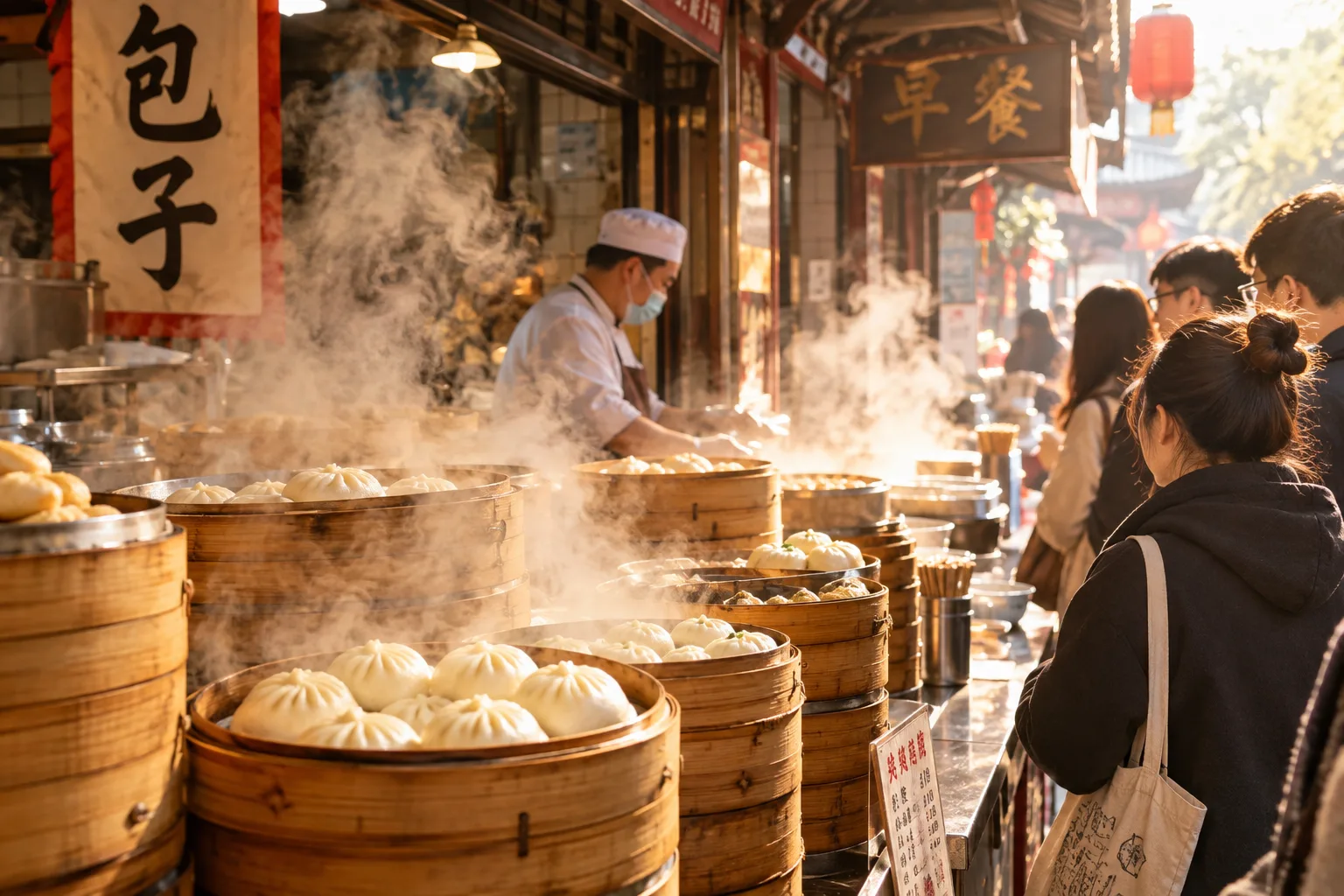
Chinese breakfast is the first meal of the day in China, and it changes a lot from region to region. In the north, people often eat wheat foods like baozi, mantou and jianbing. In the south, rice foods like congee and rice noodles are more common. Youtiao, noodles and soy milk are popular almost everywhere.
Quick answer: A typical Chinese breakfast is warm and savoury, such as baozi, congee or youtiao with a cup of soy milk. There is no single standard breakfast in China, because every region has its own favourites.
What Do Chinese People Eat for Breakfast?
Some people grab a quick bite on the way to work. Others sit down at a small shop for a hot bowl of noodles. Here is a quick look at the most common choices.
| Food | Chinese Name | Short Description |
|---|---|---|
| Baozi | 包子 (bāozi) | Steamed filled bun |
| Youtiao | 油条 (yóutiáo) | Fried dough stick |
| Congee | 粥 (zhōu) | Soft rice porridge |
| Jianbing | 煎饼 (jiānbing) | Savoury crepe with egg |
| Soy milk | 豆浆 (dòujiāng) | Warm soybean drink |
| Noodles | 面条 (miàntiáo) | Hot noodles in soup or sauce |
| Dumplings | 饺子 (jiǎozi) | Filled dough pockets |
| Mantou | 馒头 (mántou) | Plain steamed bread |
10 Popular Chinese Breakfast Foods
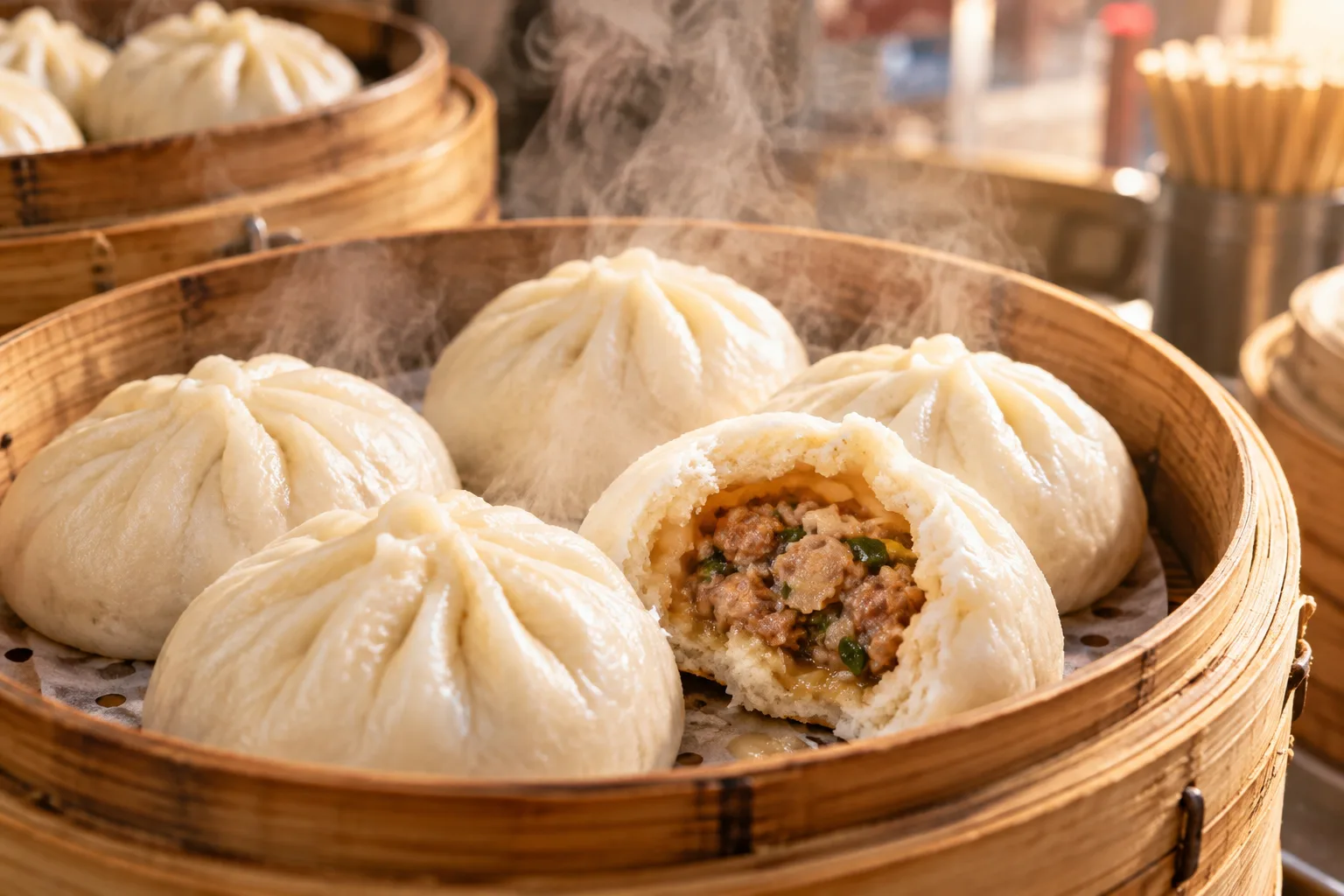
Baozi (包子)
Baozi are fluffy steamed buns filled with pork, cabbage, mushrooms or egg. Some are sweet, with red bean paste. People eat them by hand, often with congee or soy milk, and they are especially loved in the north.
Youtiao (油条)
Youtiao are long, golden fried dough sticks. They are crispy outside, airy inside and lightly salty. Dip them into soy milk or tear them into a bowl of congee.
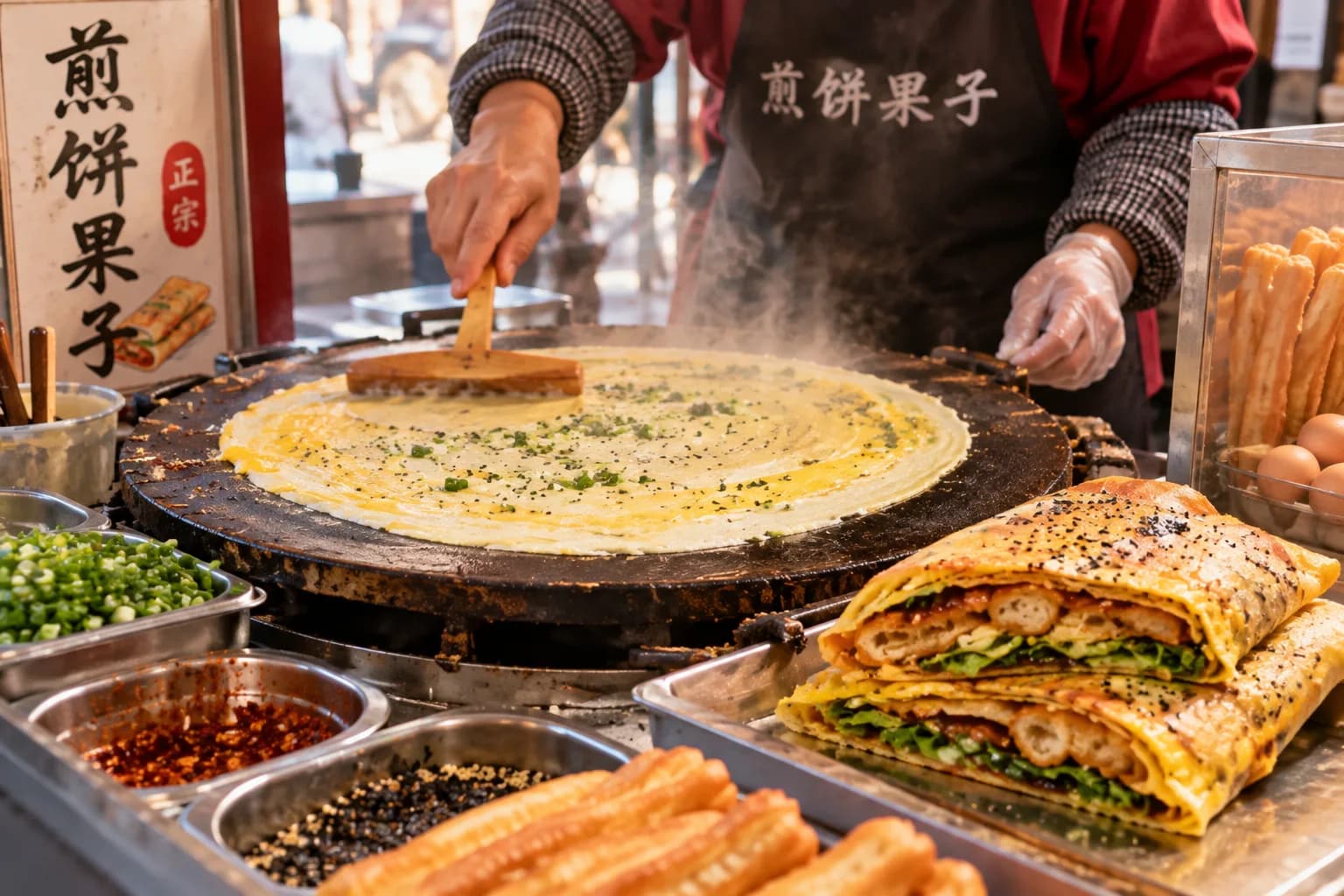
Jianbing (煎饼)
Jianbing is a thin savoury crepe, cooked on a hot griddle with egg, sauce, spring onion and a crispy cracker, then folded up. It started in northern cities like Tianjin and Beijing, and it is a classic grab and go street breakfast. Ask for chilli sauce if you like some heat.
Congee / Zhou (粥)
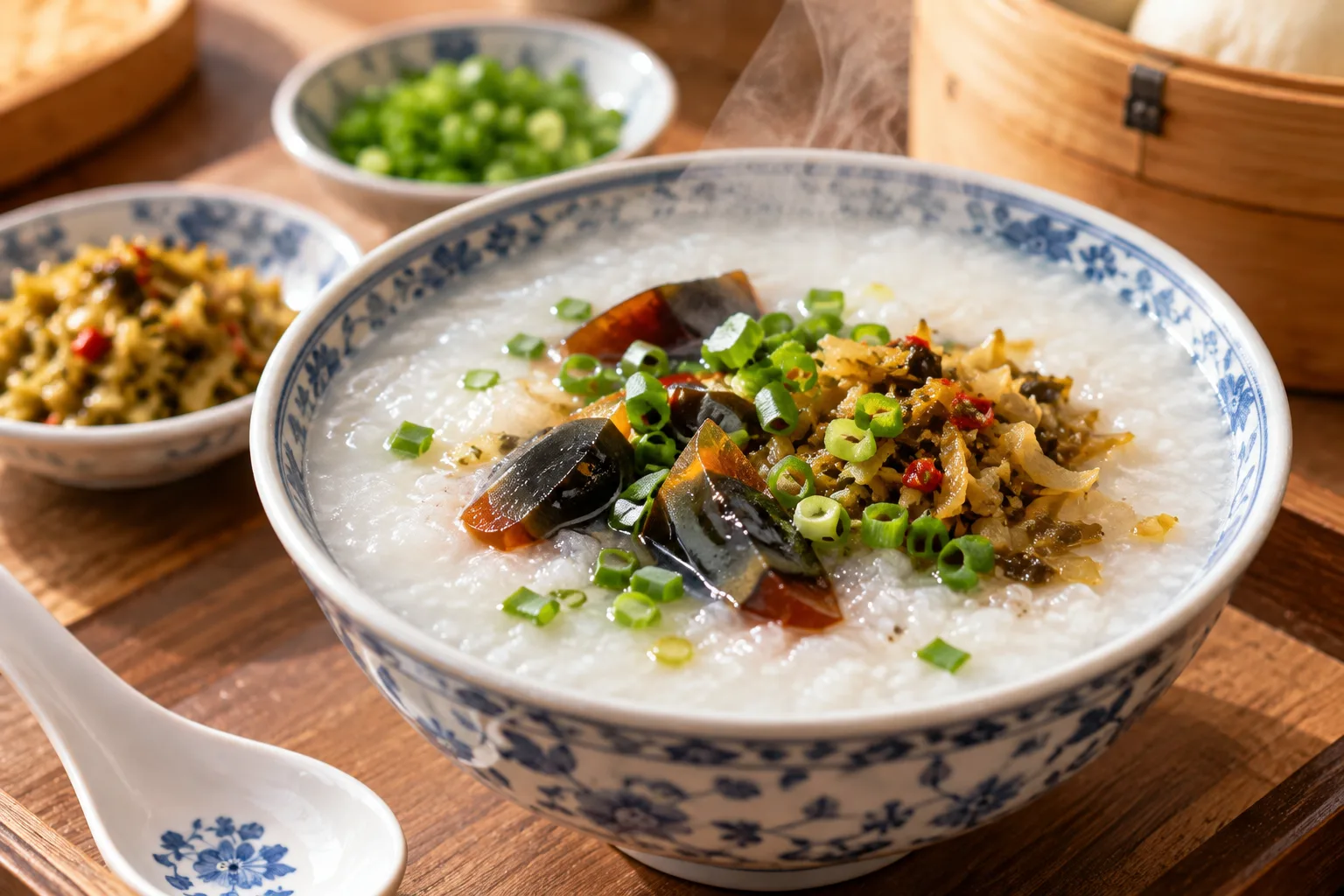
Congee is rice cooked slowly in a lot of water until it turns soft and creamy. It tastes mild on its own, so people add pickles, century egg, shredded pork or peanuts. It is a comfort food, most popular in southern China.
Soy Milk (豆浆)
Soy milk is the classic breakfast drink in China. It is served warm and is usually sweet. In Shanghai you can also find a salty version with vinegar, pickles and dried shrimp.
Chinese Breakfast Noodles
Noodles in the morning are very normal in China. Try hot dry noodles (热干面, rè gān miàn) from Wuhan, which come with sesame paste, or beef noodle soup from Lanzhou. Many noodle shops open at sunrise.
Steamed Dumplings
Steamed dumplings have fillings like pork, shrimp or vegetables, and are dipped in vinegar, soy sauce or chilli oil. Famous examples are xiaolongbao (soup dumplings) from Shanghai and shaomai, which are common in dim sum style breakfasts.
Rice Noodles
Rice noodles are soft and smooth, and they are popular in the south and southwest. In Guilin they come with pork and rich broth. In Guangdong you will find cheung fun (肠粉, chángfěn), rolled rice sheets with sweet soy sauce.
Tea Eggs (茶叶蛋)
Tea eggs are boiled eggs, cracked slightly and simmered in tea, soy sauce and spices. The cracks leave a pretty marbled pattern. They are cheap and easy to find in convenience stores and street stalls.
Mantou (馒头)
Mantou are plain steamed buns with no filling. They are soft and slightly sweet, so people eat them with pickles, vegetable dishes or soy milk. They are a staple in northern China, where wheat is more common than rice.
What Is a Traditional Chinese Breakfast Like?
A traditional Chinese breakfast is about the whole experience, not one dish. Food is warm, freshly made and often bought from a stall or small shop on the way to work or school. At home, many families eat congee, boiled eggs or leftovers from the night before. What ends up on the table depends on where you live.
Is Chinese Breakfast Usually Sweet or Savoury?
It is usually savoury. Meat baozi, jianbing, noodles and congee with pickles are all salty. Sweet options exist too, such as sweet soy milk, red bean buns and sesame balls.
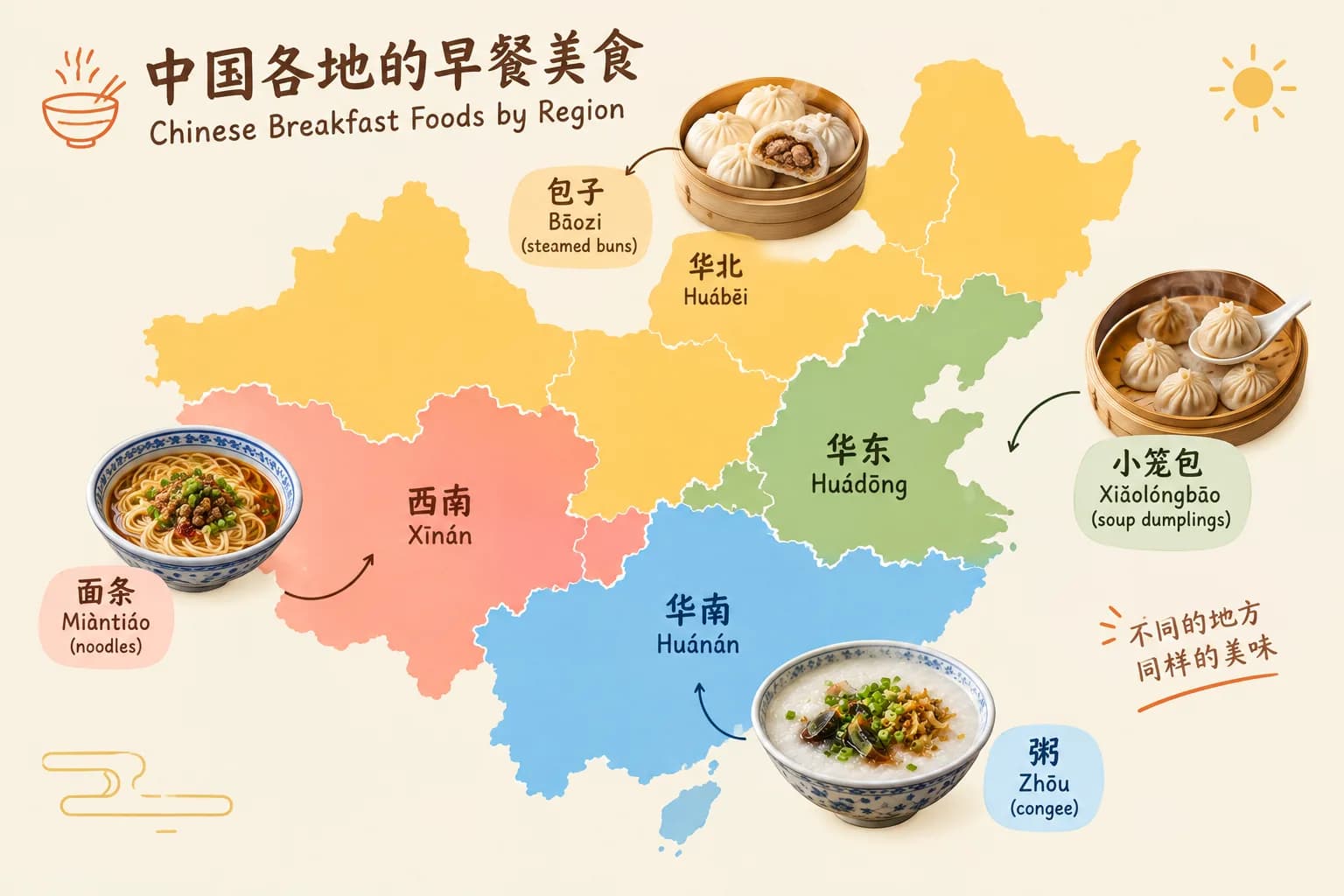
Chinese Breakfast by Region
Northern China
Wheat is the main grain here, so expect baozi, mantou, jianbing and noodles. Breakfast is hearty and filling, which suits the colder weather.
Southern China
Rice is the star. People eat congee, rice noodles and other rice dishes, usually with lighter flavours.
Shanghai & Eastern China
Shanghai is famous for shengjian mantou, which are pan fried pork buns with a crispy bottom. You will also find xiaolongbao, soy milk and youtiao.
Guangdong
Guangdong is the home of dim sum. A slow breakfast with tea, congee, cheung fun and steamed dumplings is a favourite with family and friends.
Sichuan & Southwestern China
Breakfast here often means a small bowl of noodles with chilli oil, pickles and peanuts. In Yunnan, rice noodles are a morning favourite.
The key point: there is no single standard Chinese breakfast, and that is part of the fun.
Chinese Breakfast vs Western Breakfast
| Chinese Breakfast | Western Breakfast | |
|---|---|---|
| Main foods | Rice, noodles, steamed buns, eggs | Bread, cereal, eggs, bacon |
| Flavour | Mostly savoury | Often sweet or mixed |
| Drinks | Soy milk, tea | Coffee, juice, milk |
| Where eaten | Home, stalls and small shops | Home and cafes |
5 Key Differences Between Chinese and Western Breakfast
- Savoury vs sweet. Chinese breakfast leans salty, while Western breakfast often includes cereal, pancakes or jam.
- Hot vs cold. Chinese breakfast is usually served hot. Western breakfast can include cold items like yogurt.
- Grain base. Rice, noodles and steamed buns replace toast and bagels.
- Drinks. Soy milk and tea are the classics, not coffee and juice.
- Buying out. Picking up breakfast from a stall is completely normal in China.
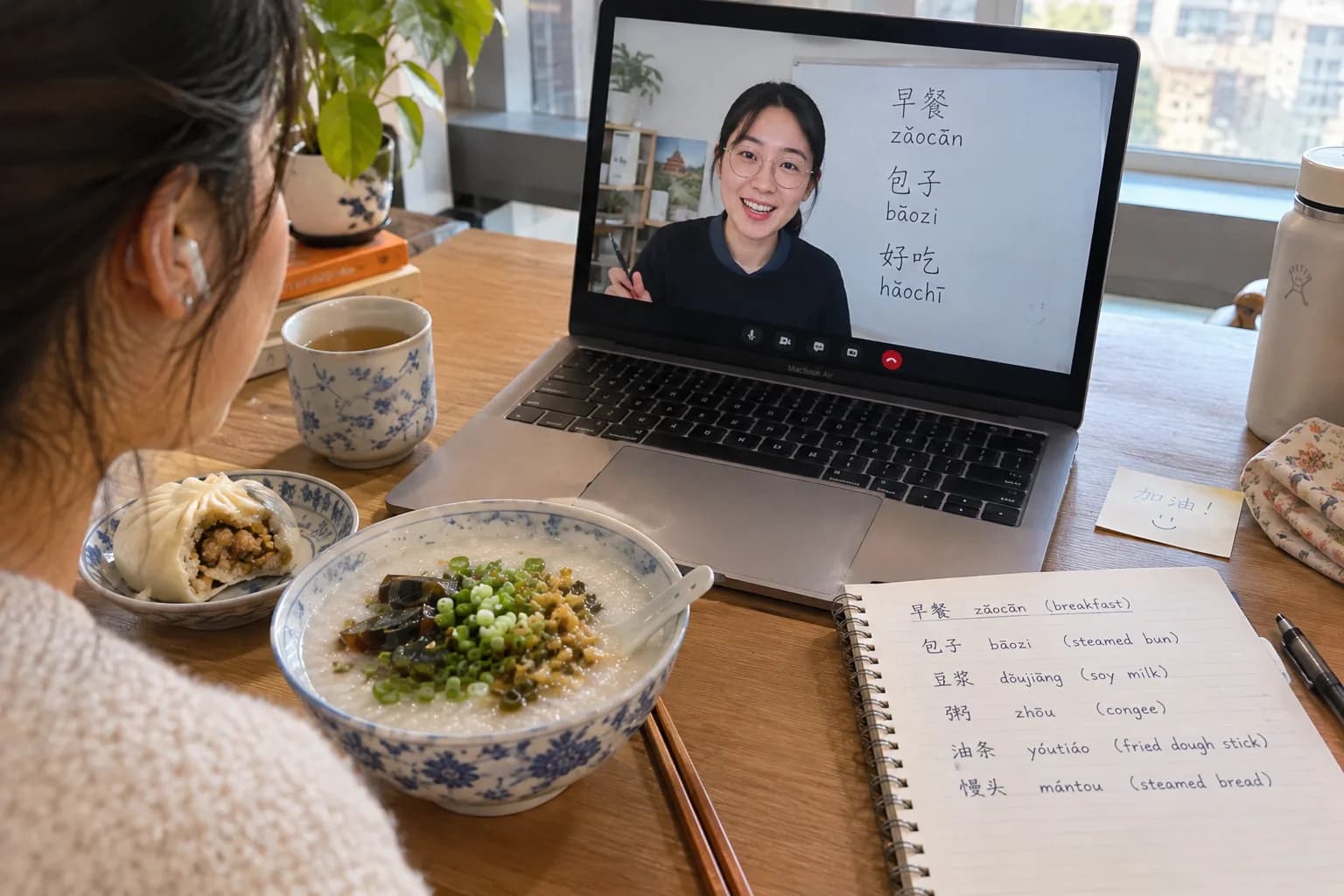
Chinese Breakfast Vocabulary for Mandarin Learners
Food words are some of the easiest to learn because you see them every day on menus and signs. Here is a starter list.
| English | Chinese | Pinyin |
|---|---|---|
| Breakfast | 早餐 | zǎocān |
| Baozi (steamed bun) | 包子 | bāozi |
| Dumpling | 饺子 | jiǎozi |
| Soy milk | 豆浆 | dòujiāng |
| Youtiao | 油条 | yóutiáo |
| Congee | 粥 | zhōu |
| Mantou | 馒头 | mántou |
| Noodles | 面条 | miàntiáo |
| Egg | 鸡蛋 | jīdàn |
| Tea | 茶 | chá |
| Jianbing | 煎饼 | jiānbing |
Also learn 吃 (chī), which means "to eat". You will use it all the time.
Useful Mandarin Phrases for Ordering Chinese Breakfast
A few simple phrases go a long way.
How to Say 'What Would You Like for Breakfast?'
你早餐想吃什么?(Nǐ zǎocān xiǎng chī shénme?) What would you like for breakfast?
How to Order Soy Milk and Youtiao
我要一杯豆浆和一根油条。(Wǒ yào yì bēi dòujiāng hé yì gēn yóutiáo.) I would like one cup of soy milk and one youtiao.
How to Say 'How Much Is This?'
这个多少钱?(Zhège duōshao qián?) How much is this?
How to Say 'I Would Like One...'
我想要一个…… (Wǒ xiǎng yào yí ge...) I would like one...
Add a food word at the end, like 包子 (bāozi).
How to Ask 'Is This Spicy?'
这个辣吗?(Zhège là ma?) Is this spicy?
To avoid spice, say 不要辣 (bú yào là), which means "no spice, please".
How to Order Breakfast in China
- Find a busy stall. Look for steam, stacked bamboo steamers and a line of locals.
- Look or point. Many shops have photos on the wall. If not, point at what you want.
- Say what you want and how many. Try 我要这个 (Wǒ yào zhège), "I want this one", or 两个包子 (liǎng ge bāozi), "two baozi".
- Pay. Many places accept WeChat Pay or Alipay. Some small stalls take cash, so check first.
- Takeaway or eat in. Say 打包 (dǎbāo) to take it away, or 在这里吃 (zài zhèlǐ chī) to eat there.
Is Chinese Breakfast Healthy?
It depends on what you choose. Fried foods like youtiao have more oil, steamed foods like baozi and mantou are cooked differently, and congee and noodles are mostly carbohydrates. Eggs, soy milk and meat fillings add protein. If you have specific dietary needs, check the ingredients and ask a doctor or dietitian.
Frequently Asked Questions About Chinese Breakfast
What is a typical Chinese breakfast?
A warm, savoury meal such as baozi, congee, noodles or youtiao with soy milk, depending on the region.
What do Chinese people eat for breakfast?
Baozi, youtiao, congee, jianbing, noodles, dumplings, mantou and tea eggs, often with soy milk or tea.
What is the most popular Chinese breakfast?
There is no single winner, but baozi, youtiao with soy milk and congee are common across the country.
What is a traditional Chinese breakfast?
Usually something warm and freshly made, like congee with side dishes or steamed buns with soy milk.
Is Chinese breakfast sweet or savoury?
Mostly savoury, with some sweet choices like sweet soy milk and red bean buns.
What is the Chinese breakfast pancake called?
It is called jianbing (煎饼).
What do Chinese people drink with breakfast?
Soy milk and tea are the most common drinks.
What is youtiao?
Youtiao (油条) is a long, crispy fried dough stick, often eaten with soy milk or congee.
What is baozi?
Baozi (包子) is a steamed bun with a filling such as pork, vegetables or red bean paste.
What is the Chinese word for breakfast?
It is 早餐 (zǎocān). You may also hear 早饭 (zǎofàn) in everyday speech.
Learn More Mandarin Through Everyday Chinese Culture
Food is a fun and natural way to learn Mandarin. Every dish comes with new words, new phrases and a bit of culture. Next time you enjoy a bowl of congee or a warm baozi, practice saying its name out loud.
Connect Mandarin offers courses and beginner resources for learners at every level. Start with everyday topics like food, greetings and travel, and build your confidence step by step.
About the Author
Connect Mandarin Team
We are built by a team of native-speaking teachers and language educators who focus on real, usable Chinese - not just textbook phrases. With 15+ years of combined teaching experience.
Continue Reading

Hakka People: History, Language, and Culture Explained
The Hakka people (客家人) are a Han Chinese subgroup known for their own language, fortified earthen homes, and a cuisine built around preserved ingredients. Here's where they came from, how they live today, and what their story teaches Mandarin learners.

Famous Chinese People: 20 Figures Who Shaped History and Culture
Learn about 20 famous Chinese people who shaped China's history and culture, from Confucius to Jack Ma, with Hanzi, pinyin, and how to say each name.
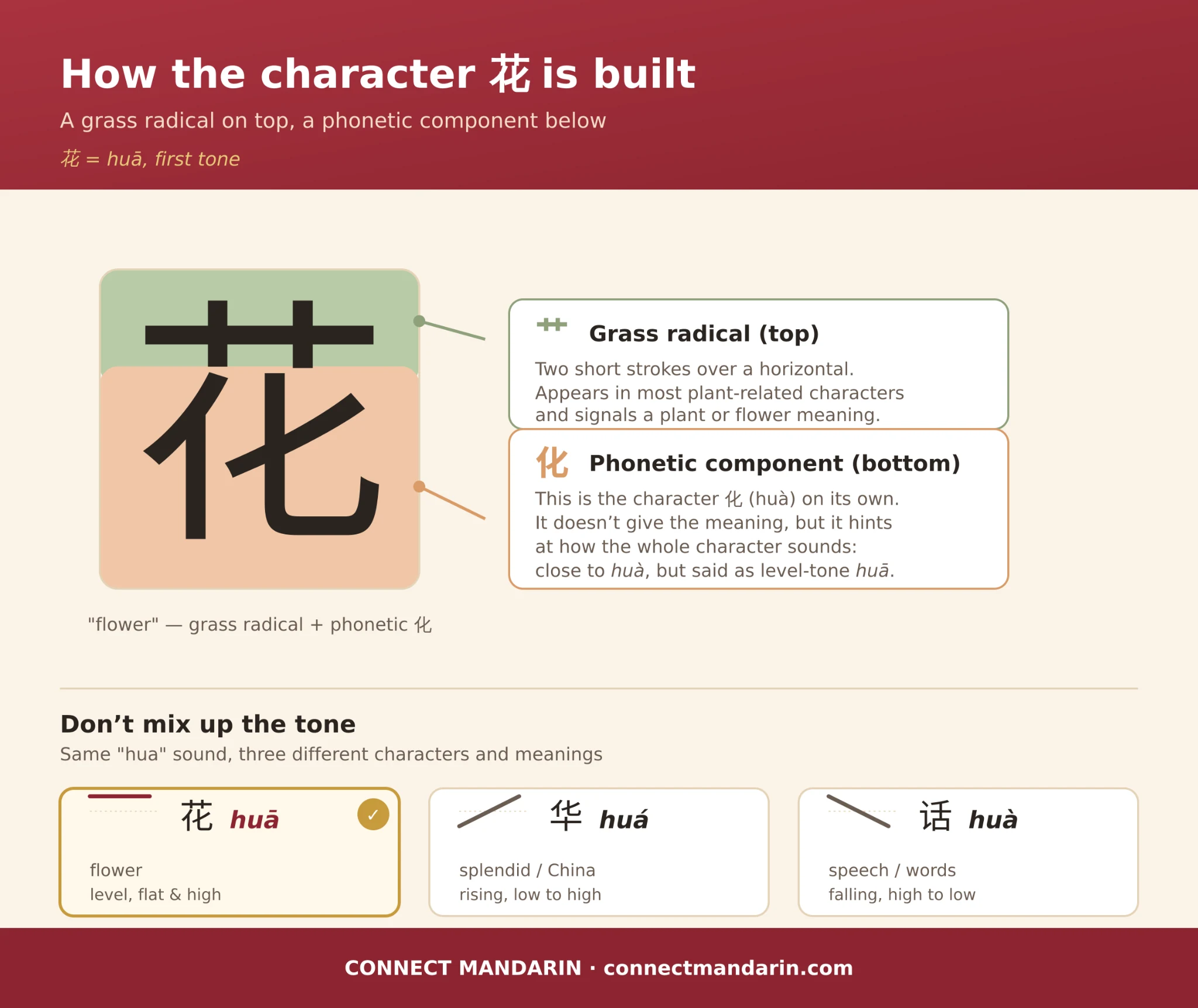
Flowers in Chinese: Names, Meanings, and Culture (花 huā)
Learn Chinese flower names like 玫瑰 (rose) and 牡丹 (peony), their cultural meanings, and how 花 shows up in idioms and Chinese New Year customs.