Famous Chinese People: 20 Figures Who Shaped History and Culture
Learn about 20 famous Chinese people who shaped China's history and culture, from Confucius to Jack Ma, with Hanzi, pinyin, and how to say each name.
China's history stretches back thousands of years, and along the way it has produced emperors, philosophers, scientists, and artists whose influence reaches far beyond its borders. Whether you're studying Mandarin, planning a trip to Beijing, or just curious, this list will introduce you to twenty people who left their mark on Chinese history and culture, with their names in Hanzi and pinyin so you can say them correctly.
How Chinese Names Work (And How to Say Them Correctly)
Before we dive in, it helps to understand how Chinese names are put together, since it's different from how names work in English.
Most Chinese names have two parts: the family name comes first, followed by the given name. So in 毛泽东 (Máo Zédōng), "Mao" is the family name and "Zédōng" is the given name. This is the opposite order from Western names, where the family name usually comes last.
You'll also notice small marks above some of the vowels in the pinyin, like the ā in Máo. These are tone marks, and they matter a lot in Mandarin. The same syllable said with a different tone can mean something completely different. There are four main tones, plus a neutral one, and getting comfortable with them is one of the first steps in learning to speak Chinese naturally.
With that groundwork in place, let's meet the people.
Ancient and Imperial Icons of China
China's imperial history spans more than two thousand years, and a handful of names come up again and again when people talk about the figures who defined it.
Confucius (孔子, Kǒngzǐ) — The First Teacher
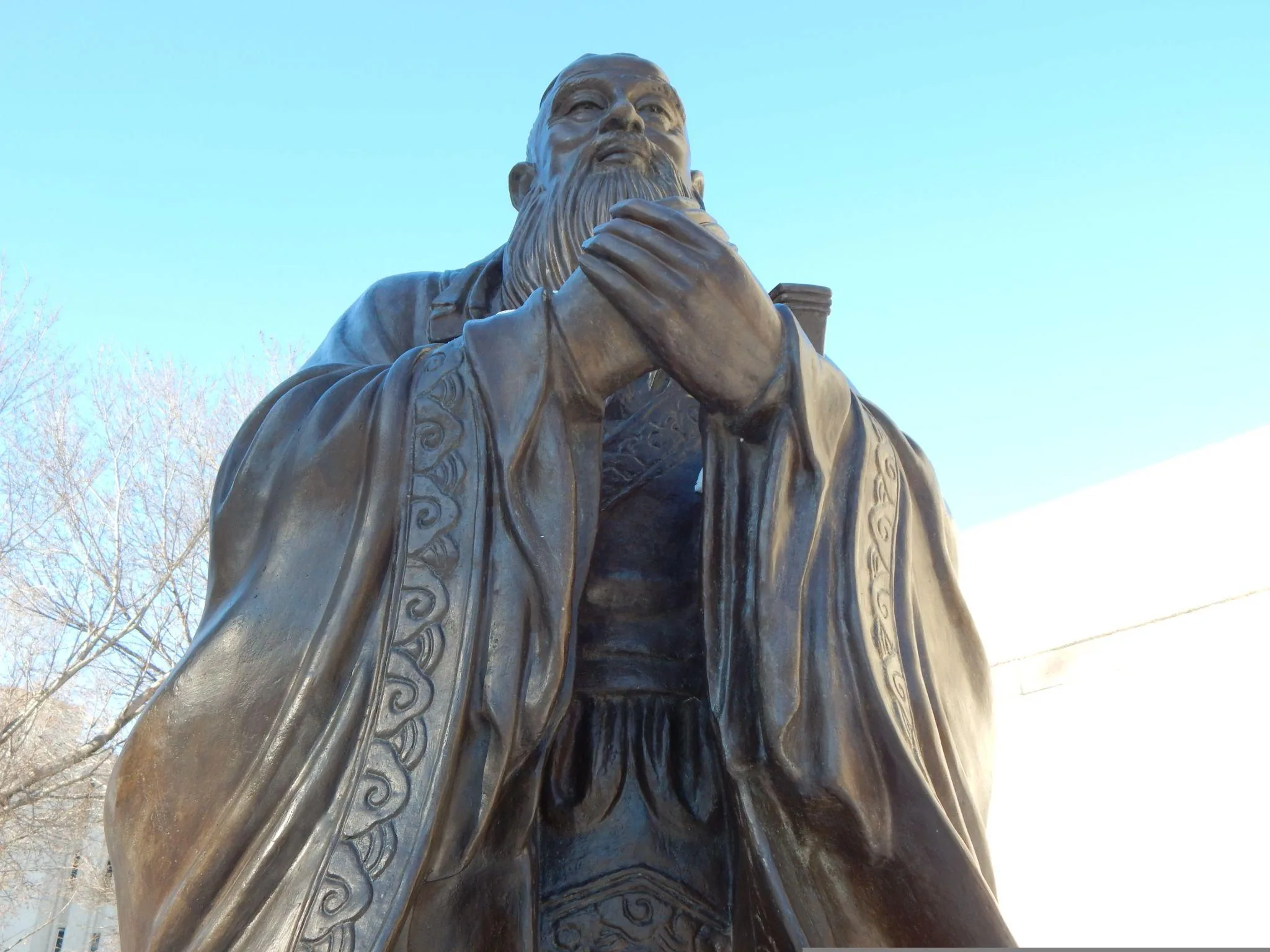
Confucius lived from 551 to 479 BC and is often called China's first teacher. He taught thousands of students during his lifetime, focusing on ideas like respect, honesty, and social harmony rather than religion or ritual for its own sake. After he died, his students gathered his sayings into a book called the Analects, which is still read and quoted today. His ideas, known collectively as Confucianism, shaped Chinese education, family life, and government for centuries, and traces of that influence are still visible across East Asia.
Qin Shi Huang (秦始皇) — The First Emperor
Born Ying Zheng, this ruler took the name Qin Shi Huang once he became emperor in 221 BC after conquering six rival states and unifying China for the first time. He standardized the writing system, currency, and units of measurement across the newly unified country, which made trade and communication far easier. He also began construction on the Great Wall, a project later emperors would continue for generations. Perhaps his most famous legacy is the Terracotta Army, a life-sized clay army of soldiers, horses, and chariots buried near his tomb in Xi'an to guard him in the afterlife.
Wu Zetian (武则天) — China's Only Female Emperor
Wu Zetian is the only woman in Chinese history to rule as emperor in her own right, rather than as a regent or empress consort. She began as a concubine in the imperial court and rose through the ranks until she took the throne of the Tang Dynasty in 690 AD. Her rule was marked by strong, effective administration, and she expanded the empire's borders during her reign. Historians still debate her legacy, but there's no question she was one of the most capable rulers of her era.
Empress Dowager Cixi (慈禧) — The Power Behind the Throne
Cixi entered the imperial court as a concubine and eventually became the most powerful figure in China during the final decades of the Qing Dynasty. As Empress Dowager, she was the de facto ruler for much of the second half of the 19th century, guiding China through a turbulent period of modernization and conflict with foreign powers. She pushed for reforms to the military and infrastructure, though her rule remains a complicated and often controversial chapter in China's history.
Modern Political Figures
The 20th century reshaped China entirely, and these two leaders were at the center of that transformation.
Mao Zedong (毛泽东)
Mao Zedong led the Communist Party to victory in 1949 and became the founding leader of the People's Republic of China. He remained the country's most powerful figure until his death in 1976, steering major campaigns that reshaped Chinese society, agriculture, and industry. His portrait still hangs over Tiananmen Gate in Beijing, and his influence on modern China is impossible to overstate.
Deng Xiaoping (邓小平)
Deng Xiaoping rose to power after Mao's death and became the architect of China's economic reforms starting in the late 1970s. Rather than pursuing strict state control of the economy, he opened China up to market-based reforms and foreign investment, a shift often credited with setting the stage for China's rapid economic growth in the decades that followed. He never held the country's top formal title, but he was widely seen as its most influential leader through the 1980s and early 1990s.
Science and Innovation Pioneers
Not every famous figure in China wore a crown or led a political movement. Some changed the world through research in the lab and the field.
Yuan Longping (袁隆平) — Father of Hybrid Rice
Yuan Longping spent his career trying to solve one of humanity's oldest problems: hunger. He developed hybrid rice varieties that produced significantly higher yields than traditional strains, and his work is credited with helping prevent famine and feed hundreds of millions of people worldwide. When he passed away in 2021, the news dominated Chinese television and social media, a testament to how deeply his work touched everyday lives.
Tu Youyou (屠呦呦) — Nobel Prize-Winning Scientist
Tu Youyou is a pharmaceutical chemist who discovered artemisinin, a compound that became a breakthrough treatment for malaria and has saved millions of lives, particularly in developing countries. In 2015, she became the first Chinese scientist to win a Nobel Prize, taking home the Nobel Prize in Physiology or Medicine. She was also named one of Time magazine's 100 Most Influential People, recognition for research that continues to save lives today.
Business and Technology Leaders
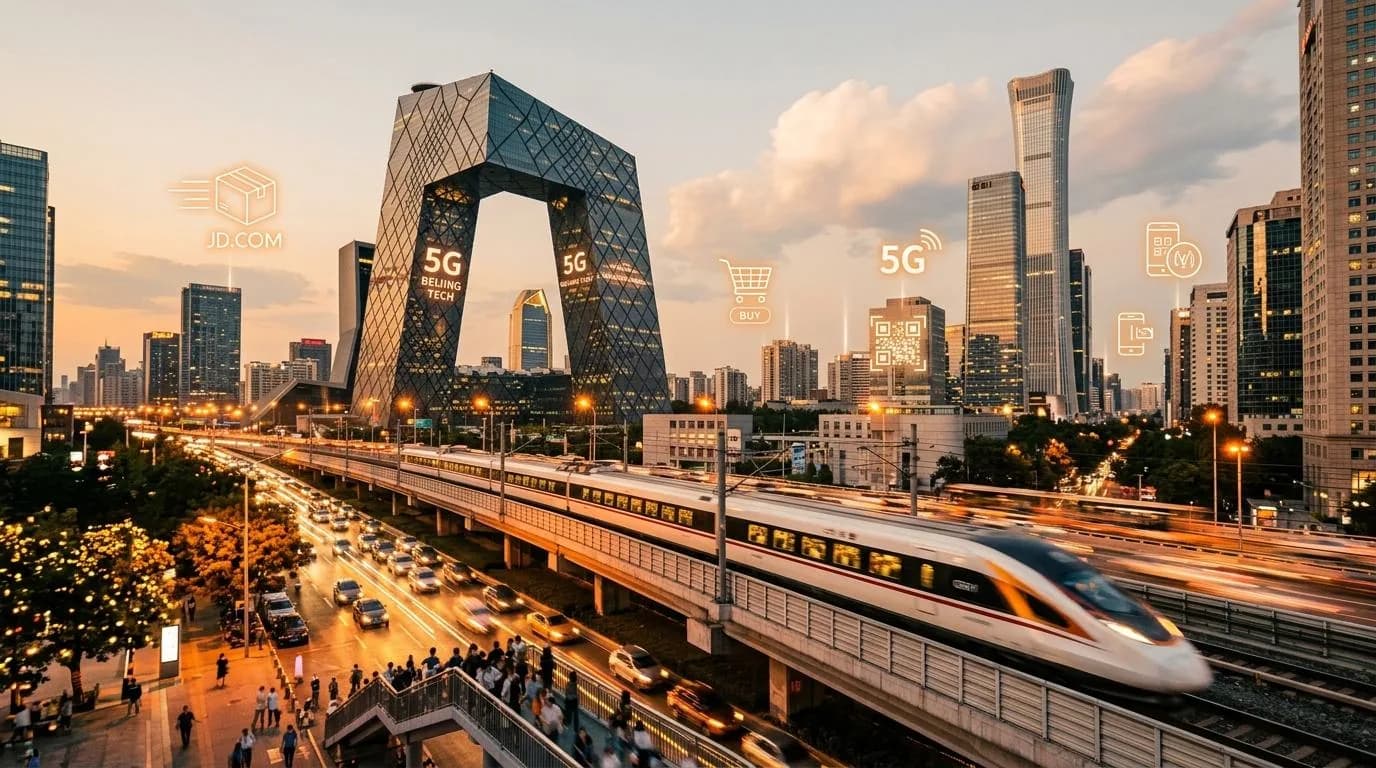
China's rise as an economic power has its own cast of famous names, and one stands above the rest.
Jack Ma (马云) — Founder of Alibaba
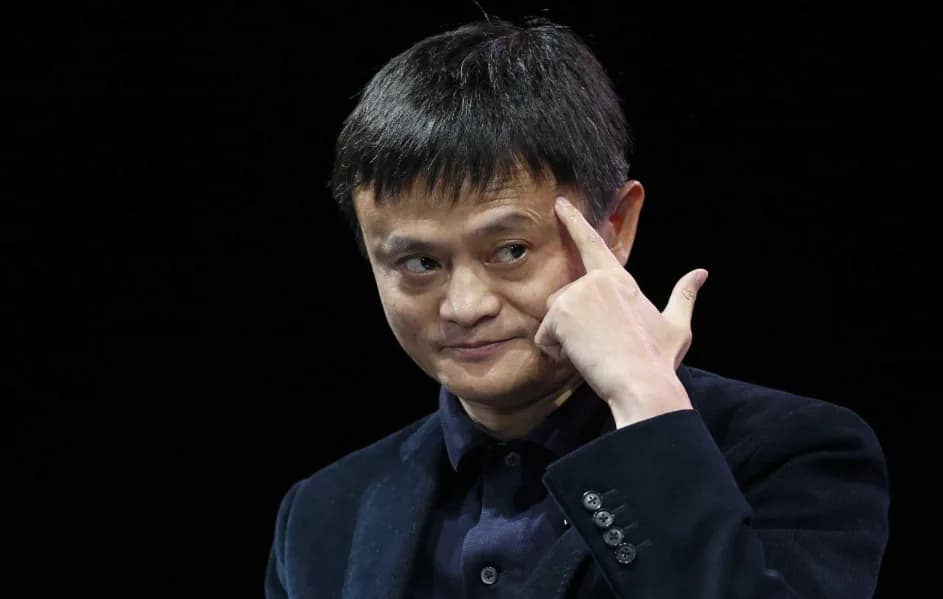
Jack Ma founded Alibaba Group, the company behind Taobao and Alipay, platforms that hundreds of millions of people in China use every single day. His path there wasn't conventional. He trained as an English teacher and translator before he became fascinated with the internet's potential, and he built Alibaba into one of the largest e-commerce and technology companies in the world. His story has become something of a modern legend in China, often cited as proof that persistence and an eye for opportunity can go a long way.
Arts, Literature and Entertainment
China's creative industries have produced some genuinely global names over the past few decades.
Liu Cixin (刘慈欣) — Science Fiction Author
Liu Cixin wrote "The Three-Body Problem," a science fiction novel that became the first Chinese work in the genre to find major international acclaim. He won the Hugo Award for it, becoming the first Asian writer to receive the honor. His books blend hard science with big questions about humanity, and the trilogy has since been adapted for the screen, introducing his work to an even wider audience.
Zhang Yimou (张艺谋) — Filmmaker
Zhang Yimou is one of China's most celebrated film directors, known for visually striking films like "Raise the Red Lantern" and "Hero." His work has earned international recognition at major film festivals and helped bring Chinese cinema to a global audience. Beyond film, he also served as the chief director for the opening and closing ceremonies of the 2008 Beijing Olympics, a production watched by billions of people around the world.
Crystal Liu (刘亦菲) — Actress
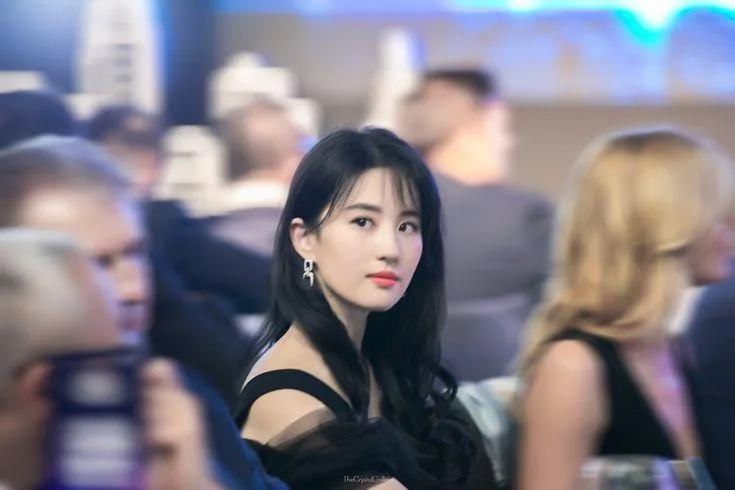
Crystal Liu, whose Chinese name is Liu Yifei, is an actress born in 1987 who first became well known in China through television dramas. She reached a much wider international audience when she played the title role in Disney's live-action adaptation of "Mulan." She has since been recognized as one of Hollywood's rising stars, bridging Chinese and Western entertainment industries.
Sports Icons
Yao Ming (姚明) — Basketball Legend
Yao Ming stands 7 feet 6 inches tall and became one of the most recognizable athletes in the world during his NBA career with the Houston Rockets. An eight-time NBA All-Star, he did more than put up impressive stats. He became a bridge between Chinese and American basketball culture, drawing huge new audiences to the NBA in China and later serving as an ambassador for the sport well after his playing days ended.
Trailblazing Chinese Women
Chinese history includes plenty of women who pushed against real barriers to leave their mark, beyond the empresses mentioned earlier.
Song Qingling (宋庆龄)
Song Qingling was the wife of Sun Yat-sen, considered the father of modern China, and she became a significant political figure in her own right. She remained deeply involved in Chinese politics for decades after his death and later served as an honorary head of state of the People's Republic of China, one of the few women to hold such a prominent political position in modern Chinese history.
Qiu Jin (秋瑾)
Qiu Jin was a poet and revolutionary who became an early and outspoken champion of women's rights in China during the final years of the Qing Dynasty. She argued for women's education and independence at a time when those ideas were radical, and she was ultimately executed for her role in planning an uprising against the government. She's remembered today as one of the earliest feminist icons in Chinese history.
Quick-Reference Table: Famous Chinese People at a Glance
| Name | Chinese & Pinyin | Years | Field | Known For |
|---|---|---|---|---|
| Confucius | 孔子 (Kǒngzǐ) | 551–479 BC | Philosophy | Founded Confucianism; authored the Analects |
| Qin Shi Huang | 秦始皇 (Qín Shǐhuáng) | 259–210 BC | Imperial History | First emperor; unified China; began the Great Wall |
| Wu Zetian | 武则天 (Wǔ Zétiān) | 624–705 AD | Imperial History | China's only female emperor |
| Cixi | 慈禧 (Cíxǐ) | 1835–1908 | Imperial History | De facto ruler during the late Qing Dynasty |
| Mao Zedong | 毛泽东 (Máo Zédōng) | 1893–1976 | Politics | Founding leader of the People's Republic of China |
| Deng Xiaoping | 邓小平 (Dèng Xiǎopíng) | 1904–1997 | Politics | Architect of China's economic reforms |
| Yuan Longping | 袁隆平 (Yuán Lóngpíng) | 1930–2021 | Science | Developed hybrid rice; eased global famine |
| Tu Youyou | 屠呦呦 (Tú Yōuyōu) | b. 1930 | Science | Nobel laureate; discovered artemisinin |
| Jack Ma | 马云 (Mǎ Yún) | b. 1964 | Business | Founded Alibaba Group |
| Liu Cixin | 刘慈欣 (Liú Cíxīn) | b. 1963 | Literature | Hugo Award-winning author of The Three-Body Problem |
| Zhang Yimou | 张艺谋 (Zhāng Yìmóu) | b. 1951 | Film | Acclaimed director; Beijing Olympics ceremonies |
| Crystal Liu | 刘亦菲 (Liú Yìfēi) | b. 1987 | Film | Actress; played Mulan in Disney's live-action film |
| Yao Ming | 姚明 (Yáo Míng) | b. 1980 | Sports | NBA All-Star; global ambassador for Chinese basketball |
| Song Qingling | 宋庆龄 (Sòng Qìnglíng) | 1893–1981 | Politics | Honorary head of state; wife of Sun Yat-sen |
| Qiu Jin | 秋瑾 (Qiū Jǐn) | 1875–1907 | Literature /Politics | Revolutionary poet; early women's rights advocate |
How Connect Mandarin Brings Chinese History to Life
We're based in Beijing, a city that has served as the imperial capital for multiple dynasties and is home to the Forbidden City, where emperors like the successors of Qin Shi Huang and rulers like Empress Dowager Cixi once lived and governed. That history isn't just something we teach from a textbook. It's part of daily life here, from the street names to the museums to the way older generations talk about the past. When you study Mandarin with us, you're not just memorizing vocabulary. You're picking up the cultural context that makes the language, and the people behind it, make sense.
Frequently Asked Questions
Who are some famous Chinese people to know?
Notable figures include Confucius, the philosopher behind Confucianism; Qin Shi Huang, China's first emperor; Wu Zetian, its only female emperor; and modern figures like Jack Ma, Yuan Longping, and Yao Ming, who shaped business, science, and sport.
Who is considered the most influential person in Chinese history?
Confucius (孔子, Kǒngzǐ) is widely regarded as the most influential figure in Chinese history. His teachings on ethics, respect, and social harmony, recorded in the Analects, continue to shape Chinese culture and values today.
Who was the first emperor of China?
Qin Shi Huang (秦始皇) became China's first emperor in 221 BC after uniting six warring states. He standardized writing, currency, and measurements, and began construction of the Great Wall and the Terracotta Army.
Who was Wu Zetian and why is she significant?
Wu Zetian (武则天) was China's only female emperor, ruling the Tang Dynasty from 690 AD. She rose from concubine to sovereign and was known as an effective administrator who expanded the empire's borders.
Who are famous Chinese women in history?
Notable Chinese women include Wu Zetian, China's only female emperor; Empress Dowager Cixi, who ruled during the late Qing Dynasty; and Qiu Jin, a revolutionary poet who championed women's rights in the early 20th century.
What have modern Chinese figures contributed to science and business?
Yuan Longping developed hybrid rice that helped prevent famine worldwide, Tu Youyou won a Nobel Prize for discovering a malaria treatment, and Jack Ma built Alibaba into one of the world's largest e-commerce companies.
How is Beijing connected to famous figures in Chinese history?
Beijing has served as the imperial capital for multiple dynasties, home to the Forbidden City and the site of key events tied to emperors like Qin Shi Huang's successors and Empress Dowager Cixi's Qing court.
Reading about these figures is one thing. Understanding the language and culture behind their stories is another. If you'd like to go beyond names and dates and start speaking the language that carries this history forward, check out our intensive classes and start learning Mandarin with us.
About the Author
Connect Mandarin Team
We are built by a team of native-speaking teachers and language educators who focus on real, usable Chinese - not just textbook phrases. With 15+ years of combined teaching experience.
Continue Reading
Flowers in Chinese: Names, Meanings, and Culture (花 huā)
Learn Chinese flower names like 玫瑰 (rose) and 牡丹 (peony), their cultural meanings, and how 花 shows up in idioms and Chinese New Year customs.
Chinese Girl Names: 50+ Meaningful Names with Pinyin & Pronunciation
Discover 50+ Chinese girl names with pinyin, tones & meanings from Beijing-based Mandarin teachers. Find the perfect name for your daughter.
Chinese Names for Boys: 50+ Meaningful Names with Pinyin & Pronunciation
50+ Chinese boy names with pinyin, tones, meanings & zodiac naming tips from Beijing-based Mandarin teachers.