Traditional Chinese Clothing: Hanfu, Qipao & More
Discover Hanfu, Qipao, and other traditional Chinese garments, their history, styles, and modern revival. A cultural guide for travellers and learners.
Why Traditional Clothing Matters in Chinese Culture
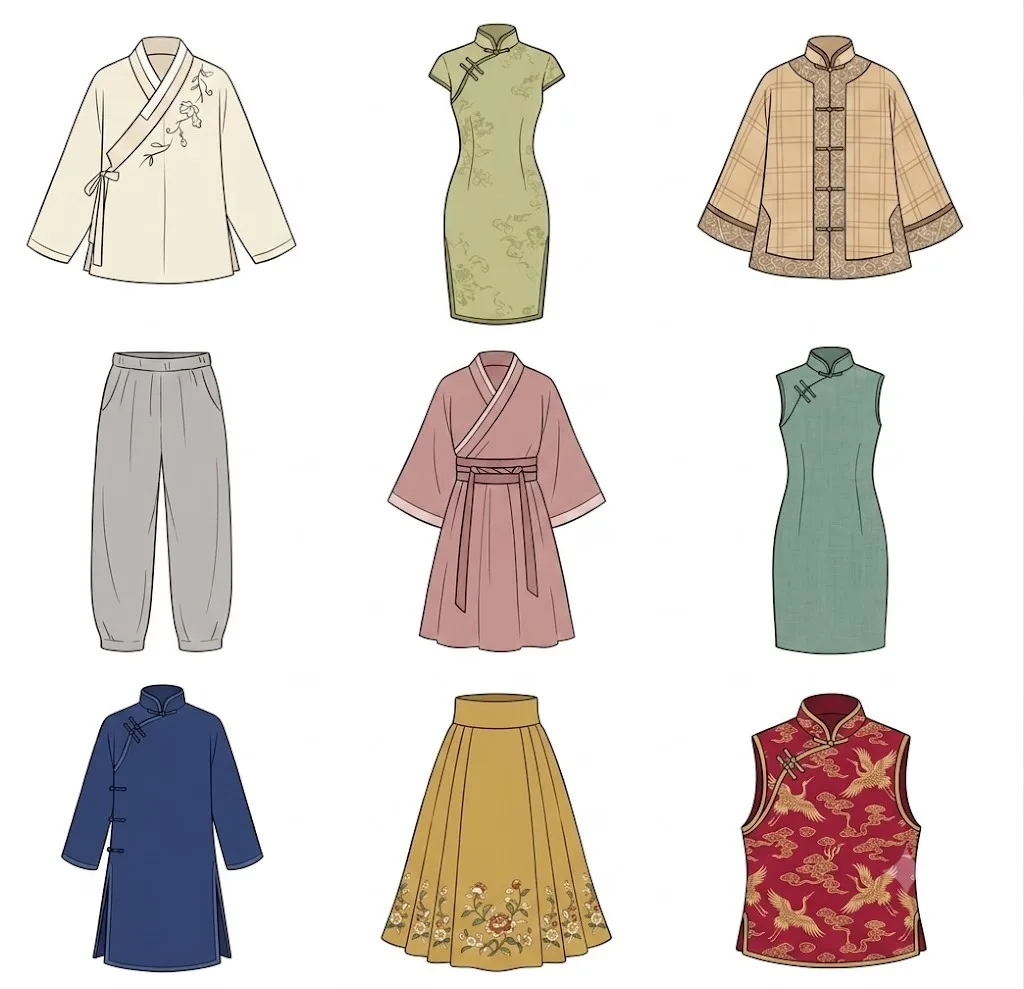
Ask someone to picture China, and traditional clothing is usually one of the first things that comes to mind — a Hanfu robe drifting in the wind, a silk Qipao hugging the waist, a costume drama scene burned into memory from some late-night binge. But these outfits aren't just pretty things to look at. Each one carries pieces of China's history, its values, and its sense of identity.
If you're learning Mandarin, or you've got a trip to China coming up, knowing a bit about these garments changes how you see the culture — you start noticing them everywhere: at festivals, at weddings, tucked into museum displays, and worn by locals posing for photos in old, historic neighborhoods.
Nothing about these clothes is random. Color choices, sleeve shapes, the patterns stitched into the fabric — all of it means something. A dragon or a phoenix, a crane, a peony — these aren't just decoration. They're stand-ins for power, luck, a long life, or good fortune.
Day-to-day fashion in China today looks like fashion anywhere else. But traditional dress hasn't gone anywhere — it still shows up front and center at festivals, weddings, and the kind of milestone celebrations where families want a bit of history woven into the moment.
Hanfu (汉服): The Clothing of the Han People
If you've watched even one Chinese historical drama, you've already seen Hanfu.
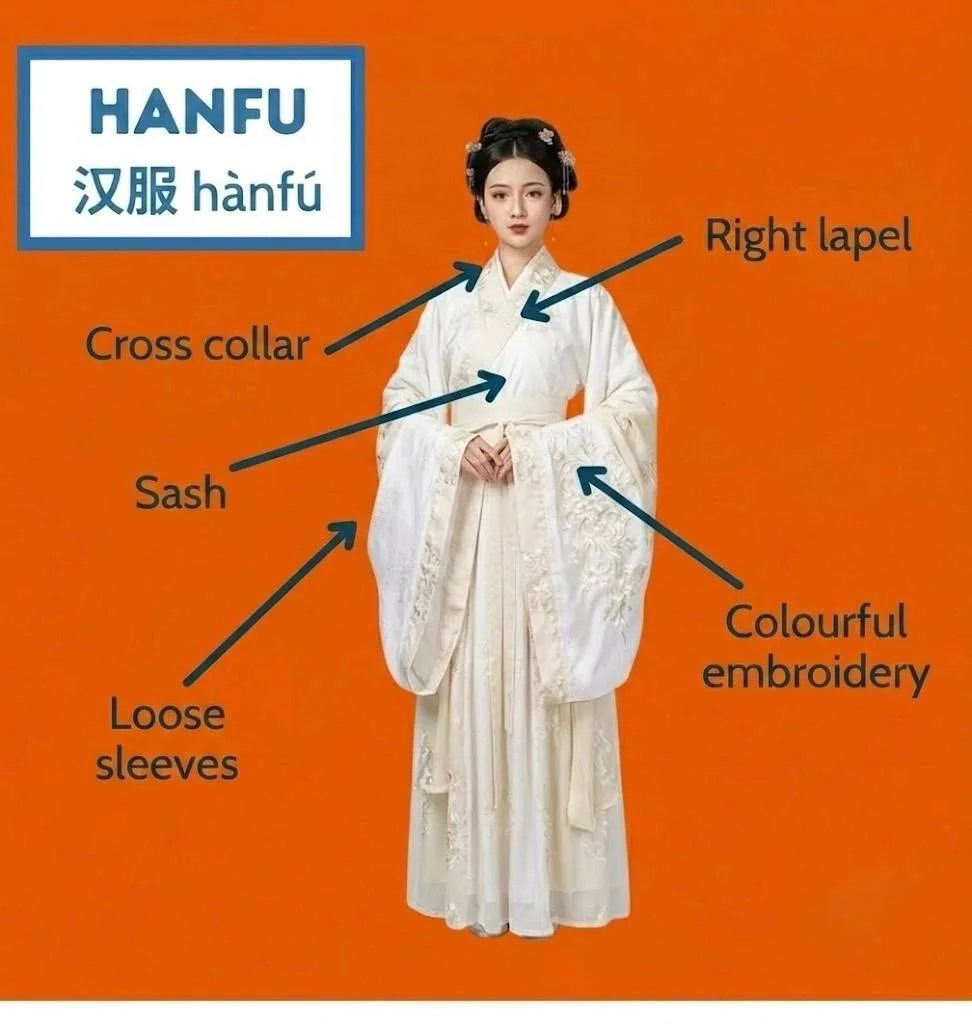
The name literally means "Han clothing" — Hanfu (汉服, Hànfú) is the traditional dress of the Han Chinese, the country's largest ethnic group. It goes back more than 2,000 years, and while the look changed quite a bit from dynasty to dynasty, that flowing silhouette never really disappeared.
A few things tend to define it:
- Wide, sweeping sleeves
- Crossed collars
- Long, draping robes
- Fabric belts instead of buttons
- Layers of fabric rather than a single piece
What's interesting is that "Hanfu" isn't one fixed look — it shifted a lot depending on the era:
- Han Dynasty (206 BC–220 AD): Simple and understated, with clean, flowing lines. A lot of people point to this period as the real starting point of Hanfu.
- Tang Dynasty (618–907 AD): Bold colors, wider sleeves, more open and expressive cuts. Women's fashion especially became a lot more daring during this era.
- Song Dynasty (960–1279 AD): A move toward something quieter — softer colors, more subtle layering, and less flash.
- Ming Dynasty (1368–1644 AD): More structured pieces, with intricate embroidery and a closer, more tailored fit.
Hanfu is having a real moment right now, especially among younger people in China. It's not unusual to see someone in full Hanfu just walking around — at a cultural festival, during a photoshoot, at a tea ceremony, wandering a museum, or just out with friends on an ordinary afternoon.
Qipao (旗袍): Timeless Elegance
Of all the traditional Chinese dresses, the Qipao is probably the one most people around the world would recognize on sight. In Cantonese, it's often called the Cheongsam.
Unlike Hanfu, which goes back thousands of years, the Qipao is actually pretty young as far as Chinese fashion history goes. If you've ever seen old photographs of 1920s Shanghai, you've seen the Qipao — that's really when it took off.
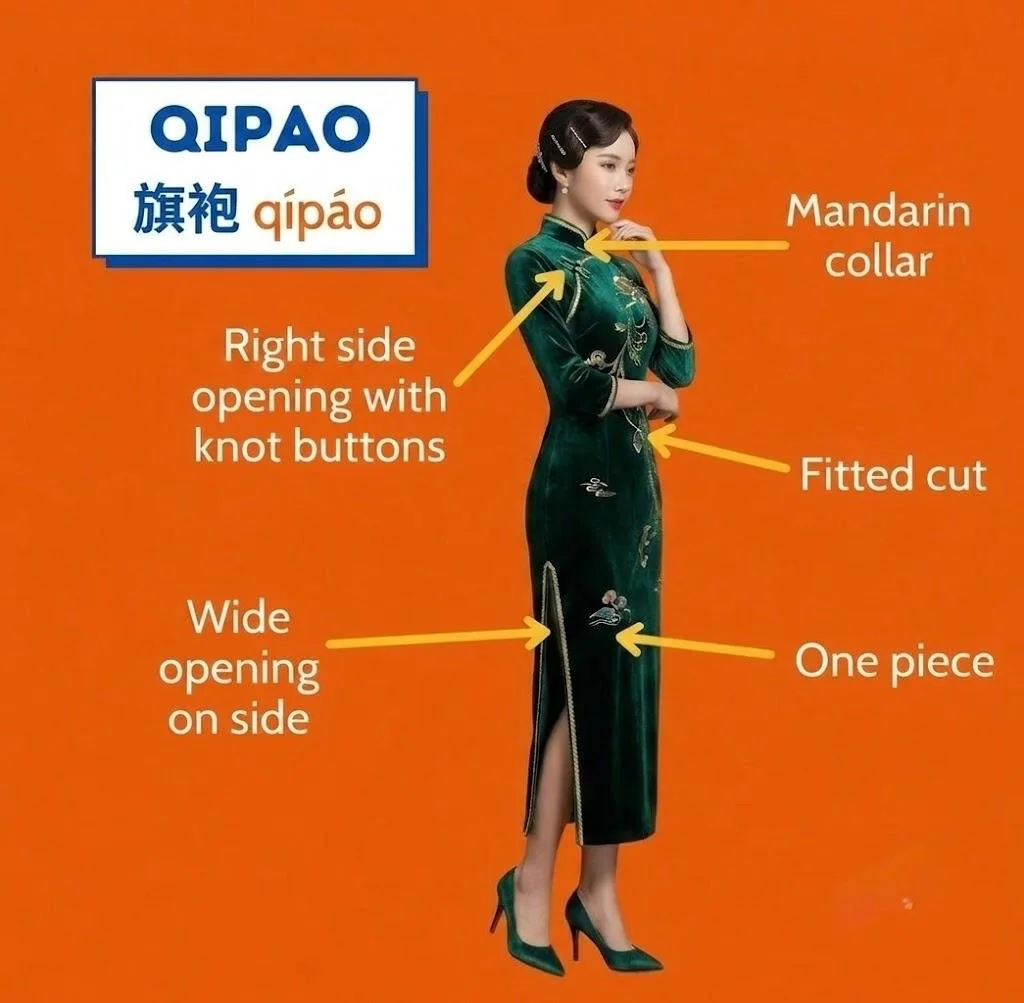
A few things make it instantly recognizable:
- A high, stiff collar
- A fitted, body-hugging cut
- Slits up the side
- Frog buttons — those small, knotted fabric fastenings
- Fabric that's usually rich, heavy silk
Part of what makes the Qipao so enduring is that it sits right at the intersection of old Chinese tradition and Western tailoring, which is probably why it's still a go-to for weddings, formal dinners, and cultural performances. A lot of Chinese brides still change into a red Qipao at some point during their wedding, since red stands for happiness and good fortune.
Tang Suit (唐装)
Here's a small surprise — the Tang Suit (唐装, Tángzhuāng) doesn't actually come from the Tang Dynasty, despite the name.
It's a much later creation, blending elements from Qing Dynasty style with more modern touches.
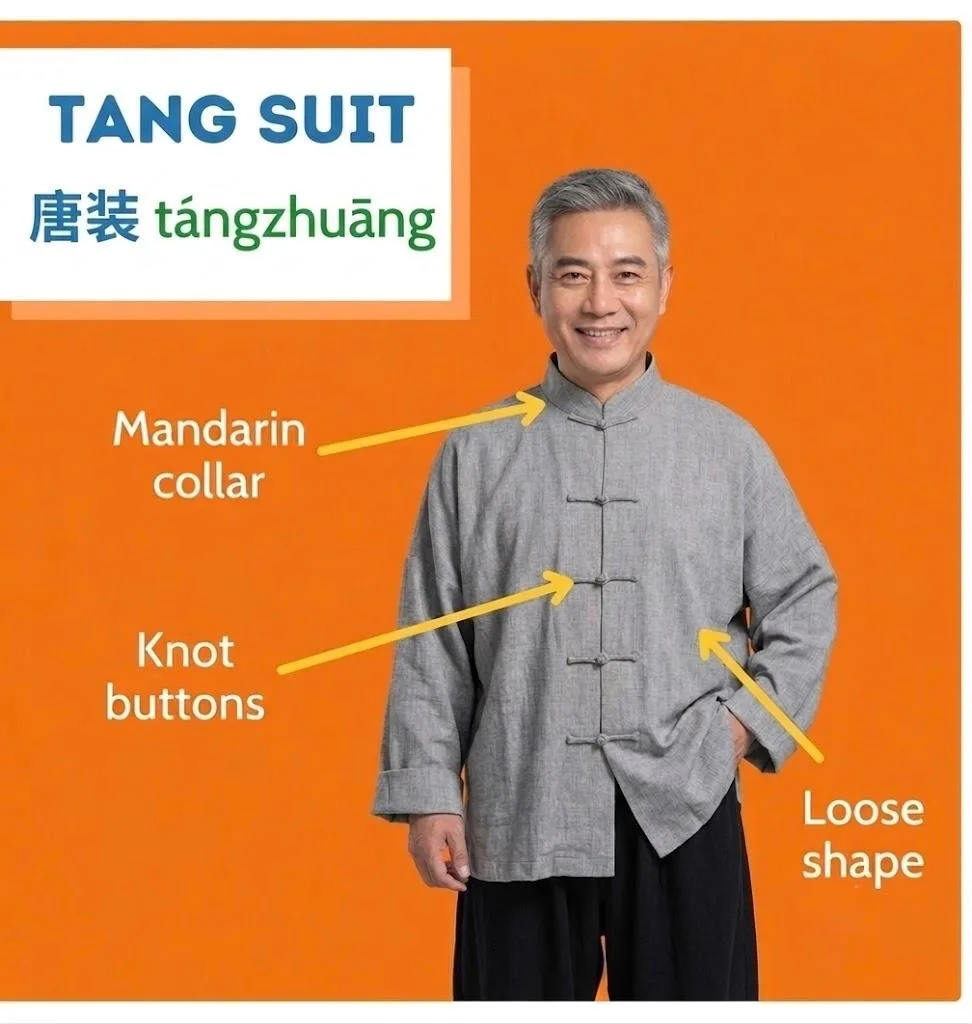
You can spot one pretty easily by its:
- Mandarin collar
- Matching frog button closures
- Loose-fitting, comfortable jacket cut
- Silk or brocade material
- Embroidered dragons, flowers, or lucky characters
These days, the Tang Suit is a favorite for festive occasions — you'll see people of all ages wearing one during Chinese New Year, family gatherings, and other big cultural events.
Zhongshan Suit (中山装): A Symbol of Modern China
The Zhongshan Suit — often called the "Mao Suit" outside China — belongs to a very different era of Chinese history altogether.
It's named after Sun Yat-sen, the revolutionary leader known in Mandarin as Sun Zhongshan.
The design is simple, deliberate, and practical:
- Four pockets on the front
- A standing collar
- Five buttons down the front
- A clean, symmetrical look
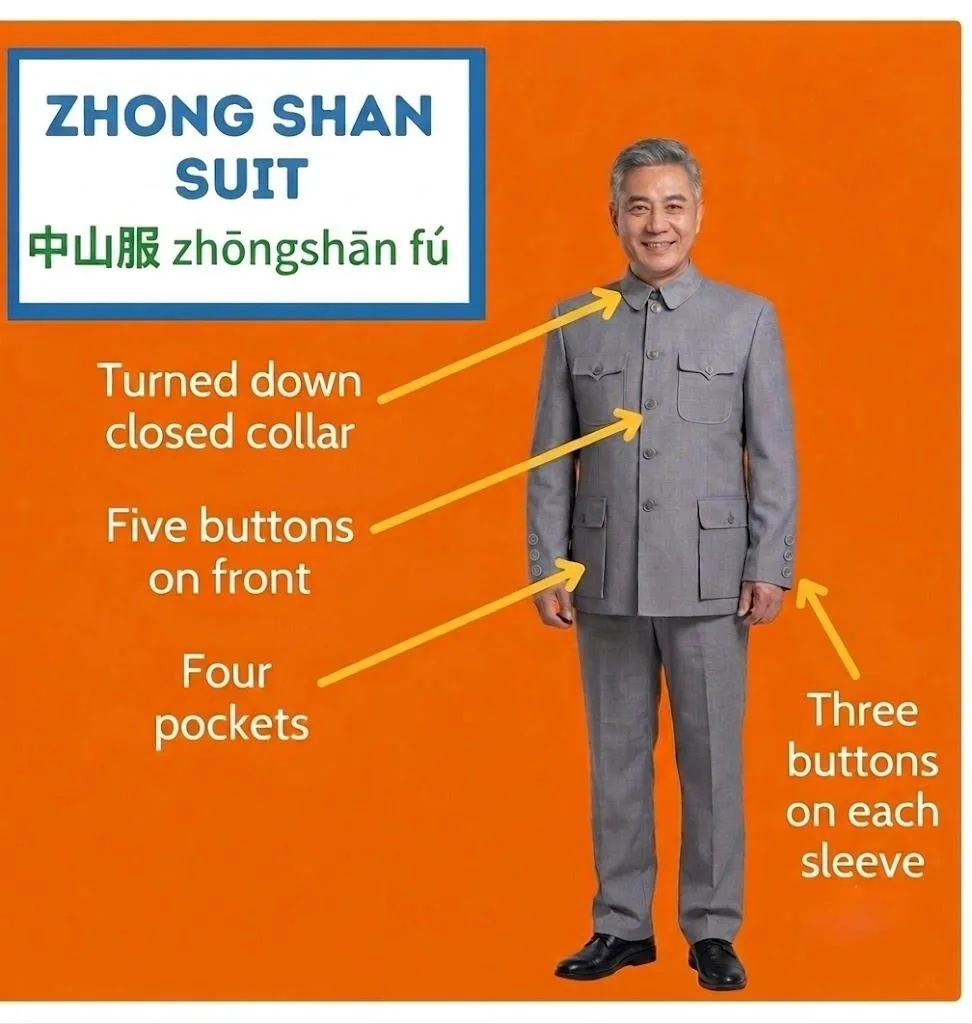
You won't see many people wearing it day-to-day now, but it still carries a lot of symbolic weight and shows up at state ceremonies and formal diplomatic events.
What Do the Colors Mean?
In traditional Chinese clothing, color choices were never random. Colors carried powerful cultural symbolism that told observers exactly what kind of event or emotion was being marked.
| Color | Cultural Meaning |
|---|---|
| Red ❤️ | Happiness, luck, celebration, and vitality |
| Yellow 💛 | Royalty, ultimate power, and prosperity (historically for emperors) |
| Blue 💙 | Peace, healing, and harmony |
| White ⚪ | Mourning and remembrance (traditionally worn at funerals) |
| Green 💚 | Growth, renewal, and vitality |
| Black 🖤 | Stability, honor, and dignity |
This color code is exactly why bright red dominates weddings, Chinese New Year, and other joyful milestone celebrations.
Decoding the Embroidery: The Hidden Symbols
In traditional Chinese attire, the patterns stitched into the silk were never purely decorative. They functioned as a visual blessing or a statement of character. If you're looking closely at a garment, here is what the motifs mean:
- The Dragon (龙, lóng) & Phoenix (凤, fèng): Historically, the dragon was reserved for the Emperor and symbolized supreme power. Today, when paired with the phoenix (representing the Empress), they symbolize the perfect yin-and-yang balance — making them the most popular embroidery choice for wedding wear.
- The Crane (仙鹤, xiānhè): A sacred bird in Chinese mythology, often depicted flying amidst clouds. It represents longevity, deep wisdom, and a noble spirit.
- The Peony (牡丹, mǔdān): Known as the "King of Flowers" in China, this lush, intricate blossom signifies wealth, high social status, and prosperity.
- The Lotus (莲花, liánhuā): Because the lotus rises out of muddy waters to bloom immaculately clean, it is a universal symbol of moral purity, resilience, and spiritual elegance.
Modern Etiquette: Wearing Traditional Clothes Respectfully
With the massive resurgence of the Hanfu Movement (汉服运动), traditional clothing is more accessible than ever. If you visit China or attend a cultural event, here are a few unspoken rules to keep in mind:
⚠️ The Golden Rule of Hanfu: Always cross the left collar over the right collar (forming a "y" shape at your chest). In Chinese culture, crossing the right side over the left is traditionally reserved for funerary garments, so reversing it by accident is considered a major taboo!
- Match the Occasion: A formal, heavily embroidered Ming Dynasty Hanfu or a sleek silk Qipao is perfect for weddings and evening galas. For casual everyday wear or walking through historic districts, go for "Modified Hanfu" (Improved Hanfu) or a linen Tang Suit jacket.
- Mind the Slits: Authentic Qipaos feature side slits that can run quite high. When wearing one to a formal event, it is customary to wear skin-toned tights or a matching slip underneath to keep the look elegant when sitting down.
Traditional Accessories Complete the Look
An outfit was never considered complete without carefully chosen accessories. These extra touches added a layer of elegance and often carried their own symbolic meanings of wealth or good fortune:
- Jade pendants hung from the waistband to symbolize purity and virtue
- Intricate hairpins (发簪, fàzān) to secure complex hairstyles
- Delicate silk fans used for both cooling and graceful performance
- Embroidered shoes featuring patterns that matched the robes
- Decorative waist ornaments and tassels
- Phoenix crowns worn by brides on their wedding day
FAQ
What's the difference between Hanfu and a Qipao?
Hanfu is ancient and flowing, with wide sleeves and crossed collars. Qipao is much newer (1920s Shanghai) and fitted, with a high collar.
Can foreigners wear Hanfu or Qipao?
Yes, it's welcomed — rental shops for visitors are common near historic sites in cities like Xi'an and Beijing.
Why do Chinese brides wear red instead of white?
White traditionally signifies mourning in Chinese culture; red signifies luck and celebration, so many brides change into red attire for part of the wedding.
Is the Tang Suit actually from the Tang Dynasty?
No, it's a much later style, more influenced by the Qing Dynasty.
What's the easiest way to tell these styles apart?
Wide sleeves + crossed collar = Hanfu. High collar + fitted cut = Qipao. A loose jacket + frog buttons = Tang Suit. Four pockets + five buttons = Zhongshan Suit.
Where can I see traditional Chinese clothing in person?
Historic districts (Xi'an's city wall, Beijing's hutongs) and cultural festivals are your best bet.
Does learning about traditional clothing help with learning Mandarin?
Yes, pairing a word like 汉服 (Hànfú) with an image and a story makes it stick better than a flashcard alone. It's the approach Connect Mandarin uses.
Where should I start if I want Mandarin + Chinese culture together?
Start with vocabulary tied to what you're curious about — Connect Mandarin builds lessons around cultural context like this.
About the Author
Connect Mandarin Team
We are built by a team of native-speaking teachers and language educators who focus on real, usable Chinese - not just textbook phrases. With 15+ years of combined teaching experience.
Continue Reading
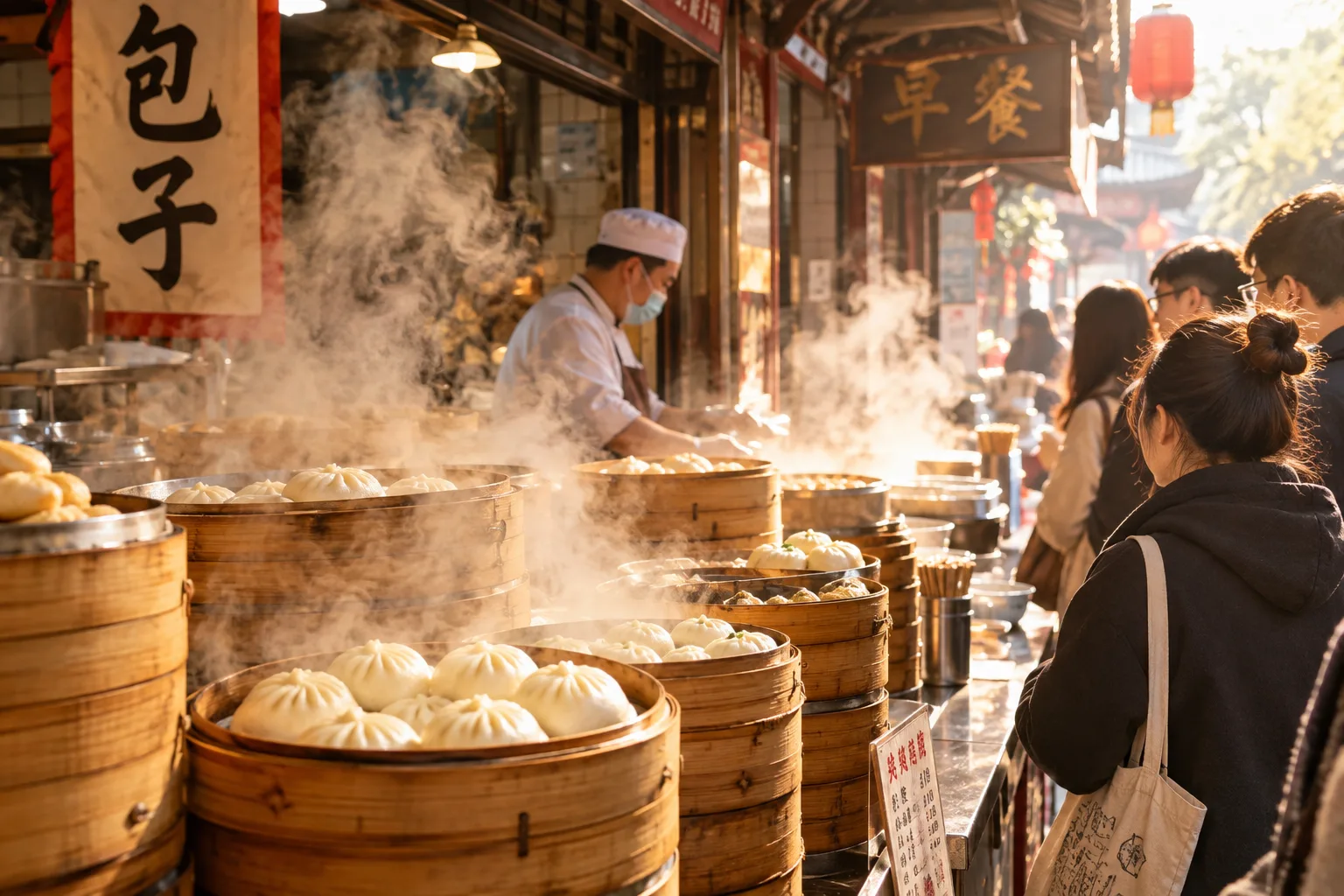
Chinese Breakfast: Popular Foods, Dishes & What People Eat in China
Explore Chinese breakfast foods like baozi, youtiao, congee and jianbing. See regional dishes, key Mandarin phrases, and how to order breakfast in China.
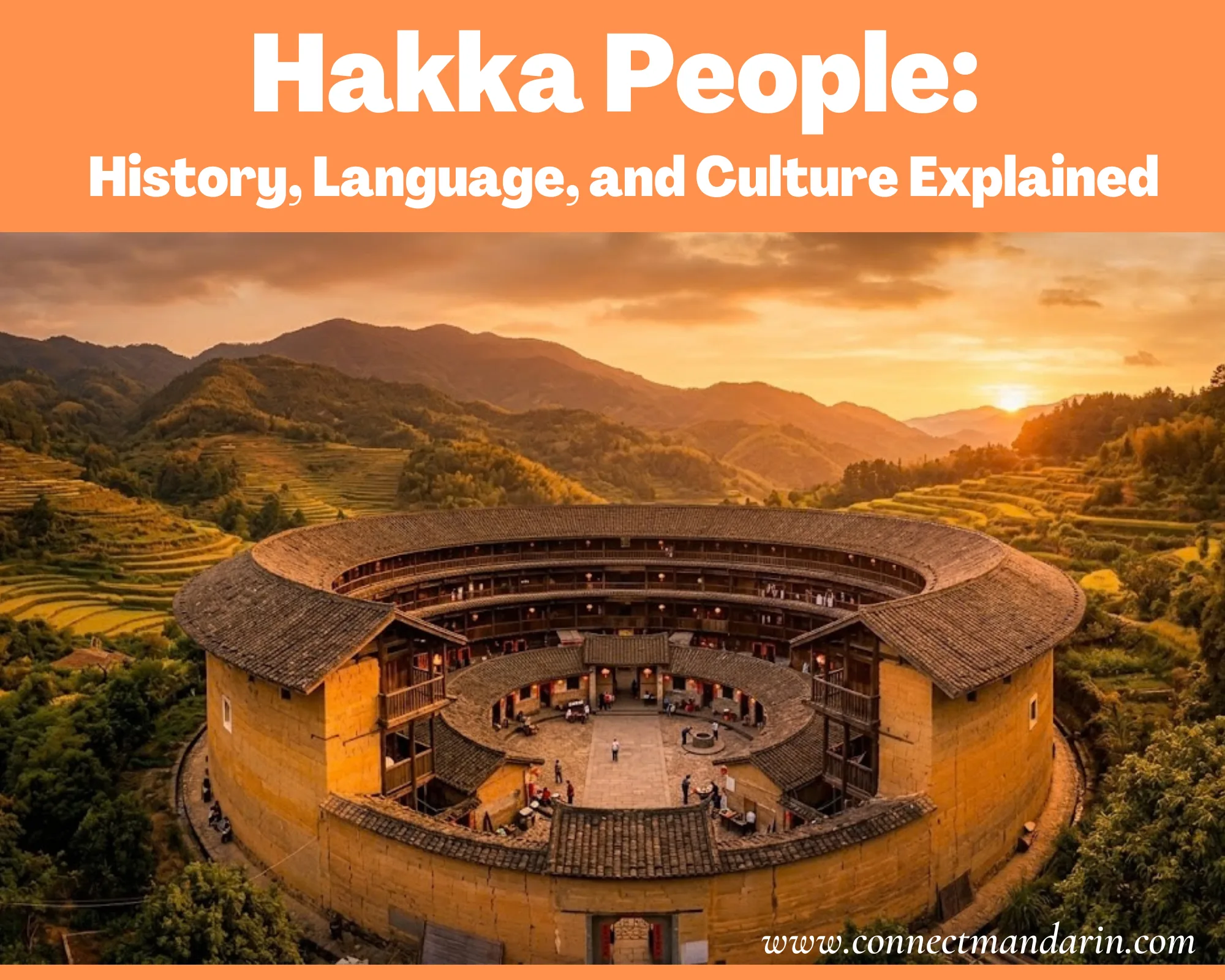
Hakka People: History, Language, and Culture Explained
The Hakka people (客家人) are a Han Chinese subgroup known for their own language, fortified earthen homes, and a cuisine built around preserved ingredients. Here's where they came from, how they live today, and what their story teaches Mandarin learners.
Famous Chinese People: 20 Figures Who Shaped History and Culture
Learn about 20 famous Chinese people who shaped China's history and culture, from Confucius to Jack Ma, with Hanzi, pinyin, and how to say each name.