
Beijing Travel Guide 2026: The Complete Guide to Exploring & Learning in China's Capital
Your complete guide to Beijing — top sights, neighborhoods, food, transport, and how to learn Mandarin while you explore China's capital.
So here is the thing: Most travelers spend two weeks in Beijing and leave without speaking a single word of Mandarin. They see the historic sites, navigate the subway using English signs, and use point-and-gesture methods to order food. But when you look past the standard tourist routes, Beijing reveals itself not just as a city of monuments but as the world's greatest living language classroom.
Imagine waking up to the gentle hum of a historic hutong (narrow alleyway), the rich aroma of a freshly made jianbing (savory crepe) filling the air, and the crisp, distinct cadence of standard Mandarin spoken all around you. This guide is built specifically for travelers, expats, and curious minds who want to do more than just pass through. It is for those who want to live, breathe, and truly understand Beijing.
What This Guide Covers
- Practical Arrival Setup: Visas, flight logistics, and crucial digital apps.
- Neighborhood Breakdowns: Where to stay based on your personal budget and immersion style.
- Iconic Landmarks & Hidden Corners: Navigating the city's timeless sights.
- Culinary Language Lessons: How to eat like a local and order with confidence.
- The Immersive Approach: Transforming your trip into a powerful language breakthrough with Connect Mandarin, right here in the heart of the Chaoyang District.
How to Get to Beijing: Flights, Visas & Entry Requirements
Planning an extended trip or moving to Beijing requires navigating a few essential logistical steps. Getting your entry requirements and digital footprint sorted before you land ensures a seamless transition.
Choosing Your Airport: PEK vs. PKX
Beijing is served by two massive, world-class international airports.
- Beijing Capital International Airport (PEK): Located in the northeast, PEK is the traditional, established hub. It is closest to downtown and the expat-heavy Chaoyang District. Taking the Airport Express train directly connects you to the city subway system at Sanyuanqiao or Dongzhimen in just under 25 minutes.
- Beijing Daxing International Airport (PKX): Located in the far south, PKX is a futuristic architectural masterpiece designed by Zaha Hadid. While it is further away geographically, the high-speed Daxing Airport Express train rockets you into Caoqiao Station in South Beijing in just 19 minutes, traveling up to 160 km/h.
Navigating China Visa Requirements
Entering China requires proper preparation. Depending on the length and purpose of your visit, travelers generally utilize one of two main options:
- The 144-Hour Transit Visa-Free Policy: Citizens from over 50 countries (including the US, Canada, UK, Australia, and EU nations) can enter Beijing without a visa for up to 6 days. You must prove you are transiting through Beijing to a third international destination (e.g., London → Beijing → Tokyo). This is perfect for short-term cultural exploration or an introductory language boot camp.
- Standard L (Tourist) or X2 (Short-Term Student) Visas: If you plan to dive into an immersive Mandarin course lasting several weeks or months, you will need to apply for a standard visa at your local Chinese embassy or visa application service center before departure.
Beijing Weather and Seasons
| Season | Months | Average Temperature | Clothing & Travel Advice |
|---|---|---|---|
| Spring | April – May | 10°C to 25°C | Mild and pleasant; pack light layers for evening and morning time. Watch out for occasional yellow fluff or dust storms. Excellent for walking the city. |
| Summer | June – August | 25°C to 38°C | Hot, humid, and rainy. Bring breathable clothing, an umbrella, and sun protection. Indoor air conditioning is strong. |
| Autumn | Sept – November | 5°C to 20°C | The absolute best time to visit. Clear blue skies ("Beijing Blue") and comfortable temperatures. Pack light jackets and sweaters. |
| Winter | Dec – March | -10°C to 5°C | Cold, dry, and windy, but rarely snows heavily. Pack a heavy down coat, gloves, thermal underwear, and a scarf. |
Essential Digital Entry Prep Checklist
China operates on a distinct digital ecosystem. To function seamlessly on arrival, download and configure these tools on your phone before passing through border customs:
- eSIM / Local SIM Card: Ensure your phone is unlocked. You can buy a physical SIM from China Unicom or China Mobile at the airport using your passport, or set up a travel eSIM beforehand.
- Alipay & WeChat Pay: Beijing is virtually cashless. Both platforms now allow international travelers to link foreign credit cards (Visa/Mastercard). This lets you scan QR codes to pay for everything from street food to subway rides.
Where to Stay in Beijing: Neighborhoods by Traveler Type
Your choice of neighborhood dictates your daily relationship with the city. Beijing is vast, organized around concentric ring roads, each district carrying a distinct personality and lifestyle score.
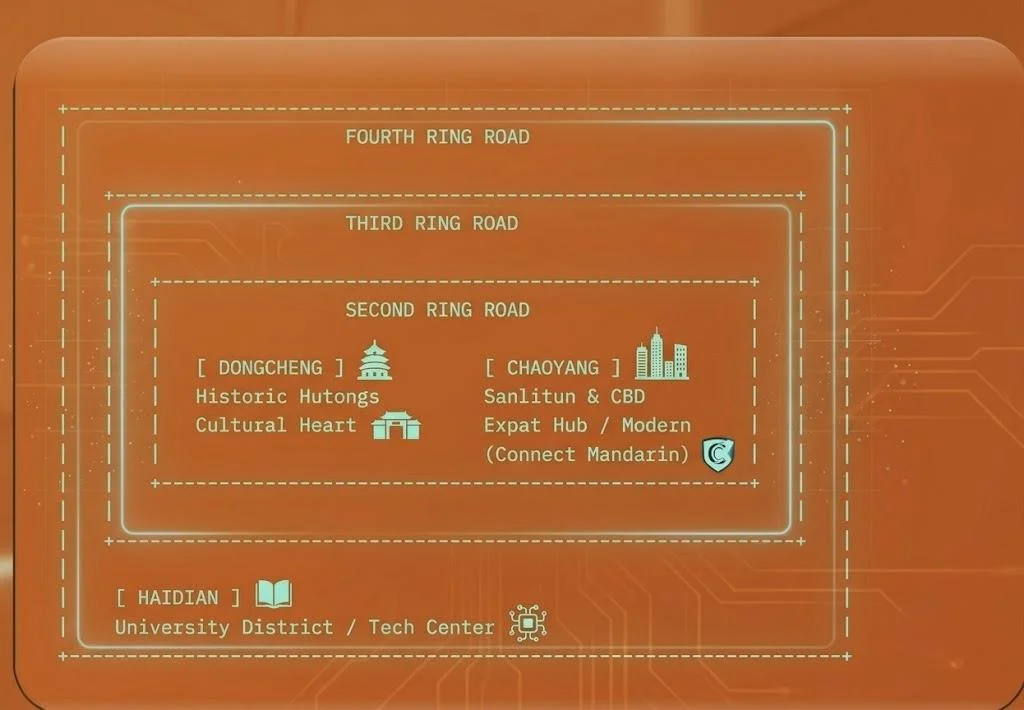
Chaoyang District: The Expat Hub & Modern Core
If you want modern skyscrapers, international dining, vibrant nightlife, and a large global community, Chaoyang is the default choice. Home to Sanlitun, the Central Business District (CBD), and Embassy Row, it balances international comforts with city living. This is also where the Connect Mandarin campus is located, making it exceptionally convenient for students who want to balance intensive language classes in the morning with social networking and metropolitan exploration in the afternoon.
Dongcheng & the Hutongs: Cultural Immersion
For history lovers and cultural purists, the ancient alleyways (hutongs) of Dongcheng offer unmatched atmosphere. Staying in a restored courtyard hotel near the Lama Temple (Yonghegong) or Gulou (The Drum Tower) places you right in old Beijing. Here, life moves at a slower pace; you'll see neighbors playing chess on the sidewalk and vegetable vendors shouting their morning prices in thick local accents.
Haidian District: The University Zone
Located in the northwest, Haidian is China's Silicon Valley and academic heart. It houses the country's most prestigious institutions, including Tsinghua University and Peking University. The vibe here is youthful, budget-friendly, and tech-driven. It's an excellent area for younger students and long-term academic travelers, though it sits a bit further away from Central Beijing's historic core.
Neighborhood Comparison Profile
| District | General Vibe | Budget Level | Language Immersion Score | Best Suited For |
|---|---|---|---|---|
| Chaoyang | Cosmopolitan, modern, high-energy | Premium / Mid | Moderate (English widely understood) | Expats, business travelers, lifestyle seekers |
| Dongcheng | Historic, traditional, deeply cultural | Mid / Budget | High (Great for practicing local dialect) | Solo travelers, culture buffs, photographers |
| Haidian | Academic, tech-centric, lively | Budget / Mid | High (Surrounded by domestic students) | Young scholars, budget backpackers |
Top Things to Do in Beijing (Beyond the Great Wall)
Beijing houses a staggering collection of UNESCO World Heritage sites alongside hyper-modern creative zones. Navigating them efficiently requires a bit of local insider knowledge.
The Historic Axis: Forbidden City & Tiananmen Square
The magnificent, red-walled Forbidden City (Gugong) served as the imperial palace for 24 emperors across the Ming and Qing dynasties.
- Insider Tip: Tickets sell out days in advance and must be booked online via your passport number. Enter through the Meridian Gate and walk south to north.
- Language Opportunity: Don't rely exclusively on English audio guides. Try asking a staff member: "Qǐngwèn, bǎowùguǎn de chūkǒu zài nǎlǐ?" (Excuse me, where is the museum exit?) to practice your directional terms.
The Imperial Gardens: Summer Palace & Temple of Heaven
The Temple of Heaven, where emperors prayed for good harvests, features brilliant blue-tiled architecture set within an expansive public park. Arrive before 8:30 AM to catch hundreds of local retirees practicing tai chi, singing traditional opera, and writing water calligraphy on the pavement. The Summer Palace, located in the northwest, offers a beautiful escape filled with pavilions, covered walkways, and boat rides across Kunming Lake.
Hutong Exploring: Nanluoguxiang vs. Wudaoying
While Nanluoguxiang is famous, it can become highly commercialized and crowded. For a more relaxed, creative vibe, head to Wudaoying Hutong near the Lama Temple. It features an array of boutique coffee shops, indie clothing stores, and quiet tea houses where traditional architecture meets contemporary Beijing youth culture.
Modern Creativity: 798 Art District & Sanlitun
Housed in deactivated, East German-designed military factory buildings from the 1950s, the 798 Art District is the epicenter of China's contemporary art scene. Giant industrial pipes wind around high-end galleries, outdoor sculptures, and cafes. In the evening, the neon-lit plazas of Sanlitun Taikoo Li provide the city's premier shopping, dining, and lifestyle experiences.
The Great Wall of China: Choosing Your Section
No trip to Beijing is complete without seeing the wall, but choosing the right section alters your experience entirely:
- Mutianyu: The highly recommended choice for most travelers. It features beautifully restored watchtowers, fewer crowds than Badaling, and a thrilling toboggan slide that whisks you down from the mountain top.
- Badaling: Well-restored and highly accessible via a direct train, but frequently congested with large domestic tour groups.
- Jiankou / Simatai: Unrestored, wild, "wild walls" ideal for experienced hikers looking for rugged terrain and minimal foot traffic.
What to Eat in Beijing: A Culinary Language Lesson
Food in Beijing is rich, historical, and deeply satisfying. Learning the names of iconic dishes allows you to confidently bypass tourist traps and order straight from local menus.
The Big Three Culinary Staples
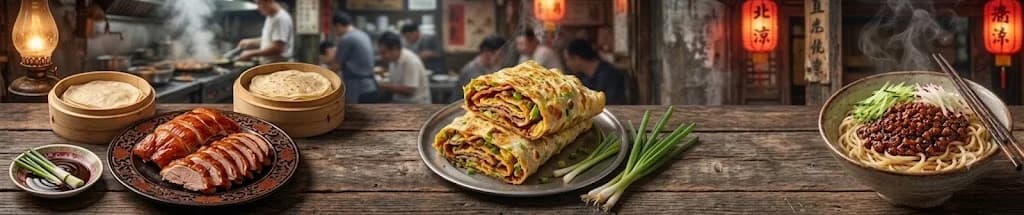
| Dish | Description |
|---|---|
| Peking Duck | Crispy skin dipped in sugar; wrapped in thin pancakes with hoisin. |
| Jianbing | Savory mung bean crepe with egg, crispy wonton crust, and scallions. |
| Zhajiangmian | Thick wheat noodles with savory, fermented sweet bean sauce. |
- Peking Roast Duck (北京烤鸭 - Běijīng Kǎoyā): The crown jewel of local cuisine. Chefs carve the duck tableside into thin, delicate slices. Take a piece of crispy skin, dip it lightly in sugar, and let it melt. Then wrap the succulent meat in thin pancakes with sweet bean sauce, scallions, and cucumber.
- Jianbing (煎饼果子 - Jiānbǐng Guǒzi): The ultimate Beijing street breakfast. A savory crepe made from mung bean batter, brushed with spicy chili paste and sweet sauce, layered with scrambled eggs, fresh scallions, coriander, and a perfectly crispy fried wonton sheet (baocui), folded together hot off the griddle.
- Zhajiangmian (炸酱面 - Zhájiàngmiàn): Comfort food at its finest. Thick, chewy wheat noodles served warm, topped with a rich, dark, aromatic sauce made from stir-fried ground pork and fermented sweet bean paste, complemented by shredded cucumber, radishes, and fresh bean sprouts.
Foodie Phrase Box: Ordering Like a Local
Use these foundational phrases next time you walk into a neighborhood eatery (guanguan) to instantly show respect and get exactly what you want.
- "Měi fèn kǎoyā, xièxie." (一份烤鸭,谢谢。)
- Pronunciation: ee-fuhn kow-yah, shyeh-shyeh.
- Meaning: One serving of roast duck, please.
- "Wǒ bù yào xiāngcài." (我不要香菜。)
- Pronunciation: waw boo yow shyang-tsaee.
- Meaning: I do not want coriander/cilantro.
- "Zhè zhǒng bù là, duì ma?" (这种不辣,对吗?)
- Pronunciation: juh jòng boo lah, dway mah?
- Meaning: This type isn't spicy, correct?
Learn Mandarin While You Travel: The Connect Mandarin Difference
You can read all the travel guides in the world, but you will only truly understand Beijing once you can speak to the people who shape it. Most travelers interact with the city on a surface level, shielded by digital translation apps and English guides. They miss the jokes cracked by the taxi driver, the deep historical stories shared by the courtyard elders, and the ease of navigating local life smoothly.
At Connect Mandarin, located in the dynamic, centrally positioned Chaoyang District, we bridge the gap between being an outside observer and an active cultural participant. Our language programs are crafted explicitly around the philosophy of integrated lifestyle learning.
The Daily Immersion Loop
| Time | Focus | What You Do |
|---|---|---|
| 09:00 – 12:00 | Morning Classes | Interactive grammar & vocabulary work |
| 13:30 – 17:00 | Afternoon Tasks | Real-world challenges guided by teachers |
| Evening | Real Practice | Socializing, dining, life |
Instead of memorizing sterile textbook dialogues inside an isolated room, our students experience a dynamic daily rhythm:
- Morning Focus: Master essential structures, authentic local pronunciation, and targeted survival vocabulary with our expert native-speaking instructors.
- Afternoon Action: Step directly outside the classroom to complete immersive, real-world tasks. You might head into a historic Dongcheng hutong to buy fresh ingredients using your newly learned vocabulary, or navigate an intricate subway transfer to meet an afternoon group.
- Evening Connection: Join cultural mixers, calligraphy circles, or guided local dinner meetups to cement your learning over authentic conversation.
Tailored Immersive Programs
Whether you have a single week during a vacation stopover or three months to build a professional-grade foundation, we have a pathway suited to your travel goals:
- Culture Explorer Program: Perfect for active travelers who want to blend high-yield language acquisition with guided afternoon excursions to major historical landmarks.
- Intensive 1-on-1 Bootcamps: Highly personalized, fast-paced courses designed to advance your HSK proficiency level rapidly or prepare you for professional relocation in China.
- Summer Language Camps: Dynamic, immersive group experiences combining structural study, historic sightseeing, and active social interaction for students and young professionals.
Real Stories from the Community
"I came to Beijing thinking I'd just look at temples and eat duck. Signing up for a two-week course at Connect Mandarin completely altered my path. By day four, I was turning off my translation app and joking with my local dumpling vendor. The confidence it gives you is indescribable."
— Julian V., Australia
"As an expat moving to Chaoyang for work, the practical focus here saved me weeks of frustration. They didn't just teach me grammar; they walked me through setting up bank apps, communicating with delivery drivers, and truly settling in."
— Sarah M., United Kingdom
Getting Around Beijing: Subway, Didi & Transit
Beijing's public transportation network is extensive, remarkably cheap, and highly efficient once you understand its layout.
The Beijing Subway System
With over 25 lines crisscrossing the metropolis, the subway is the fastest way to beat traffic. Stations feature clear, explicit English signage, and automated ticket machines are intuitive.
- How to Ride: You can use Alipay's built-in "Transport" mini-program to generate a digital metro QR code. Simply scan your phone screen at the entry and exit turnstiles. Base fares start at a very economical 3 RMB (~$0.40 USD).
- Key Route: Line 2 runs in a complete loop directly underneath the Second Ring Road, tracing the historic path of the city's ancient inner walls and offering swift access to many central sights.
Using Didi (China's Ride-Hailing App)
Taxis are plentiful, but using DiDi Chuxing (the local equivalent to Uber) is far more efficient for foreign travelers. The standalone Didi app features an excellent, complete English interface and an integrated real-time translation chat tool that lets you message drivers effortlessly. It securely links directly to international credit cards, completely removing any payment friction or language barriers when specifying your pickup location.
Beijing Travel FAQs: Direct Answers for Travelers
Is Beijing safe for solo travelers?
Beijing is exceptionally safe, maintaining remarkably low rates of violent crime. Well-lit streets, highly responsive local assistance, and an expansive public security framework ensure solo travelers, including female solo travelers, can confidently explore any neighborhood at any hour of the night with complete peace of mind.
How many days do you need in Beijing?
A stay of 4 to 5 days is highly recommended for first-time visitors. This duration allows ample time to comfortably explore essential landmarks like the Forbidden City, the Summer Palace, and the Great Wall, while still leaving space to stroll historic alleyways and experience local dining.
Do people speak English in Beijing?
English is regularly spoken by staff at major international hotels, high-end restaurants, and popular tourist hubs. However, everyday taxi drivers, street-side restaurant workers, and residential neighborhood locals rarely speak English. Learning basic, functional Mandarin expressions significantly improves your daily convenience and depth of connection.
What is the best time to visit Beijing?
Autumn, spanning from September through November, is the absolute best time to visit. This season brings consistently clear blue skies, crisp air, and comfortable, moderate temperatures, perfectly showcasing the city's historic outdoor parks and surrounding mountains without summer humidity or winter winds.
Can I learn Chinese while traveling in Beijing?
Yes, short-term language study pairs perfectly with travel. Programs like Connect Mandarin's Culture Explorer are designed specifically to utilize morning classroom sessions for high-frequency vocabulary, which travelers then actively apply during afternoon sightseeing and real-world interactions across the city.
How much does it cost to spend a week in Beijing?
A mid-range budget of $70 to $130 USD per day comfortably covers a quality hotel stay, convenient taxi or subway transit, entrance tickets to major historic sites, and excellent local restaurant meals. Street food and public transit remain remarkably affordable for budget-conscious travelers.
Your Beijing Adventure Starts with Hello (你好)
Every historic temple gate you walk through, every bustling night market stall you explore, and every single dumpling order you place is a live Mandarin lesson waiting to unfold. Beijing rewards the curious traveler like no other city on Earth. When you take the step to learn even the basics of the native language, the city transforms from an imposing metropolis into an incredibly warm, deeply welcoming home away from home.
Don't just stand on the sidelines of your travel experience. Turn your trip into a lasting personal breakthrough.
Take your next step toward Beijing:
About the Author
Connect Mandarin Team
We are built by a team of native-speaking teachers and language educators who focus on real, usable Chinese - not just textbook phrases. With 15+ years of combined teaching experience.
Continue Reading
Hakka People: History, Language, and Culture Explained
The Hakka people (客家人) are a Han Chinese subgroup known for their own language, fortified earthen homes, and a cuisine built around preserved ingredients. Here's where they came from, how they live today, and what their story teaches Mandarin learners.
Famous Chinese People: 20 Figures Who Shaped History and Culture
Learn about 20 famous Chinese people who shaped China's history and culture, from Confucius to Jack Ma, with Hanzi, pinyin, and how to say each name.
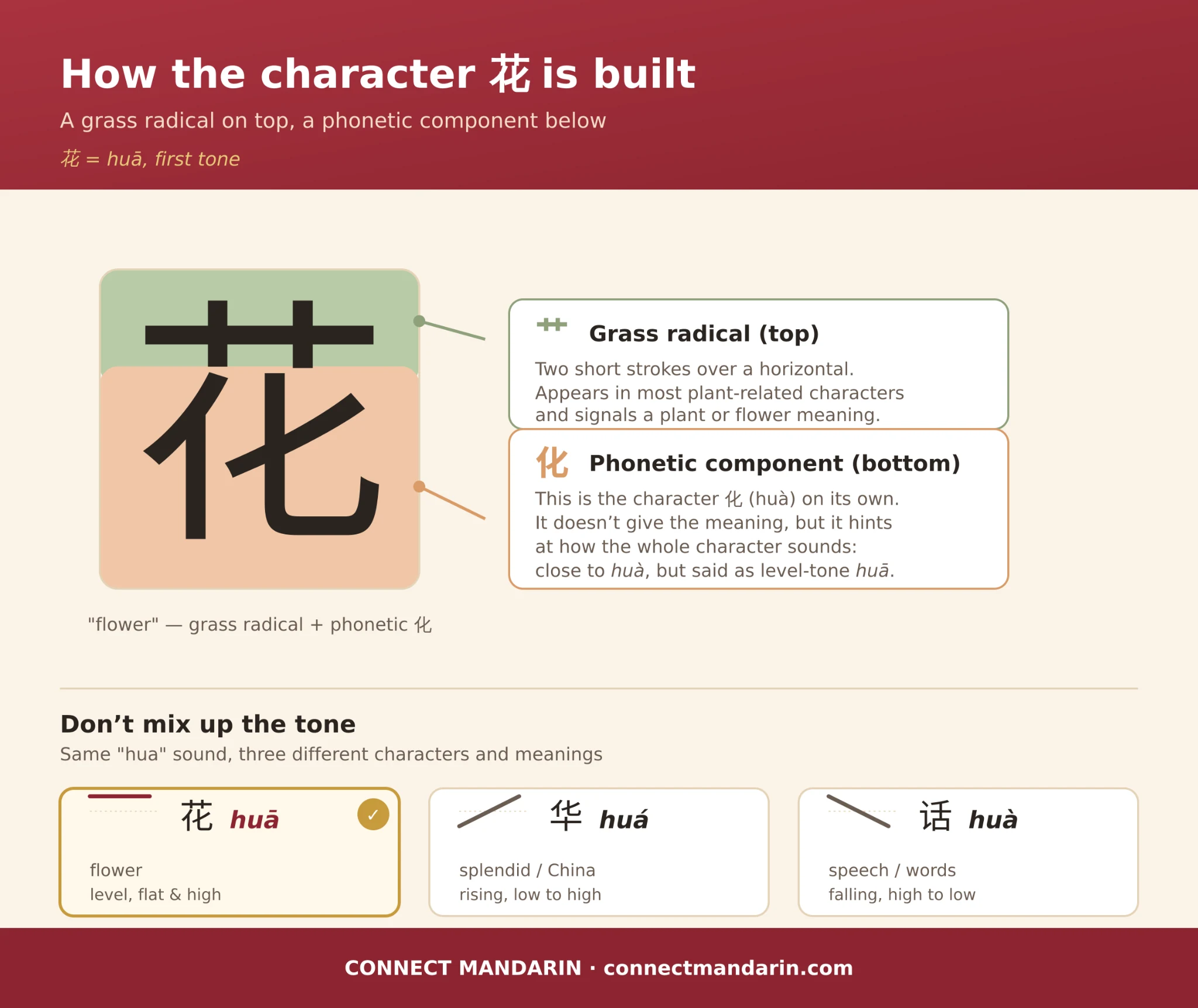
Flowers in Chinese: Names, Meanings, and Culture (花 huā)
Learn Chinese flower names like 玫瑰 (rose) and 牡丹 (peony), their cultural meanings, and how 花 shows up in idioms and Chinese New Year customs.