
How to Choose a Chinese Name: A Complete Guide
Choosing a Chinese name is more than a translation—it's stepping into the culture. Learn how the naming system works, how to pick a surname and given name, and how to find a name that sounds natural.
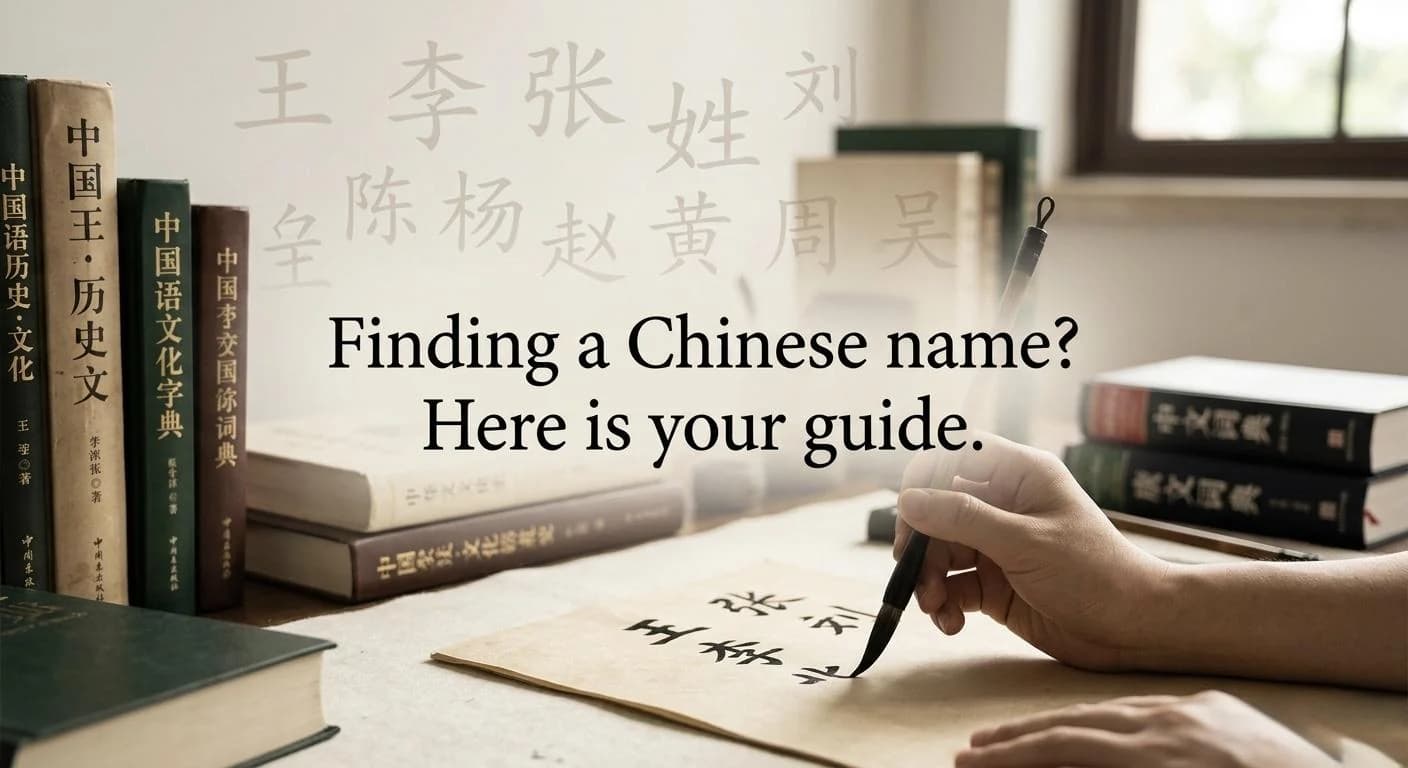
Choosing a Chinese name is a big milestone when you start learning Mandarin. It feels like the exact moment you transition from just studying words to actually stepping into the culture.
But if you look at a dictionary, the sheer volume of characters can make your head spin. How do you find a combination that actually fits your personality without picking something that makes native speakers stifle a laugh?
Getting a natural name isn't about direct translation. It is about understanding how Chinese people view identity. Let's look at how the naming system works and how you can find a name you will love using.
Drop the textbook translation
When you first join a class or pick up a textbook, you are often given a phonetic translation. If your name is David, you become Dàwèi. If your name is Mary, you get Mǎlì.
Think of it this way: there is nothing technically wrong with these names. They work perfectly fine on a visa application or a legal document. But to a native speaker, they sound incredibly generic. They hold zero poetic meaning and instantly broadcast that you just used a translation tool.
Choosing a real, thought-out Chinese name changes the dynamic completely. For one thing, it makes you memorable. Your Chinese friends and colleagues will remember a natural name much easier than a clunky transliteration. Here is why it matters most: it shows you respect the culture enough to learn its nuances, rather than just forcing Western words into Chinese characters.
The basic anatomy of a name
Before you start picking characters because they look cool, you need to understand the structural rules.
First, the family name always comes first. In Western culture, we put our individuality upfront and our family legacy at the back. In China, family comes first. If you meet someone named Zhang Wei, Zhang is the family surname, and Wei is their personal given name.
Second, pay attention to length. A normal name is almost always two or three characters long in total. You will have a single-character last name, followed by a one or two-character first name. Four-character names do exist, but they are incredibly rare and usually tied to historical family lines. Sticking to three characters total is your safest bet for sounding completely natural.
Finding your surname
So, how do you actually build this thing from scratch?
Start with your surname. Instead of trying to translate what your Western surname means, look for a historical Chinese surname that mimics the first sound of your real last name. You can find massive lists of traditional surnames online, often called the 百家姓 (Baijiaxing), to see what fits best.
Here is how you can easily map common last names by sound:
- If your last name is Harrison, Harris, or Hall, you might look at Hé (何).
- If your last name is Miller, Mills, or Martin, maybe you go with Mǐ (米) or Mǎ (马).
- If your last name is White or Watson, you could look at Wáng (王).
- If your last name is Smith, Smitt, or Simpson, you might choose Sī (司).
- If your last name is Lewis, Lee, or Lane, you could go with Lín (林) or Lǐ (李).
The goal here is simply a loose phonetic match. The meaning of the surname matters very little because traditional Chinese last names are mostly just marker tags for lineage.
Crafting your given name
Next comes the creative part: your given name. In English, we tend to recycle the same names. You probably know a handful of people named Alex, Chris, or Sarah. Chinese naming doesn't work that way at all. Because you can combine almost any characters, names are deeply customized.
Parents use names to project their hopes, values, or traits they admire. Instead of trying to make your English first name sound Chinese, think about what you value. Here is why this step is so much fun: you get to define yourself.
Are you a creative person? Do you love nature? Do you value intellect or tranquility? Look up characters that symbolize those specific traits.
Just keep an eye on gender tones. While many characters are completely neutral, certain elements carry distinct masculine or feminine associations. Words like gāng (刚 - strong), bó (博 - learned, deeply knowledgeable), or yǔ (宇 - universe) lean heavily masculine. On the flip side, words like yǎ (雅 - elegant), tíng (婷 - graceful), or xī (溪 - mountain stream) lean feminine.
Also, try to avoid names that are too basic. Introducing yourself as Lǐ Míng or Wáng Yàn is essentially introducing yourself as John Smith or Jane Doe. It won't help you stand out.
Checking the tone flow
Once you have chosen your two characters for your first name, say them out loud with your surname. You want to make sure the tones roll off the tongue naturally.
If all three characters are in the third tone, like Lǐ Mǐwǔ, it becomes an exhausting vocal workout due to tone change rules. Try to mix up the tones. A combination like Lín Mǐngyǔ (Second tone, Third tone, Third tone) or Hé Tíngxuān (Second tone, Second tone, First tone) flows much more smoothly.
The most important step: the vibe check
Once you have a combination of characters that you think sounds amazing, do not print it on a business card just yet. You absolutely must run it past a native speaker.
Mandarin is famous for homophones, which are words that sound identical but mean totally different things depending on the character and the context. A character might look beautiful and poetic when you read its definition by itself. But when you couple it with your chosen surname and say it out loud, it might accidentally sound exactly like a random piece of furniture, an unlucky phrase, or a bit of modern internet slang.
If you want to make sure your name sounds completely natural and culturally appropriate, our native tutors at Connect Mandarin can help you brainstorm and fine-tune the perfect name during your live sessions. A quick vibe check with a native speaker will instantly catch those hidden meanings and save you a lot of future embarrassment.
A perfect way to break the ice
The absolute best part about having a thoughtful Chinese name is that it gives you a permanent conversation starter.
Because names in China carry so much intent, people will naturally ask you why you chose your specific characters. When you can confidently explain the backstory, the traits you picked, and why they matter to you, you instantly break down walls. It shows off your language skills right from the very first handshake and sets a great tone for the rest of your conversation.
Ask around!
Make sure to ask several Chinese-speaking friends to get opinions on your new name. You will probably be able to judge how good/bad/weird/normal your name is based on their first reactions. Also, remember, this is your "name!" Make sure you like the way it looks in simplified and/or traditional characters, the way it sounds, and its meaning.
Frequently asked questions
Can I just use my English name when talking to Chinese speakers?
You can, but it might be difficult for native speakers to pronounce or remember easily. Choosing a natural Chinese name shows you respect the culture and helps you connect with people much faster.
Should my Chinese surname match my legal last name?
It doesn't need to match the meaning, but it is best to match the sound. Pick a traditional Chinese surname from the Baijiaxing list that starts with a similar phonetic sound to your actual last name.
How long should a Chinese name be?
Stick to three characters total. This includes a single-character surname followed by a two-character given name. It is the most common format and sounds the most natural for language learners.
Are Chinese names gender-neutral?
Many characters are neutral, but certain words lean heavily toward one gender. Characters relating to strength or intellect often lean masculine, while characters representing elegance, flowers, or gentle nature elements lean feminine.
How can I make sure my chosen name doesn't sound weird?
Always test it out loud with a native speaker before you officially adopt it. If you want to make sure the tones and meanings flow perfectly, you can run your ideas past our native teachers at Connect Mandarin to get an instant vibe check.
About the Author
Connect Mandarin Team
We are built by a team of native-speaking teachers and language educators who focus on real, usable Chinese - not just textbook phrases. With 15+ years of combined teaching experience.
Continue Reading

Hakka People: History, Language, and Culture Explained
The Hakka people (客家人) are a Han Chinese subgroup known for their own language, fortified earthen homes, and a cuisine built around preserved ingredients. Here's where they came from, how they live today, and what their story teaches Mandarin learners.

Famous Chinese People: 20 Figures Who Shaped History and Culture
Learn about 20 famous Chinese people who shaped China's history and culture, from Confucius to Jack Ma, with Hanzi, pinyin, and how to say each name.
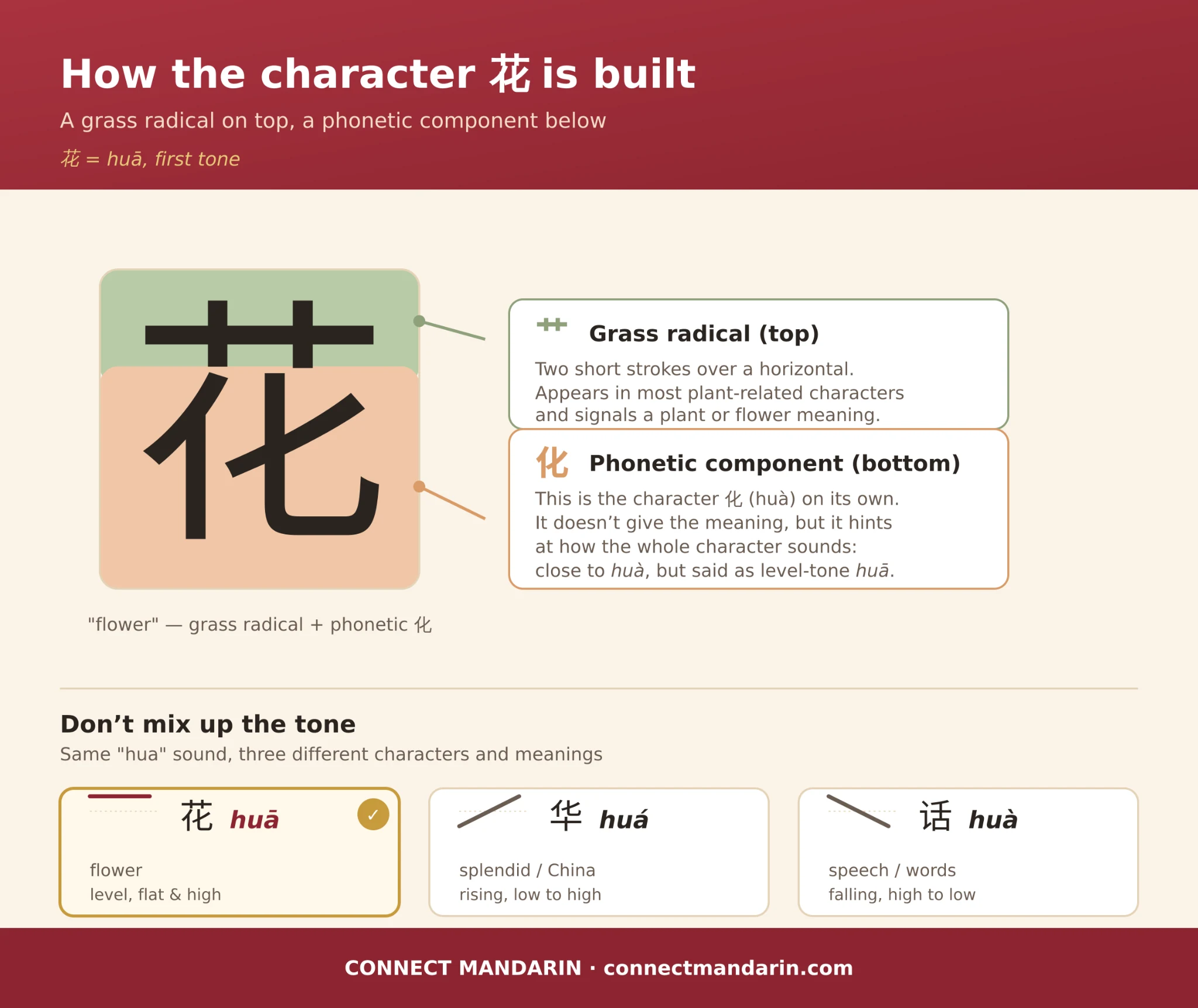
Flowers in Chinese: Names, Meanings, and Culture (花 huā)
Learn Chinese flower names like 玫瑰 (rose) and 牡丹 (peony), their cultural meanings, and how 花 shows up in idioms and Chinese New Year customs.