How to Say "Not This Time" in Chinese: 5 Natural Mandarin Phrases
Learn how to say 'not this time' in Chinese with 5 natural Mandarin phrases. Get pinyin, real examples, and tips on which one fits each situation.

Your coworker asks if you want to grab hotpot after work. Your friend invites you to a concert this weekend. A shop clerk holds up a jacket and asks if you want to try it on. In all three cases, you want to say no, but just for now, not forever.
In English, "not this time" covers all of it. In Mandarin, it doesn't work that way. If you translate the phrase word for word, you'll end up sounding stiff, or you'll miss the tone the situation actually calls for. Chinese speakers lean on a handful of different expressions depending on who they're talking to and how the conversation feels.
Below are five phrases native speakers actually use to decline something for now while leaving the door open. Some are blunt, some are soft, and a couple work better in a shop than at dinner with friends. By the end, you'll know which one fits which moment.
How Do You Say "Not This Time" in Chinese?
| Chinese | Pinyin | Meaning | Usage |
|---|---|---|---|
| 这次不行 | zhè cì bù xíng | Not this time / this time doesn't work | General |
| 下次吧 | xià cì ba | Maybe next time | Casual and polite |
| 这次算了 | zhè cì suàn le | I'll pass this time | Casual |
| 暂时不 | zànshí bù | Not for now | Direct but useful |
| 改天吧 | gǎi tiān ba | Some other day | Invitations and plans |
None of these are perfect substitutes for each other. Swapping one for another can change how blunt or how warm you sound, so pick based on the situation, not just the dictionary meaning.
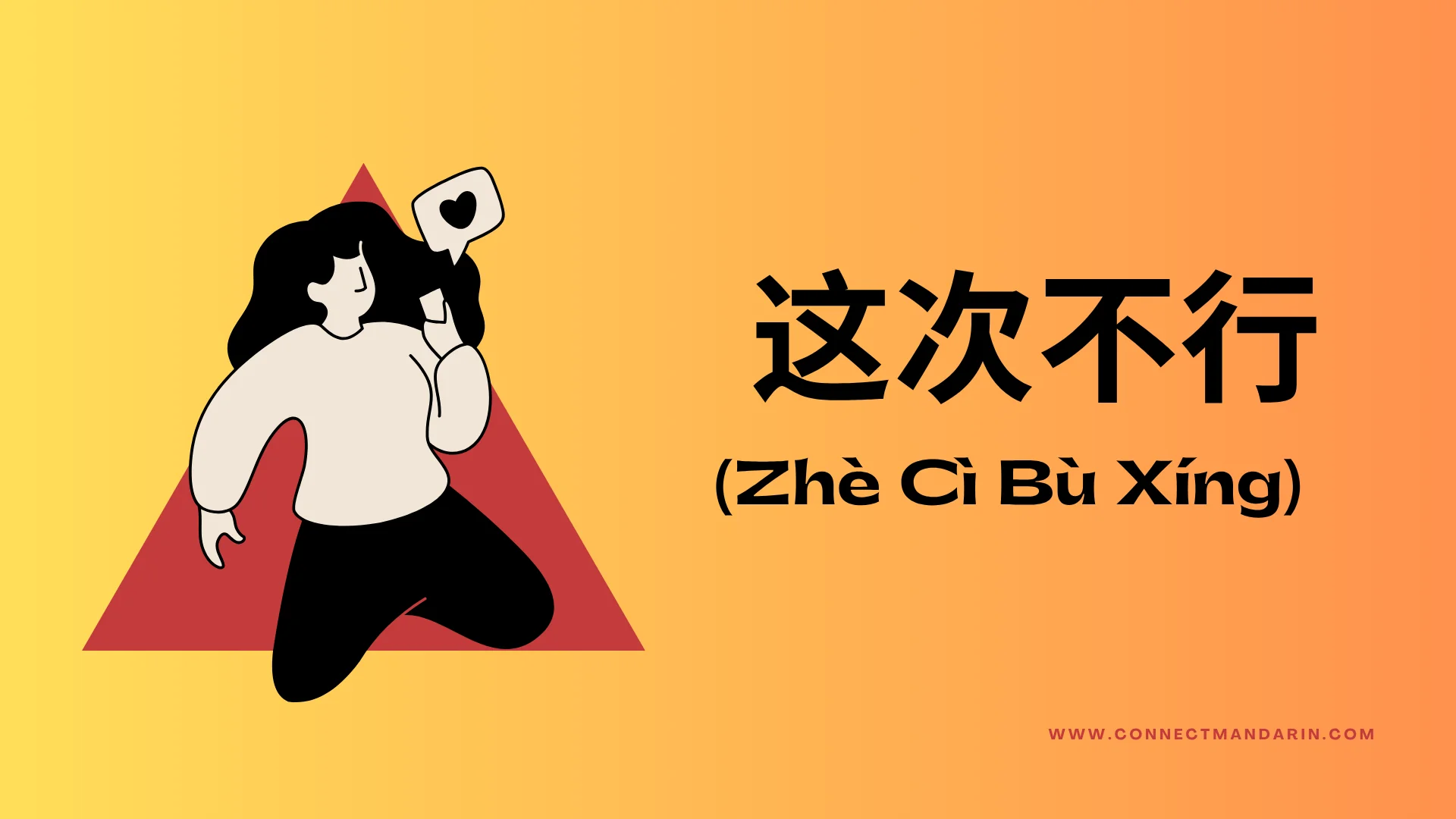
这次不行 (Zhè Cì Bù Xíng) — "Not This Time"
What Does 这次不行 Mean?
Break it into two pieces. 这次 means "this time." 不行 means "doesn't work" or "can't." Put together, you get something close to the literal English phrase, which makes it the most straightforward option on this list. It's a good default when you're not sure which phrase to reach for.
Example Sentences
周末一起吃饭吗? Zhōumò yìqǐ chīfàn ma? "Want to have dinner together this weekend?"
这次不行,我有别的安排。 Zhè cì bù xíng, wǒ yǒu bié de ānpái. "Not this time, I have other plans."
这次不行,下周怎么样? Zhè cì bù xíng, xià zhōu zěnmeyàng? "Not this time, how about next week?"
下次吧 (Xià Cì Ba) — "Maybe Next Time"
Usage and Nuance
下次 means "next time." The particle 吧 doesn't have a direct English equivalent, but it takes the edge off a sentence and makes it sound more like a suggestion than a statement. Together, 下次吧 turns a refusal into something closer to "let's do it another time," which is why it's one of the most commonly used ways to decline without sounding cold.
When Should You Use 下次吧?
This phrase works well when a friend invites you somewhere and you genuinely want to keep the relationship warm. It's common for turning down an activity, postponing plans, or declining an invitation from someone you'll likely see again.
Example Conversation
A: 明天要不要一起看电影? Míngtiān yào bu yào yìqǐ kàn diànyǐng? "Want to watch a movie together tomorrow?"
B: 下次吧,我明天有点忙。 Xià cì ba, wǒ míngtiān yǒudiǎn máng. "Maybe next time, I'm a bit busy tomorrow."
这次算了 (Zhè Cì Suàn Le) — "I'll Pass This Time"
Usage and Tone
算了 is one of those words that shows up constantly in spoken Mandarin. On its own it roughly means "forget it" or "never mind," but when you attach 这次 to the front, it softens into "I'll pass this time" rather than an outright rejection. It has a casual, easygoing feel, which makes it a good fit for low-stakes situations like shopping or trying food.
Example
A: 你要试试这个吗? Nǐ yào shìshi zhège ma? "Do you want to try this?"
B: 这次算了,谢谢。 Zhè cì suàn le, xièxie. "I'll pass this time, thanks."
改天吧 (Gǎi Tiān Ba) — "Some Other Day"
Meaning and Nuance
改天吧 doesn't translate literally to "not this time," but in conversation it does the same job. 改天 means "another day," so the phrase reads more like "let's pick a different day" than a flat no. Compared with 下次吧, which just means "next time," 改天吧 feels slightly more open-ended, since it doesn't imply a specific next occasion.
Example Conversations
A: 这周末有空一起爬山吗? Zhè zhōumò yǒu kòng yìqǐ páshān ma? "Free this weekend to go hiking together?"
B: 改天吧,这周末已经有安排了。 Gǎi tiān ba, zhè zhōumò yǐjīng yǒu ānpái le. "Some other day, I already have plans this weekend."
A: 要不要一起去吃火锅? Yào bú yào yìqǐ qù chī huǒguō? "Want to go get hotpot together?"
B: 改天吧,我今天不太饿。 Gǎi tiān ba, wǒ jīntiān bú tài è. "Some other day, I'm not too hungry today."
暂时不 (Zànshí Bù) — "Not For Now"
Meaning
暂时 means "temporarily" or "for now," and 不 is the standard word for "not." Put together, 暂时不 leans more toward "not at the moment" than "not this specific time." It's a bit more direct than the other phrases here, which makes it useful when you want to be clear without going into detail.
Making It More Polite
On its own, 暂时不 can sound a little abrupt, especially with someone you don't know well. Adding 谢谢 (thank you) softens it right away, as in 暂时不,谢谢。 You'll also hear 暂时不方便, which means "not convenient right now" and works well when someone asks for a favor or your availability.
"Not This Time" vs. "Next Time" vs. "Not For Now"
| English | Chinese | Pinyin | Best Used For | Tone |
|---|---|---|---|---|
| Not this time | 这次不行 | zhè cì bù xíng | Directly declining | Direct |
| Maybe next time | 下次吧 | xià cì ba | Soft, social refusal | Soft/casual |
| I'll pass this time | 这次算了 | zhè cì suàn le | Casual situations | Casual |
| Some other day | 改天吧 | gǎi tiān ba | Postponing plans | Friendly |
| Not for now | 暂时不 | zànshí bù | Temporary refusal | Direct |
How to Politely Say "Not This Time" in Chinese
Add 谢谢 (Xièxie) — "Thank You"
A quick thank you goes a long way in Mandarin, just as it does in English. 这次不行,谢谢。 sounds noticeably warmer than 这次不行 on its own.
Give a Short Reason
You don't need a full explanation, but a short reason makes a refusal land better. The structure 这次不行,因为…… (zhè cì bù xíng, yīnwèi...) lets you fill in the blank with something brief, like being busy or already having plans.
Suggest Another Time
Leaving the door open matters in Chinese social culture. A simple 下次吧 or 改天吧 signals that you're not shutting the person down, just postponing.
Avoid Overly Direct Refusals
A flat 不 (bù) on its own can come across as sharp, almost like slamming a door. Pairing it with a fuller phrase, a reason, or a softening particle like 吧 keeps the conversation friendly instead of tense.
"Not This Time" in Different Everyday Situations
Declining a Friend's Invitation
A: 周五晚上一起唱歌吗? Zhōuwǔ wǎnshang yìqǐ chànggē ma? "Want to go sing karaoke Friday night?"
B: 下次吧,这周有点累。 Xià cì ba, zhè zhōu yǒudiǎn lèi. "Maybe next time, I'm a bit worn out this week."
Saying No to a Sales Offer
A: 要不要办一张会员卡? Yào bu yào bàn yì zhāng huìyuán kǎ? "Would you like to sign up for a membership card?"
B: 这次不用了,谢谢。 Zhè cì bú yòng le, xièxie. "Not this time, thank you."
Turning Down Food
A: 再吃一点吧? Zài chī yìdiǎn ba? "Have a little more?"
B: 这次算了,我吃饱了。 Zhè cì suàn le, wǒ chī bǎo le. "I'll pass this time, I'm full."
Declining Help
A: 我帮你搬吧? Wǒ bāng nǐ bān ba? "Let me help you carry that?"
B: 暂时不用,谢谢,我自己可以。 Zànshí bú yòng, xièxie, wǒ zìjǐ kěyǐ. "Not for now, thanks, I've got it."
Postponing a Meeting or Plan
A: 我们这周开个会讨论一下? Wǒmen zhè zhōu kāi ge huì tǎolùn yíxià? "Should we set up a meeting this week to talk it over?"
B: 这周不太方便,改天吧。 Zhè zhōu bú tài fāngbiàn, gǎi tiān ba. "This week isn't great timing, let's pick another day."
Common Mistakes When Saying "Not This Time" in Chinese
- Translating "not this time" the same way in every situation, instead of matching the phrase to the tone of the conversation.
- Assuming 这次不行 and 下次吧 mean exactly the same thing. One is a plain refusal, the other leaves room for a future plan.
- Using a bare 不 when the moment calls for something softer.
- Forgetting what 吧 is doing in a sentence. It's small, but it changes how a phrase lands.
- Mixing up 这次 (this time) and 下次 (next time), which are easy to confuse but mean opposite things.
- Focusing only on memorizing vocabulary while ignoring tone and pronunciation, which matter just as much in how a refusal is received.
Quick Cheat Sheet: Not This Time in Mandarin

| Phrase | Pinyin | English | Tone |
|---|---|---|---|
| 这次不行 | Zhè cì bù xíng | Not this time | Direct |
| 下次吧 | Xià cì ba | Maybe next time | Soft/casual |
| 这次算了 | Zhè cì suàn le | I'll pass this time | Casual |
| 改天吧 | Gǎi tiān ba | Some other day | Friendly |
| 暂时不 | Zànshí bù | Not for now | Direct |
FAQs
How do you say "not this time" in Chinese?
这次不行 (zhè cì bù xíng) is the most direct option. Among friends, 下次吧 (maybe next time) usually sounds more natural, since it stays light and leaves room for a future plan.
What is the Chinese phrase for "not this time"?
这次不行 is the closest general-purpose match. Depending on context, you'll also hear 这次算了 (casual), 改天吧 (postponing plans), or 暂时不 (about timing rather than the invitation itself).
How do you politely say "not this time" in Mandarin?
Pair a phrase like 下次吧 with 谢谢 (thank you), and add a short reason if it feels natural. 这次不行,谢谢,我有点忙 covers all three at once.
What does 下次吧 mean in Chinese?
下次 means "next time," and 吧 softens the sentence into a gentle suggestion. Together, it reads as "let's do it next time" rather than a hard refusal.
What is the difference between 这次不行 and 下次吧?
这次不行 states plainly that this time doesn't work, with no promise attached. 下次吧 points to the future and feels warmer.
How do you say "I'll pass this time" in Chinese?
这次算了 (zhè cì suàn le). It borrows from 算了 ("never mind") and adds 这次 to limit the pass to this one instance. Relaxed and conversational.
How do you say "not for now" in Mandarin?
暂时不 (zànshí bù) centers on timing rather than the specific offer. Add 谢谢, or use 暂时不方便 ("not convenient right now") to soften it further.
Is it rude to say no in Chinese?
Not inherently, but tone matters. A bare 不 can feel abrupt. A softening particle, a short reason, or an offer to reschedule keeps it considerate.
Want to use Mandarin naturally in real conversations, not just memorize phrases from a list? Context is what makes a phrase stick. Explore Connect Mandarin classes and start practicing everyday Chinese with structured, real-world guidance.
About the Author
Connect Mandarin Team
We are built by a team of native-speaking teachers and language educators who focus on real, usable Chinese - not just textbook phrases. With 15+ years of combined teaching experience.
Continue Reading

Jokes in Chinese: Funny Phrases and Wordplay to Learn Mandarin
Learn jokes in Chinese, from dad-joke puns to internet slang, with pinyin, translations, and explanations of the wordplay behind each one.

How to Say Good Morning in Chinese: Phrases, Pinyin & Culture
Learn how to say good morning in Chinese with pinyin, tones, and etiquette. Discover formal, casual, and texting phrases used across Mandarin culture.

How to Say I Love You in Chinese Mandarin: Phrases, Meanings & Culture
Learn how to say I love you in Chinese Mandarin, plus the number codes, family customs, and cultural etiquette behind expressing love and affection.