
How to Say I Love You in Chinese Mandarin: Phrases, Meanings & Culture
Learn how to say I love you in Chinese Mandarin, plus the number codes, family customs, and cultural etiquette behind expressing love and affection.
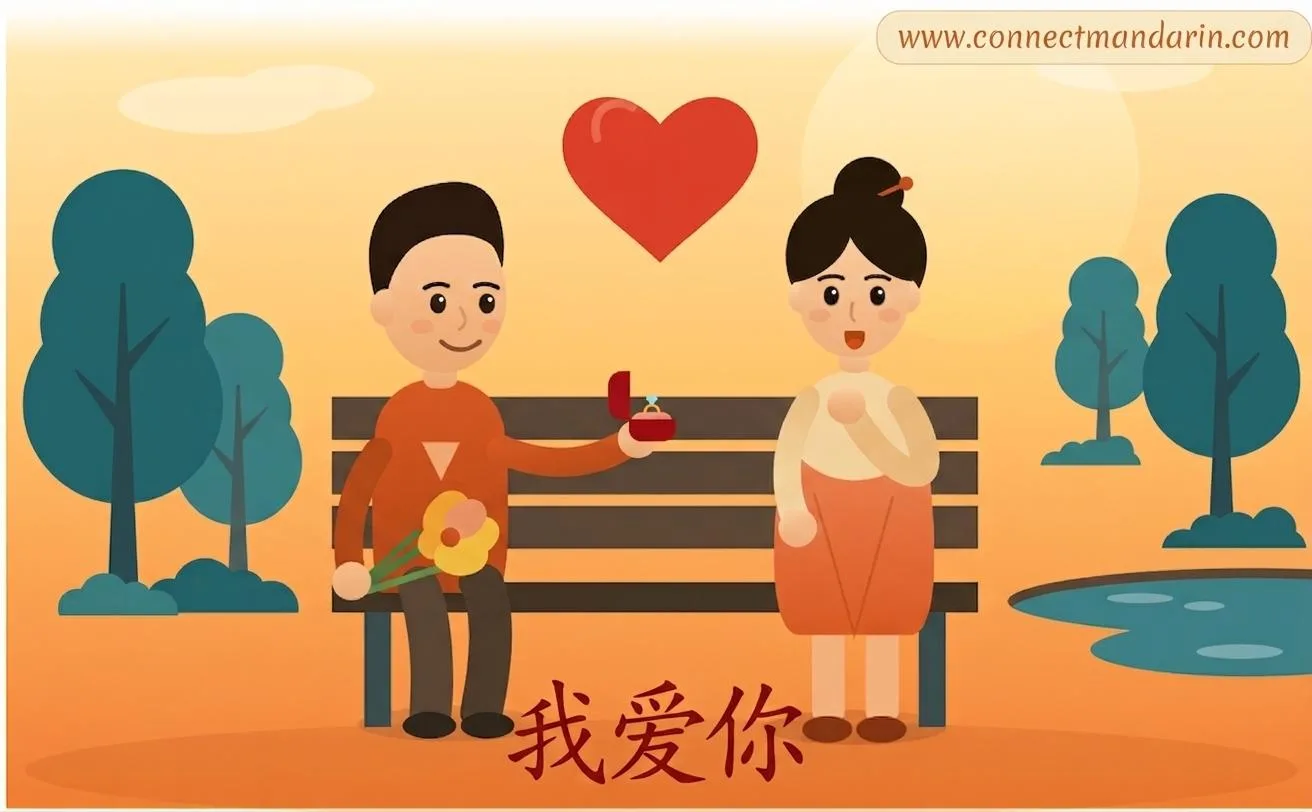
Learning how to say "I love you" in Mandarin sounds simple at first: look up the phrase, memorize it, say it. But Chinese has more than one way to express love, and each one carries a different weight. Say the wrong one to the wrong person and you might come across as too intense, or not intense enough.
In this guide, we'll cover the main phrase for "I love you," a lighter alternative for early-stage feelings, the number codes you'll see in texts, and something most guides skip entirely: how Chinese speakers often show love without saying a word about it at all.
The Main Way to Say I Love You — 我爱你 (Wǒ Ài Nǐ)
我爱你 (wǒ ài nǐ) breaks down into three simple pieces: 我 (wǒ) means "I," 爱 (ài) means "love," and 你 (nǐ) means "you." Put together, it's the direct equivalent of "I love you" in English.
Pronunciation-wise, you're working with a third tone, fourth tone, third tone chain (wǒ, ài, nǐ). When two third tones sit next to each other, the first one shifts to a rising second tone, so in practice it comes out closer to "wó ài nǐ."
Here's the part that trips up a lot of learners: in Chinese culture, 我爱你 carries more emotional weight than its English counterpart usually does. English speakers throw "love you" around casually with friends, family, even pets. In Mandarin, 我爱你 tends to be reserved for serious romantic relationships or deeply felt family moments. Saying it too early, or too often, can feel out of place to a native speaker, even if the sentiment is genuine.
我喜欢你 (Wǒ Xǐhuan Nǐ) — A Lighter Way to Say "I Like You"
If 我爱你 feels like too much too soon, 我喜欢你 (wǒ xǐhuan nǐ) is the phrase you want. 喜欢 (xǐhuan) means "to like" or "to enjoy," so the sentence translates to "I like you."
This is the go-to phrase for early relationships, crushes, and casual affection. Confessing you like someone, telling a new date you enjoy spending time with them, or admitting a crush to a friend all call for 喜欢, not 爱.
The distinction matters more in Mandarin than it does in English. Where English speakers might use "I love this" and "I love you" with the same word and just rely on context, Chinese draws a clearer line between 喜欢 (like, enjoy, fond of) and 爱 (love, a much stronger and more serious feeling). Mixing the two up is one of the most common mistakes English speakers make when they're first learning to express affection in Mandarin.
Ways Chinese Speakers Show Love Without Saying It
Here's the part that most phrase-list guides leave out entirely: a lot of the time, Chinese speakers don't say "I love you" at all. They show it instead.
Ask any Chinese person about their parents, and there's a decent chance they'll tell you their mom or dad has never once said 我爱你 to them out loud. That doesn't mean the love isn't there. It just gets expressed differently, especially with older generations and in families from more traditional or reserved backgrounds. If that sounds familiar from your own family, you're not alone.
The classic example is 你吃了吗 (nǐ chī le ma), "have you eaten?" On the surface it's just a question about food. In practice, it's often a stand-in for "I've been thinking about you" or "I care whether you're taking care of yourself." Parents ask it constantly. Grandparents ask it as a greeting. It's one of the most common ways care gets communicated in Chinese households, and it rarely gets translated as anything more than small talk.
Other everyday phrases work the same way. 多穿点衣服 (duō chuān diǎn yīfu), "put on more clothes," is another classic one, usually said by a parent worried about you catching a cold. So is showing up with your favorite snack, texting to check if you got home safely, or quietly doing something helpful without mentioning it. In a culture where saying "I love you" outright can feel a little too exposed, actions like these carry the emotional load instead.
This indirect love language is worth understanding even if you never plan to say 我爱你 yourself. It reframes how you read affection from Chinese friends, partners, and family members. Sometimes the love was never in the words to begin with.
Saying I Love You to Family, Not Just a Partner
Most Mandarin phrase guides frame 我爱你 as something you say to a romantic partner. But what about parents, children, or siblings?
The honest answer is that 我爱你 between family members is less automatic in Chinese than it is in English. Plenty of Chinese parents and children who clearly love each other will go their whole lives without saying those three words directly, relying instead on the acts of care described above. It's not coldness. It's a cultural norm that treats verbal declarations of love as something big, not something you sprinkle into daily conversation.
That said, this is shifting. Younger generations in China, especially those with more exposure to Western media and more casual communication styles, are more comfortable saying 我爱你 to parents or children than their parents' generation was. It's increasingly common to hear it said at the end of a phone call or in a text message, even between family members who wouldn't have said it out loud a generation ago.
If you're learning Mandarin to communicate with a partner's family, it helps to know this going in. Don't read reserve as a lack of feeling. And don't force 我爱你 into a family setting just because it feels natural in English. Watch and listen first.
Number Codes for I Love You — 520, 521, 5201314
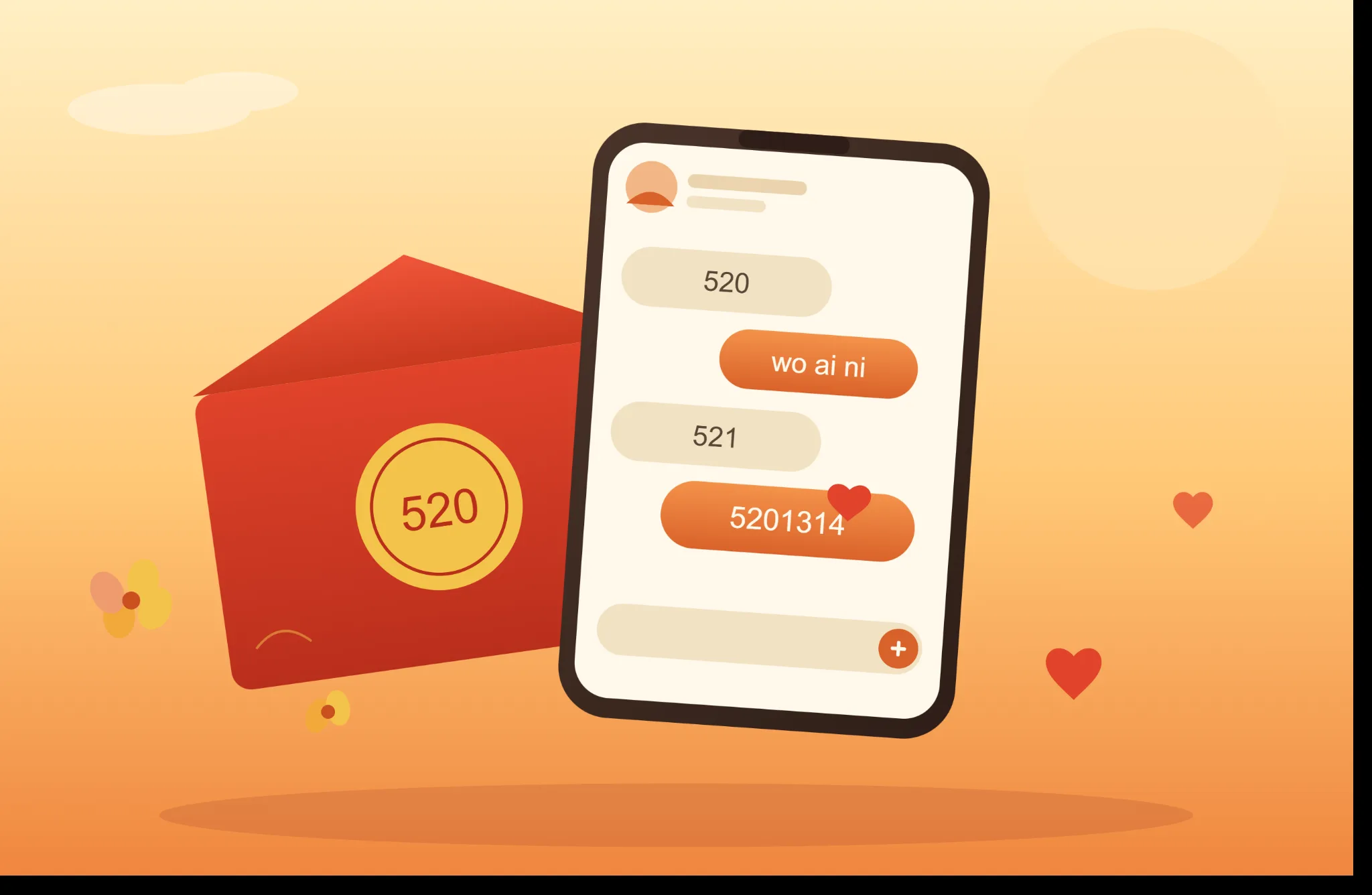
Mandarin speakers also use number codes to say "I love you," mostly in texting and on social media, because certain numbers sound like romantic phrases when spoken aloud.
520 (wǔ èr líng) is the most common one. Said aloud, it sounds close enough to 我爱你 (wǒ ài nǐ) that it's become shorthand for "I love you" everywhere from text messages to shop promotions. May 20th (5/20) has even turned into an informal, internet-born Valentine's Day built entirely around this number.
521 (wǔ èr yī) works the same way, with a slightly different tone that also echoes 我爱你. It's less widely used than 520 but shows up as an alternative, especially the day after 520 (May 21st).
5201314 (wǔ èr líng yī sān yī sì) combines two number codes into one. The 520 part means "I love you," as above. The 1314 (yī sān yī sì) sounds like 一生一世 (yī shēng yī shì), "one life, one lifetime." Together, the full number reads as something close to "I will love you forever," and it's a popular thing to text on anniversaries or include in a romantic message.
Quick-Reference Table: Ways to Express Love in Chinese
| Chinese | Pinyin | Meaning | When to Use |
|---|---|---|---|
| 我爱你 | Wǒ ài nǐ | I love you | Serious, deep romantic or heartfelt commitment |
| 我喜欢你 | Wǒ xǐhuān nǐ | I like you | Early relationships, crushes, lighter affection |
| 我也爱你 | Wǒ yě ài nǐ | I love you too | Reciprocating 我爱你 |
| 想你 | Xiǎng nǐ | Miss you | Texting a partner, long-distance |
| 宝贝 | Bǎobèi | Baby / darling | Casual term of endearment |
| 老公 / 老婆 | Lǎogōng / lǎopó | Husband (dear) / wife (dear) | Married couples, affectionate address |
| 你吃了吗 | Nǐ chī le ma | Have you eaten? | Family, elders, showing love without saying it |
| 520 | Wǔ èr líng | "I love you" (numeric code) | Texting, social media |
| 5201314 | Wǔ èr líng yī sān yī sì | "Love you forever" (numeric code) | Romantic texting, anniversaries |
How to Respond When Someone Says I Love You
If someone says 我爱你 and you feel the same way, the direct reply is 我也爱你 (wǒ yě ài nǐ), "I love you too." Simple, sincere, and exactly what it sounds like.
But what if you're not ready to say it back? Jumping straight to silence can feel harsh, and forcing out 我也爱你 when you don't mean it yet isn't a great option either. A softer middle ground is 谢谢你 (xièxie nǐ), "thank you." It's not a rejection, and it's not a false confession. It simply acknowledges the moment and lets you respond honestly without overstating where you're at.
This kind of nuance rarely makes it into phrase lists, but it's exactly the sort of real-life situation Mandarin learners run into once they're actually dating or building relationships with Chinese speakers.
Common Mistakes English Speakers Make
A few patterns show up again and again with English speakers learning to express love in Mandarin:
Overusing 我爱你 casually. In English, "love you" gets said to friends, siblings, and even casual acquaintances at the end of a call. Doing the same with 我爱你 in Chinese can come across as unexpectedly intense, since the phrase carries more weight than its English translation suggests.
Confusing 爱 and 喜欢. Because English uses "love" fairly loosely (I love this song, I love my job, I love you), it's easy to reach for 爱 when 喜欢 is the better fit. Remember: 喜欢 is liking and fondness, 爱 is deep, serious love.
Saying it too early. By Chinese cultural norms, 我爱你 often comes later in a relationship than "I love you" might in a Western one. Rushing to say it can feel like moving faster than the relationship actually is.
None of these are dealbreakers, and native speakers generally give language learners a lot of grace. But understanding the cultural weight behind these phrases will make your Mandarin feel a lot more natural.
Chinese Valentine's Days — February 14th, Qixi & 520
China doesn't have just one day for romance. It has three.
February 14th, International Valentine's Day, has become genuinely popular in China over the last couple of decades, with flowers, chocolates, and dinner reservations following familiar Western patterns.
七夕节 (Qixi), the Double Seventh Festival, is the traditional Chinese counterpart, falling on the seventh day of the seventh lunar month. It's rooted in the legend of Zhinü and Niulang, two lovers separated by the Milky Way who are allowed to reunite just once a year. Couples treat it as a chance to celebrate their own relationship, often with gifts and time together.
520, May 20th, is the newest of the three and purely a product of internet culture, built around the number code for 我爱你. It's become a major date for romantic gestures, gift-giving, and even weddings, particularly among younger generations who grew up texting 520 to partners long before they said the words out loud.
How Connect Mandarin Teaches Everyday Expressions Like This

Phrases like 我爱你 and 你吃了吗 are a good example of why learning Mandarin from a textbook alone only gets you so far. The words are simple. The cultural context around when and how to use them is where the real learning happens.
At Connect Mandarin, based in Beijing, we build that context into everyday lessons rather than treating it as an afterthought. Our Part-Time Group Class is designed for learners who want practical, real-life Mandarin, including the everyday expressions of affection, care, and connection that don't always make it into standard curriculum, taught by instructors who live and teach in the city where these expressions are used every day.
Book a free trial class and start putting phrases like this into practice with native speaking teachers, or explore more guides like this one on the Connect Mandarin blog.
FAQ
How do you say "I love you" in Chinese Mandarin?
The most common way is 我爱你 (Wǒ ài nǐ), which translates directly to "I love you." It carries real emotional weight in Chinese, so it's typically reserved for serious romantic relationships or close family rather than said casually.
What's the difference between 我爱你 and 我喜欢你?
我爱你 (wǒ ài nǐ) means "I love you" and signals deep, serious affection. 我喜欢你 (wǒ xǐhuan nǐ) means "I like you" and fits lighter situations, like early relationships or telling someone you have a crush on them.
Why do Chinese people say "have you eaten" instead of "I love you"?
Asking 你吃了吗 (nǐ chī le ma), "have you eaten?", is a traditional way Chinese speakers, especially older generations, show care without stating emotions directly. Acts of care often carry more weight than saying "I love you" out loud.
What does 520 mean in Chinese?
520 (wǔ èr líng) is a numeric code for "I love you" because its pronunciation sounds close to 我爱你 (wǒ ài nǐ). It's widely used in texts and on social media, and May 20th is even celebrated as an informal Chinese Internet Valentine's Day.
What does 5201314 mean?
5201314 combines 520 (wǒ ài nǐ, "I love you") with 1314 (yī sān yī sì), which sounds like 一生一世 (yī shēng yī shì), "one life, one lifetime." Together it means something close to "I will love you forever."
How do you respond when someone says 我爱你 to you?
If you feel the same, 我也爱你 (wǒ yě ài nǐ), "I love you too," is the direct reply. If you're not ready to say it back, a warmer alternative like 谢谢你 (xièxie nǐ), "thank you," acknowledges the moment without overstating your feelings.
Is there a Chinese equivalent of Valentine's Day?
China actually celebrates love on three occasions: February 14th (International Valentine's Day), 七夕节 (Qixi, the Double Seventh Festival, based on a folk legend), and May 20th (520), a modern internet-era Valentine's Day tied to the numeric code for "I love you."
About the Author
Connect Mandarin Team
We are built by a team of native-speaking teachers and language educators who focus on real, usable Chinese - not just textbook phrases. With 15+ years of combined teaching experience.
Continue Reading
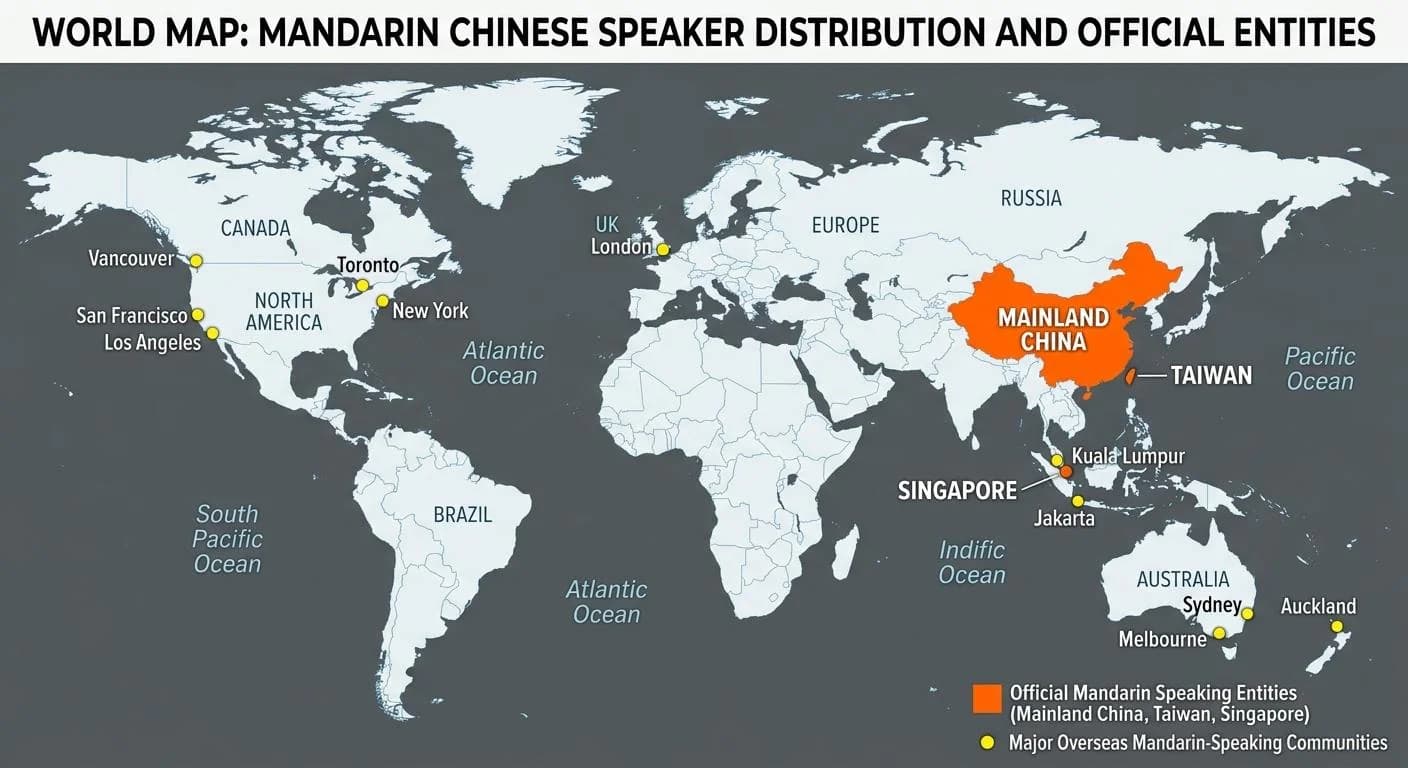
What Countries Speak Mandarin? Official Languages and Where It Is Spoken Worldwide
Which countries speak Mandarin? See where it's official (China, Taiwan, Singapore), where it's widely spoken, and which version to learn first.
What Are You Doing in Chinese? 你在做什么 (Nǐ Zài Zuò Shénme) Explained
Learn how to say "what are you doing" in Chinese, from the textbook-standard 你在做什么 to the casual Beijing favorite 你在干嘛, with pinyin, tone tips, and real dialogues.

Where Are You From in Chinese? (5 Natural Ways to Ask in Mandarin)
Learn 5 natural ways to ask "where are you from" in Chinese, from the everyday nǐ shì nǎlǐ rén to the formal nǐ láizì nǎlǐ, with pinyin and real conversation examples.