
How to Say Good Luck in Chinese: Phrases, Meanings & Culture
Learn how to say good luck in Chinese, from 祝你好运 and 加油 to phrases for exams, career, and Chinese New Year, plus the cultural meaning behind Chinese luck.
Whether you're cheering on a friend before an exam, sending a colleague off to a new job, or just want to sound a little more natural in Mandarin, knowing how to wish someone good luck is one of the most useful things you can learn. It comes up more than you'd think: at school, at work, during Chinese New Year, even in casual texts.
This guide walks through the most common good luck phrases in Chinese, how to pronounce them, when to use each one, and the cultural ideas behind them, including why numbers, colors, and red envelopes matter so much when it comes to luck in Chinese culture.
Most of the time, you only need one of two phrases. One is polite and general. The other is short, energetic, and everywhere.
The Standard Way to Say Good Luck: 祝你好运 (Zhù nǐ hǎoyùn)
This is the direct, textbook way to say good luck in Chinese. It breaks down simply: 祝 (zhù) means "to wish," 你 (nǐ) means "you," and 好运 (hǎoyùn) means "good luck." Put together, it reads almost exactly like the English phrase.
You can use 祝你好运 in nearly any situation: before a job interview, a trip, a big decision, or a first date. It's polite and safe, which makes it a good default when you're not sure how casual to be.
A quick note on tone: 好运 has a third tone followed by a fourth tone (hǎoyùn). When two third-tone syllables meet elsewhere in Mandarin they change pronunciation, but here you're fine reading it as written, just make sure the dip in "hǎo" is clear so it doesn't come out sounding flat.
If you want to wish luck on yourself, the phrase flips easily: 祝我好运 (zhù wǒ hǎoyùn), "wish me good luck."
The Energetic Cheer for Effort: 加油 (Jiāyóu)
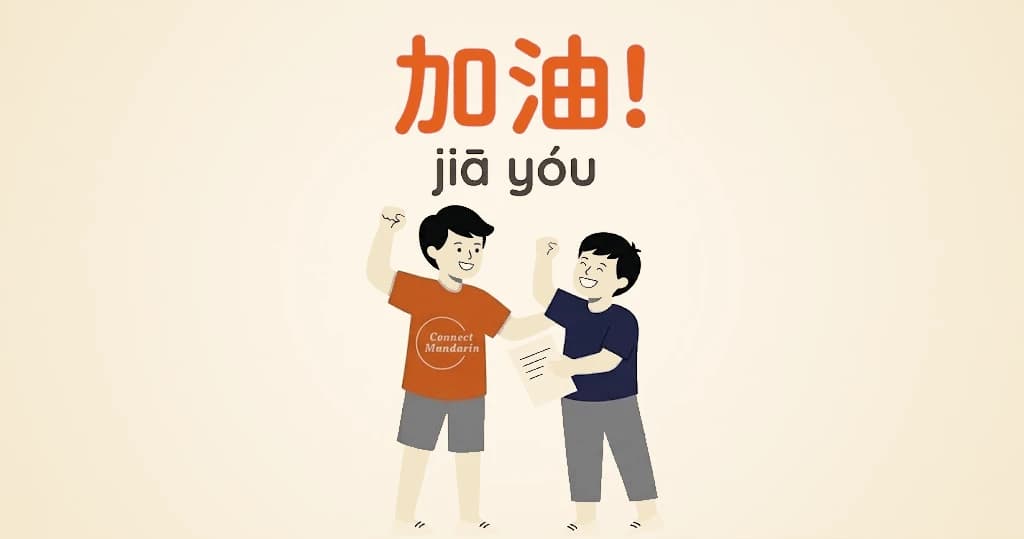
If 祝你好运 is the formal cousin, 加油 is the one you'll actually hear shouted at sports games, exam halls, and group chats. It literally means "add oil," a nod to fueling up a car or a fire, but in everyday use it means something closer to "keep going," "you've got this," or "go for it."
加油 works almost anywhere someone needs a push of encouragement. Watching a friend run a race? Shout it. A classmate about to walk into a test? Text it. Someone grinding through a tough work week? Say it. It's less about wishing fate will be kind and more about cheering someone on through effort they're already putting in.
Pronunciation-wise, it's jiā (first tone, flat and high) yóu (second tone, rising). Say it with a bit of energy and you'll sound natural, this phrase is rarely said quietly.
Both phrases are correct and widely used, the real difference is tone and timing. 祝你好运 fits a send-off. 加油 fits a moment someone needs momentum.
Quick-Reference Table: Good Luck Phrases at a Glance
Here's a scannable list of the phrases covered in this guide, with pinyin, meaning, and when each one fits best. Bookmark this table if you just need a fast lookup.
| Chinese | Pinyin | Meaning | When to Use |
|---|---|---|---|
| 祝你好运 | Zhù nǐ hǎoyùn | I wish you good luck | General, any situation |
| 加油 | Jiāyóu | Keep it up / go for it | Encouragement, exams, sports, effort |
| 顺利 | Shùnlì | Smoothly, without a hitch | New job, project, travel |
| 一帆风顺 | Yì fān fēng shùn | May your journey be downwind | Career, new venture, more formal |
| 马到成功 | Mǎ dào chéng gōng | Immediate success | New job or business |
| 旗开得胜 | Qí kāi dé shèng | Victory from the very start | Starting a new challenge or project |
| 大吉大利 | Dà jí dà lì | Great luck and great profit | Business openings, weddings, celebrations |
| 万事如意 | Wàn shì rú yì | May everything go as you wish | Festivals, Chinese New Year |
| 心想事成 | Xīn xiǎng shì chéng | May your wishes come true | Festivals, birthdays, general well-wishing |
| 金榜题名 | Jīn bǎng tí míng | Name on the golden list | Exams, formal and historical |
| 祝你考试顺利 | Zhù nǐ kǎoshì shùnlì | Wish you a smooth exam | Everyday exam send-off |
Good Luck Phrases for Exams
Exams carry a lot of pressure in Chinese culture, and there's a whole set of phrases built just for this moment. Students hear these before big tests, especially the gaokao (China's national college entrance exam) or the HSK.
祝你考试顺利 (Zhù nǐ kǎoshì shùnlì) is the everyday option, meaning "wish you a smooth exam." It's what you'd text a friend or classmate the night before.
加油 works here too, and honestly it's what you'll hear most in the exam hall hallway. Short, direct, and full of energy.
For something more formal, there's 金榜题名 (Jīn bǎng tí míng), which literally means "name on the golden list." This phrase has real history behind it. It comes from imperial China's civil service examination system, when passing candidates had their names posted on a golden list, sometimes displayed publicly in the capital. Today it's used as a way of wishing someone not just a passing grade, but real distinction.
There's also 愿你一举成功 (Yuàn nǐ yì jǔ chénggōng), "may you succeed in one go," which fits well for a single make-or-break test.
If you're prepping for the HSK specifically, phrases like these are exactly the kind of practical, everyday Mandarin covered in Connect Mandarin's HSK Exam Preparation Program, alongside the grammar and vocabulary you actually need for the exam itself.
Good Luck Phrases for Career & New Beginnings
Starting a new job, launching a business, or stepping into a big career move all call for their own set of luck phrases, and Chinese has several good ones built around movement and momentum.
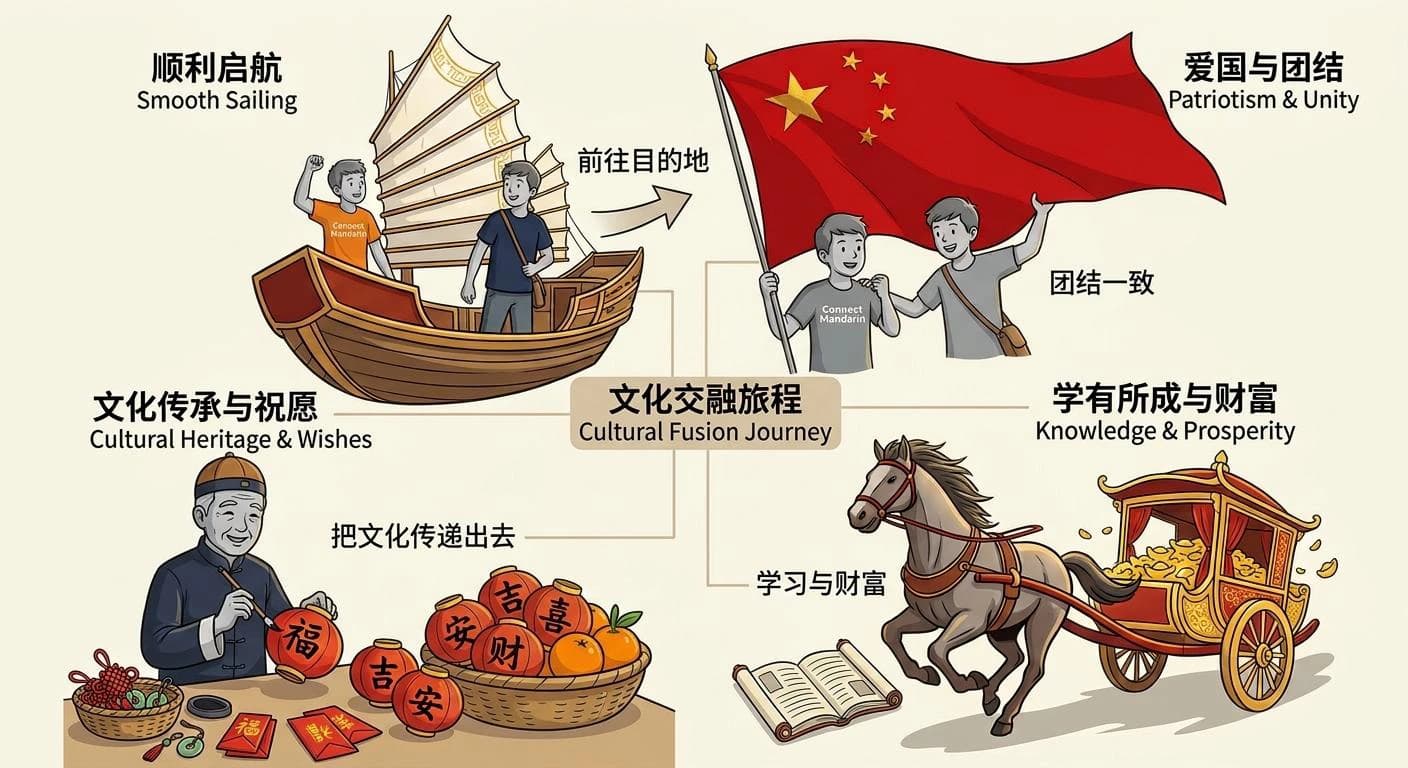
一帆风顺 (Yì fān fēng shùn) translates to "may your journey be downwind," a sailing metaphor for smooth, obstacle-free progress. It's a bit poetic, which makes it a nice choice for something like a card or a more thoughtful message rather than a quick text.
马到成功 (Mǎ dào chéng gōng) means "success as soon as the horse arrives," essentially wishing someone quick, easy success right out of the gate. It's a favorite for new business ventures and new jobs.
旗开得胜 (Qí kāi dé shèng) literally means "the flag opens, and victory is achieved." Picture a flag being raised at the start of a battle or competition, this phrase wishes someone a win from the very first move.
大吉大利 (Dà jí dà lì) means "great luck and great profit." You'll hear this one at store openings, weddings, and other celebratory moments where prosperity is the theme.
And for something simpler, 顺利 (Shùnlì), "smoothly," works well on its own or inside a longer sentence like 工作顺利 (gōngzuò shùnlì), "may your work go smoothly."
Good Luck Phrases for Festivals & Chinese New Year
Festival greetings lean broader than career or exam phrases. Instead of wishing luck for one specific event, they wish good things across someone's whole life for the year ahead.
万事如意 (Wàn shì rú yì) is one of the most common phrases you'll hear during Chinese New Year and other family gatherings. It means "may everything go as you wish," and it's often paired with 新年快乐 (xīnnián kuàilè), "Happy New Year," in one greeting.
心想事成 (Xīn xiǎng shì chéng) means "may your wishes come true," and works well for birthdays too, not just New Year.
You'll also see festival greetings written on red paper, spoken during family visits, and printed on red envelopes (hóng bāo) handed out during Chinese New Year. Red envelopes usually contain money, and the phrase written or said alongside them is almost always some version of a "may your year go well" wish rather than the sharper, effort-based 加油.
How to Respond When Someone Wishes You Luck
Responding is simple. In most cases, a plain 谢谢 (Xièxie), "thank you," covers it completely.
If you want to sound a bit warmer, try 谢谢你的祝福 (Xièxie nǐ de zhùfú), "thank you for your blessing." This fits well when someone has clearly put thought into their well-wish rather than tossing off a quick "加油."
A few other options worth knowing:
- 非常感谢 (Fēicháng gǎnxiè): "Thank you very much," more formal.
- 多谢 (Duōxiè): "Many thanks," casual but sincere.
- 谢谢你为我加油 (Xièxie nǐ wèi wǒ jiāyóu): "Thanks for cheering me on," a nice reply specifically when someone says 加油 to you.
None of these need to be paired with anything elaborate. In Mandarin, a short, sincere thank-you is considered complete on its own, you don't need to add extra explanation the way English speakers sometimes do.
The Culture Behind Chinese Luck
Luck isn't a side topic in Chinese culture, it shapes how buildings are numbered, how weddings are planned, and even how people pick phone numbers. A little background makes these phrases land with more meaning.
Numbers carry weight. The number 8 (八, bā) sounds close to 发 (fā), the word tied to wealth and prosperity, which is why you'll see it in prices, addresses, and phone numbers people pay extra for. On the flip side, 4 (四, sì) sounds close to 死 (sǐ), "death," and many buildings in China skip the fourth floor entirely, the same way some Western buildings skip a 13th floor.
Red is the color of luck. It shows up in red envelopes (hóng bāo) during Chinese New Year and weddings, in door decorations, and in clothing worn for celebrations. Gold often appears alongside it, tied to wealth and success, which is part of why so many good luck idioms mention gold, including 金榜题名 from the exams section above.
Idioms carry history, not just meaning. 金榜题名 is a good example. It isn't just a poetic phrase, it's a direct reference to the imperial examination system that shaped Chinese education and government service for over a thousand years. Passing those exams could change a family's entire future, and the tradition of posting successful names publicly is where the phrase comes from. Some of this exam culture and its associated ceremonies were closely tied to the imperial capital, giving certain luck idioms a real historical anchor in Beijing rather than being generic sayings.
Superstition still shows up in daily life, even for people who wouldn't call themselves superstitious. Giving clocks as gifts is avoided because 送钟 (sòng zhōng), "to give a clock," sounds like 送终 (sòng zhōng), a phrase associated with attending someone's funeral. None of this needs to be taken too seriously to be worth knowing, it's part of what makes these good luck phrases feel like more than just vocabulary.
How Connect Mandarin Teaches Everyday Phrases Like This
Phrases like 加油 and 祝你好运 are exactly the kind of practical, high-frequency Mandarin that textbooks often skip in favor of grammar drills. At Connect Mandarin, based in Beijing, our Part-Time Group Class is built around real conversation from day one, small groups with a practical communication focus, so you're learning the phrases people actually use with friends, coworkers, and classmates, not just the ones that show up in a textbook dialogue.
Being based in Beijing also means our teaching draws on a city with deep roots in Chinese language and tradition, including the historical background behind idioms like 金榜题名, which trace back to imperial examination culture centered in this very city. That context helps phrases stick, they're not just words to memorize, they come with a story.
If exams are your focus rather than general conversation, our HSK Exam Preparation Program covers the structured vocabulary and grammar you need, while still building in the natural, everyday phrases that make you sound like a fluent speaker rather than someone reciting a word list.
FAQ
How do you say "good luck" in Chinese?
The most common way is 祝你好运 (Zhù nǐ hǎoyùn), meaning "I wish you good luck." It works in almost any situation. For encouragement before an effort, such as an exam or competition, Chinese speakers more often say 加油 (jiāyóu), literally "add oil."
What does jiayou (加油) mean?
加油 (Jiāyóu) literally translates to "add oil," but it functions like "keep it up," "you can do it," or "go for it" in English. It's the phrase you'll hear most at sporting events, before exams, and any time someone needs a quick burst of motivation.
How do you say "wish me luck" in Chinese?
Say 祝我好运 (Zhù wǒ hǎoyùn), which translates directly to "wish me good luck." It follows the same structure as 祝你好运, just swapping "you" (nǐ) for "me" (wǒ).
How do you respond when someone wishes you good luck in Chinese?
A simple 谢谢 (Xièxie), meaning "thank you," works in any context. For a warmer response, try 谢谢你的祝福 (Xièxie nǐ de zhùfú), "thank you for your blessing," which fits when someone gives a more thoughtful well-wish.
What's a good luck phrase for Chinese New Year?
万事如意 (Wàn shì rú yì), meaning "may everything go as you wish," is one of the most common New Year and general well-wishing phrases, often paired with 新年快乐 (Happy New Year) during family visits and reunions.
Is there a formal way to wish someone luck before an exam?
Yes, 金榜题名 (Jīn bǎng tí míng), literally "name on the golden list," is a formal, historically rooted idiom for exam success, referencing the imperial examination system. For everyday use, 祝你考试顺利 (wish you a smooth exam) is more common among students.
Why do Chinese people say "add oil" for good luck?
加油's origins are debated, but the most cited theory ties it to Macau car races, where crowds shouted for drivers to "add oil" (accelerate). It evolved into general encouragement and is now used across Greater China, and increasingly in English, as a universal cheer of support.
About the Author
Connect Mandarin Team
We are built by a team of native-speaking teachers and language educators who focus on real, usable Chinese - not just textbook phrases. With 15+ years of combined teaching experience.
Continue Reading
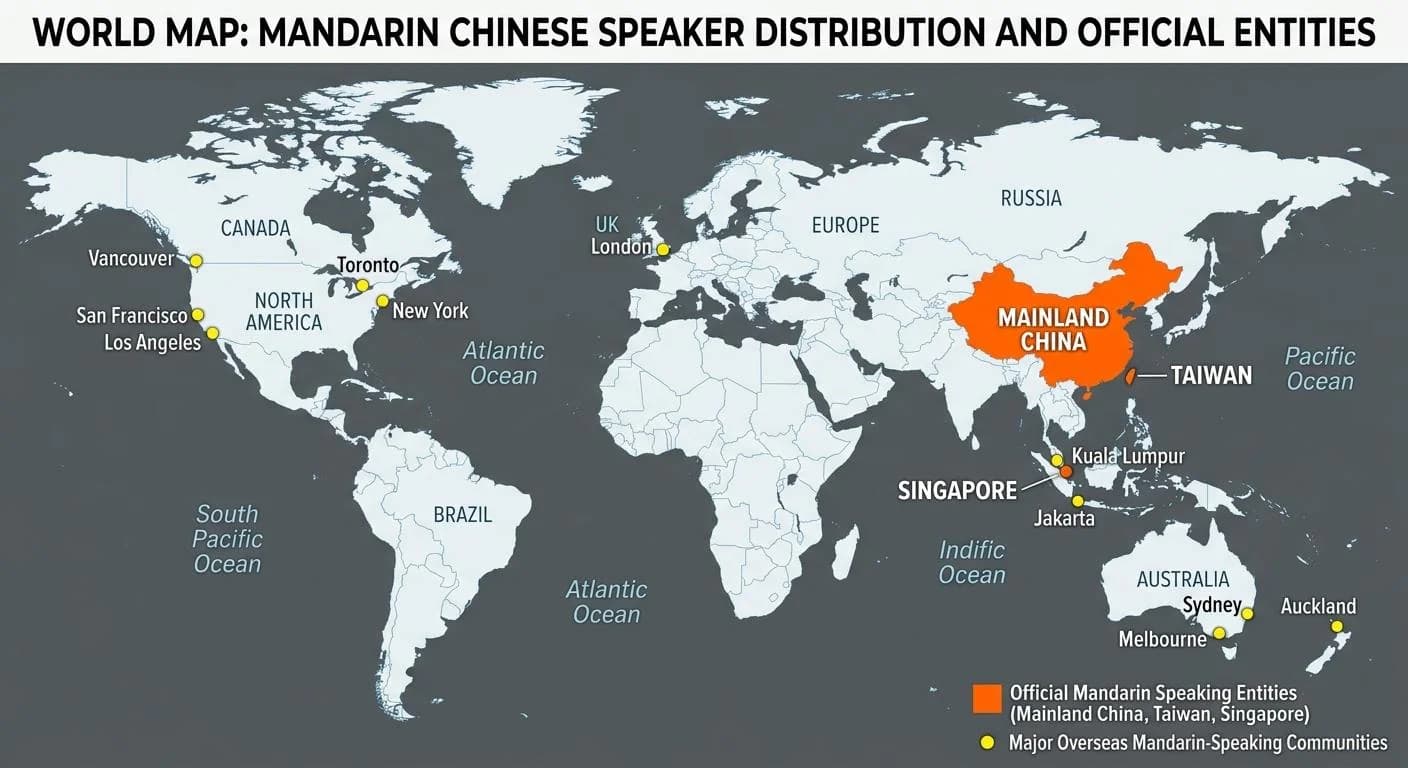
What Countries Speak Mandarin? Official Languages and Where It Is Spoken Worldwide
Which countries speak Mandarin? See where it's official (China, Taiwan, Singapore), where it's widely spoken, and which version to learn first.
What Are You Doing in Chinese? 你在做什么 (Nǐ Zài Zuò Shénme) Explained
Learn how to say "what are you doing" in Chinese, from the textbook-standard 你在做什么 to the casual Beijing favorite 你在干嘛, with pinyin, tone tips, and real dialogues.

Where Are You From in Chinese? (5 Natural Ways to Ask in Mandarin)
Learn 5 natural ways to ask "where are you from" in Chinese, from the everyday nǐ shì nǎlǐ rén to the formal nǐ láizì nǎlǐ, with pinyin and real conversation examples.