
Chinese Names for Boys: 50+ Meaningful Names with Pinyin & Pronunciation
50+ Chinese boy names with pinyin, tones, meanings & zodiac naming tips from Beijing-based Mandarin teachers.
Quick Takeaway: Chinese boy names typically follow surname plus one or two given-name characters chosen for meaning, not sound alone. Popular 2026 choices favor nature and virtue characters (瑞, 泽, 辰) over trendy ones. This guide includes 50+ names with pinyin, tones, meanings, and zodiac-based naming tips from Beijing-based Mandarin teachers.
If you're choosing a Chinese name for a son, whether he's Chinese, mixed-heritage, or a foreign child learning Mandarin, the process works differently than picking an English name off a list. A Chinese name is built character by character, and each character carries its own meaning, sound, and tone. Get the structure right first, and the fun part, actually picking a name you love, gets a lot easier. Below, our Beijing-based Mandarin teaching team explains how the system works, how to say each name correctly, and lists more than 50 real options to consider.
How Chinese Names Work: Surname First, Given Name Second
A Chinese name has two parts: the surname (姓, xìng), which comes first, and the given name (名, míng), which comes second. That's the reverse of most Western names. So if a boy's surname is Zhāng (张) and his given name is Wěi (伟), he is called Zhāng Wěi, never Wěi Zhāng.
Given names are usually one or two characters long, so most full names run two or three syllables total. Western first names are drawn from a fairly fixed pool (there are only so many Jameses), but Chinese given names are often composed specifically for the child. Parents pick characters for their meaning, hopes for strength, intelligence, prosperity, or good fortune, rather than choosing from a pre-made list of "boy names." That's also why this guide leans on single characters you can combine yourself, alongside ready-made two-character examples.
The Three Most Common Surnames (Li, Wang, Zhang)
Surnames aren't chosen. They're inherited, almost always from the father, and the pool of Chinese surnames is much smaller than the pool of Western ones. Three surnames alone, Lǐ (李), Wáng (王), and Zhāng (张), are shared by roughly a quarter of a billion people. That's part of why the given name carries so much weight in Chinese naming culture. With a limited set of surnames in circulation, the given name is where individuality and family hopes actually get expressed.
How to Pronounce Chinese Boy Names Correctly (Pinyin + Tone Guide)
Every name in this guide is written in pinyin, the standard system for spelling Chinese sounds with the Latin alphabet, along with tone marks: the small accents above vowels that show whether your pitch rises, falls, dips, or stays flat. Mandarin has four main tones plus a neutral tone, and getting the tone wrong can change a name's meaning entirely, so these aren't optional extras.
| Tone | Mark | Pitch Pattern | Example |
|---|---|---|---|
| 1st | ā | High and flat | Jūn (君) |
| 2nd | á | Rising, like a question | Míng (明) |
| 3rd | ǎ | Dips down, then up | Hǎi (海) |
| 4th | à | Sharp drop | Zhì (志) |
A simple way to practice: say each syllable in the tables below out loud, exaggerating the pitch shape before worrying about speed. Native speakers understand a name spoken a little slowly and correctly toned far better than one rushed with flat, English-style intonation.
One-Character Chinese Boy Names with Meanings
Single-character given names are common, clean-sounding, and flexible. Our teachers point out that two single characters can later be combined into a two-character name of your own design.
| Character | Pinyin | Meaning |
|---|---|---|
| 辰 | Chén | Morning, celestial |
| 泽 | Zé | Kindness, radiance (also "marsh/pond") |
| 瑞 | Ruì | Auspicious, fortunate omen |
| 昊 | Hào | Vast sky |
| 朗 | Lǎng | Bright, clear |
| 弘 | Hóng | Great, expansive |
| 谦 | Qiān | Humble |
| 睿 | Ruì | Wise, perceptive |
| 硕 | Shuò | Large, accomplished |
| 岩 | Yán | Rock, cliff. Suggests steadfastness |
| 霖 | Lín | Long, gentle rain |
| 骏 | Jùn | Swift, outstanding (like a fine horse) |
| 沛 | Pèi | Abundant, vigorous |
| 川 | Chuān | River |
| 旭 | Xù | Rising sun |
| 恒 | Héng | Constant, enduring |
| 铭 | Míng | Engraved, remembered |
| 熙 | Xī | Bright, flourishing |
| 逸 | Yì | Free, at ease |
| 澄 | Chéng | Clear, pure |
Two-Character Chinese Boy Names with Meanings
Two-character given names let parents combine ideas, a virtue plus an image from nature, for instance, into one more distinctive name.
| Name | Pinyin | Meaning |
|---|---|---|
| 泽辰 | Zé Chén | Kindness meets the morning |
| 瑞泽 | Ruì Zé | Auspicious and gracious |
| 昊然 | Hào Rán | Vast and natural |
| 弘毅 | Hóng Yì | Broad-minded and resolute |
| 子墨 | Zǐ Mò | Son of ink. A scholarly image |
| 明轩 | Míng Xuān | Bright and lofty |
| 思远 | Sī Yuǎn | Thinking far ahead |
| 承宇 | Chéng Yǔ | Inheritor of the universe |
| 修远 | Xiū Yuǎn | Cultivated and far-reaching |
| 景铄 | Jǐng Shuò | Bright and shining |
| 敬轩 | Jìng Xuān | Respectful and lofty |
| 嘉懿 | Jiā Yì | Excellent and virtuous |
| 星野 | Xīng Yě | Star field. Suggests wide vision |
| 云帆 | Yún Fān | Cloud sail. Suggests ambition |
| 致远 | Zhì Yuǎn | Reaching far, high aspiration |
| 家豪 | Jiā Háo | Family pride, heroic |
| 博文 | Bó Wén | Broad learning |
| 立诚 | Lì Chéng | Standing on sincerity |
| 兴德 | Xīng Dé | Rising virtue |
| 昭明 | Zhāo Míng | Clearly bright |
Chinese Zodiac & Generational Naming Traditions
Meaning isn't only chosen by feel. Chinese naming culture also draws on two older systems: the birth-year zodiac animal and, in many families, a fixed generational character.
Naming by Birth Year Animal
Some parents choose characters believed to suit a child's zodiac animal. For example, characters with grass or grain radicals are sometimes favored for a child born in the Year of the Rabbit or Ox, since these animals are traditionally linked to abundance and grounded growth. Characters with "mountain" or "cave" components are considered auspicious for a Tiger year, echoing the animal's natural habitat. This isn't a strict rule so much as a layer of folk symbolism that some families weigh alongside meaning and sound. Plenty of modern parents skip it entirely.
Generation Name (字辈) Tradition in Chinese Families
In more traditionally minded or extended families, one character in a two-character given name may be a generation name (字辈, zìbèi), a character fixed in advance, often generations earlier, and shared by every child of the same generation within a family line. If a family's generation character is 泽 (Zé), every cousin born into that generation might carry 泽 as one syllable, with the second character chosen individually. This tradition has faded in many urban families but is still observed, especially where ancestral clan records get passed down through the paternal line.
Trending Chinese Boy Names in 2026

Naming trends in mainland China have moved away from the stylized, once-trendy names that dominated the 2010s and early 2020s (think heavily stylized combinations built around 梓, zǐ) toward names rooted in nature imagery and classical virtue. Characters like 瑞 (ruì, auspicious), 泽 (zé, gracious), and 辰 (chén, celestial or morning) now appear consistently near the top of newborn naming data, often paired to form names such as 瑞辰 or 泽宸.
There's also a regional pattern worth noting. Naming preferences in Beijing tend to lean slightly more classical and literary, drawing on chengyu (four-character idioms) and canonical texts for inspiration, compared to some southern and eastern cities, where softer, nature-forward pairings have topped recent hospital and household-registration naming lists. Our Beijing-based teachers see this reflected directly in the names local families ask about most. Fewer purely decorative characters, more names that would sit comfortably in classical poetry.
Names to Avoid: Common Mistakes Foreign Parents Make
- Choosing by sound alone. A name that sounds pleasant in English may combine characters with awkward, negative, or nonsensical meaning in Chinese. Always check what the characters mean together, not just how they read aloud.
- Accidentally naming a common noun or everyday word. Two characters that individually sound nice can combine into an existing word, like naming a child "Tomorrow" or "Vegetable." It's technically grammatical, but it reads oddly to native speakers.
- Ignoring tones. Two names can share identical letters in pinyin but mean completely different things depending on tone. Always confirm the tone marks, not just the spelling.
- Skipping a native speaker check. Even fluent non-native speakers can miss cultural associations, homophones, or generational connotations a native speaker would catch instantly. A quick check before finalizing a name is worth it.
- Assuming strict gender rules exist. Certain characters skew toward boys or girls by convention, but very few are truly off-limits to one gender. Treat these as tendencies, not hard rules.
How a Native Mandarin Teacher Can Help You Choose the Right Name
A character-by-character list can only take you so far. The real value comes from a native speaker who can check tone combinations, flag accidental meanings, and weigh in on how a name will actually sound and read to Chinese friends, family, or colleagues. Our Beijing-based Mandarin instructors regularly help students and parents choose or refine a Chinese name as part of personalized Mandarin lessons in Beijing, pairing name selection with real pronunciation practice so you (or your child) can say it with confidence from day one. For families building toward broader fluency goals, many also use naming vocabulary as an early, motivating entry point into HSK exam preparation.
FAQs
What does a Chinese boy's name mean?
A Chinese boy's name is built from characters chosen for their meaning rather than sound alone, often reflecting hopes for strength, intelligence, virtue, or good fortune. Common themes include nature imagery (mountains, rivers, morning light) and classical virtues like wisdom, integrity, and ambition, combined into one or two given-name characters.
How do I choose a Chinese name for my son?
Start with characters whose individual meanings you like, check how they sound and read together in pinyin with correct tones, and confirm the combination doesn't form an existing word or awkward phrase. Ideally, have a native Mandarin speaker review the final choice before you commit to it.
Is it disrespectful for foreigners to use Chinese names?
No. Thoughtfully chosen Chinese names are generally welcomed, especially when the meaning and pronunciation are correct and the choice reflects genuine interest in the language and culture. Taking time to understand the naming system, rather than picking characters at random, is what native speakers appreciate most.
Do Chinese names change based on birth order?
Birth order itself doesn't dictate a name, but some families use a shared generational character (字辈) across siblings and cousins of the same generation, with the second character chosen individually per child. This tradition is more common in extended or traditionally minded families than in modern urban households.
About the Author
Connect Mandarin Team
We are built by a team of native-speaking teachers and language educators who focus on real, usable Chinese - not just textbook phrases. With 15+ years of combined teaching experience.
Continue Reading
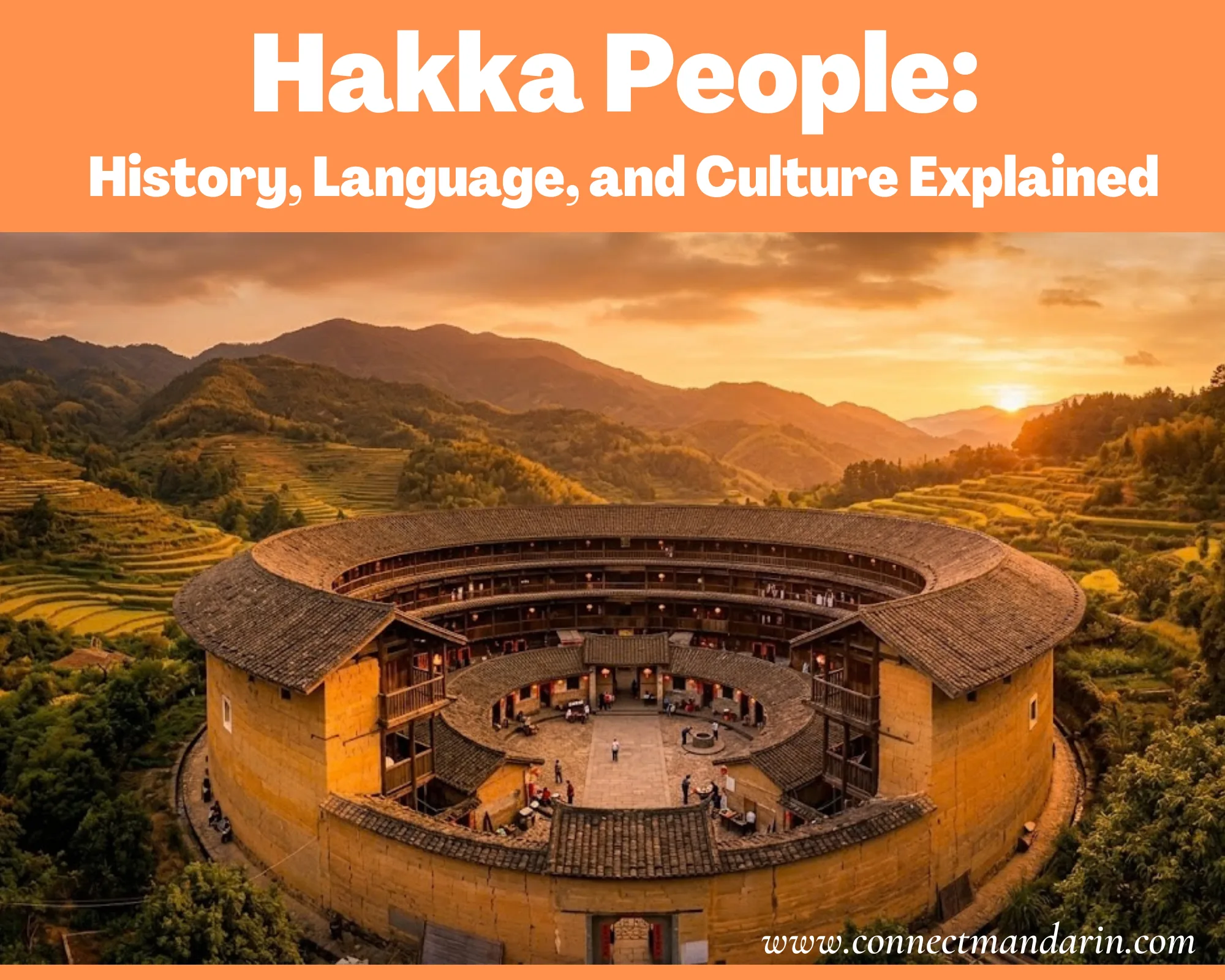
Hakka People: History, Language, and Culture Explained
The Hakka people (客家人) are a Han Chinese subgroup known for their own language, fortified earthen homes, and a cuisine built around preserved ingredients. Here's where they came from, how they live today, and what their story teaches Mandarin learners.
Famous Chinese People: 20 Figures Who Shaped History and Culture
Learn about 20 famous Chinese people who shaped China's history and culture, from Confucius to Jack Ma, with Hanzi, pinyin, and how to say each name.
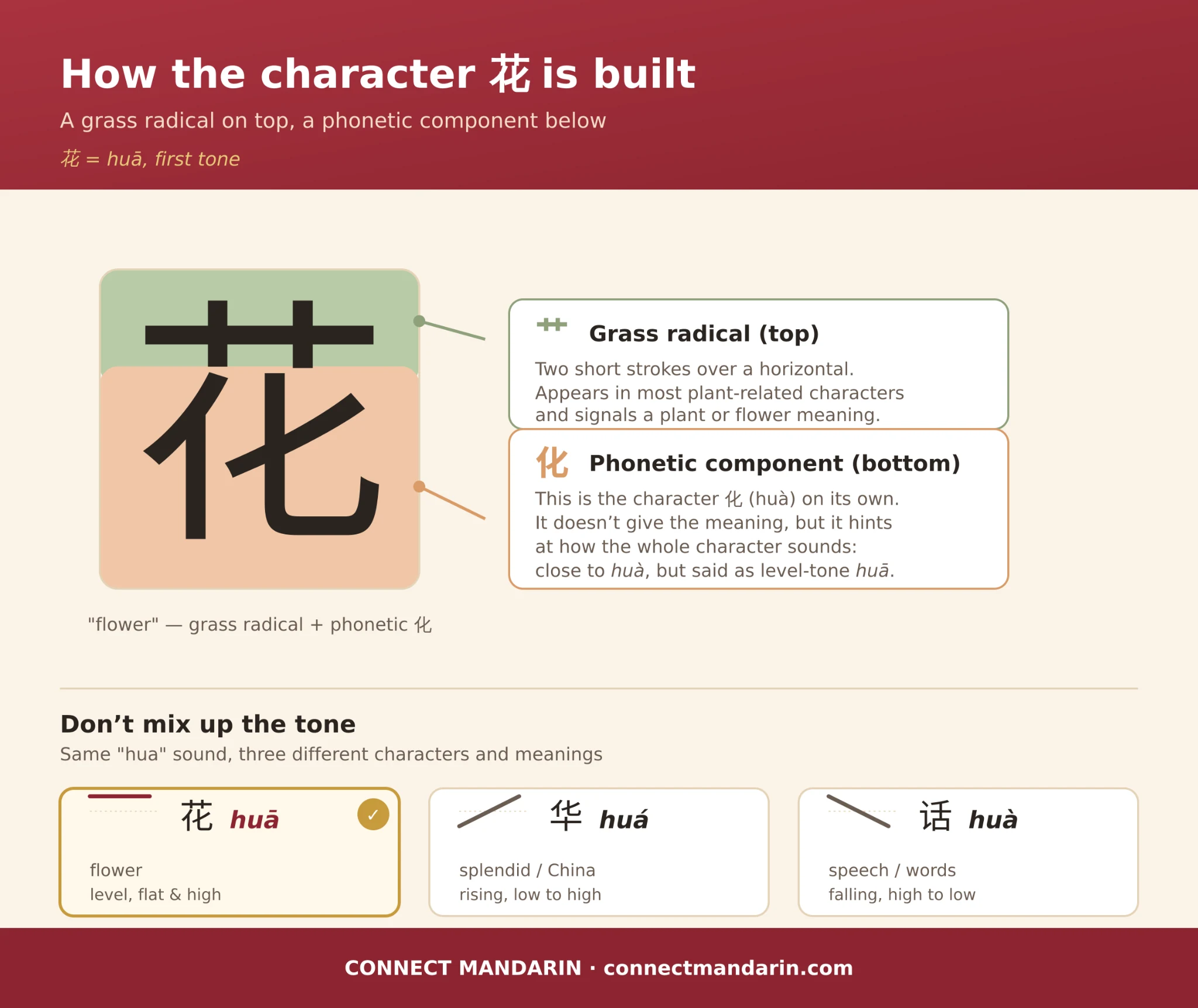
Flowers in Chinese: Names, Meanings, and Culture (花 huā)
Learn Chinese flower names like 玫瑰 (rose) and 牡丹 (peony), their cultural meanings, and how 花 shows up in idioms and Chinese New Year customs.