
Chinese Girl Names: 50+ Meaningful Names with Pinyin & Pronunciation
Discover 50+ Chinese girl names with pinyin, tones & meanings from Beijing-based Mandarin teachers. Find the perfect name for your daughter.
Chinese girl names follow surname + one or two given-name characters, chosen for both meaning and how the syllables sound together. Favored qualities include beauty, grace, and nature (兰, 玥, 瑶). This guide includes 50+ names with pinyin, tones, meanings, and pairing tips from Beijing-based Mandarin teachers.
Picking a Chinese name for a daughter, a student, or yourself is about more than translating a word. It's about choosing characters that carry meaning, sound good together, and fit naturally into Chinese culture. This guide covers how Chinese names are actually built, how to say them correctly and gives you more than 50 real examples to work from, organized so you can mix and match with confidence.
How Chinese Names Work — Surname First, Given Name Second
In Chinese, the family name always comes first, followed by the given name. That's the reverse of the Western order. "Sarah Wilson" would appear as "Wilson Sarah" if it followed the Chinese structure. So in a name like Wáng Xiǎoyǔ (王小雨), Wáng is the surname and Xiǎoyǔ is the given name.
Most full Chinese names run two or three syllables total: one for the surname, and one or two for the given name. The surname is inherited, so there's no choosing it. The given name is where the meaning and creativity go in. Surnames repeat constantly across the population, but given names are rarely duplicated exactly, since parents are drawing from thousands of possible characters and combinations.
The Three Most Common Surnames (Li, Wang, Zhang)
A small number of surnames are shared by a huge share of the population. Lǐ (李), Wáng (王), and Zhāng (张) are consistently the three most common family names in mainland China, together accounting for tens of millions of people. Other frequently seen surnames include Liú (刘), Chén (陈), Yáng (杨), and Zhào (赵). If you're building out a full Chinese name, say, for a child with a Chinese heritage surname, or for yourself as a Mandarin learner, pairing your surname with the given names below is the natural next step.
How to Pronounce Chinese Girl Names Correctly (Pinyin + Tone Guide)
Every name in this guide is written in pinyin, the standard system for spelling Chinese sounds with the Latin alphabet, along with tone marks that show how your voice should move on each syllable. Mandarin has four main tones plus a neutral tone:
| Tone | Mark | How it sounds |
|---|---|---|
| 1st tone | ā | High and flat, held steady |
| 2nd tone | á | Rising, like asking "huh?" |
| 3rd tone | ǎ | Dips down, then rises |
| 4th tone | à | Sharp and falling, like a command |
| Neutral tone | a | Light and short, no strong pitch |
Tones aren't decoration. They change the meaning of a syllable entirely. Mā (妈, mother), má (麻, hemp), mǎ (马, horse), and mà (骂, to scold) are four completely different words that happen to share the same letters. That's exactly why it helps to get a native speaker's ear on a name, not just a dictionary entry, before it becomes someone's lifelong name. A session with a native-speaking teacher, through something like personalized Mandarin lessons in Beijing, is one of the fastest ways to hear the tones correctly and practice saying them yourself.
How to Choose a Chinese Girl Name — Meaning and Sound Together
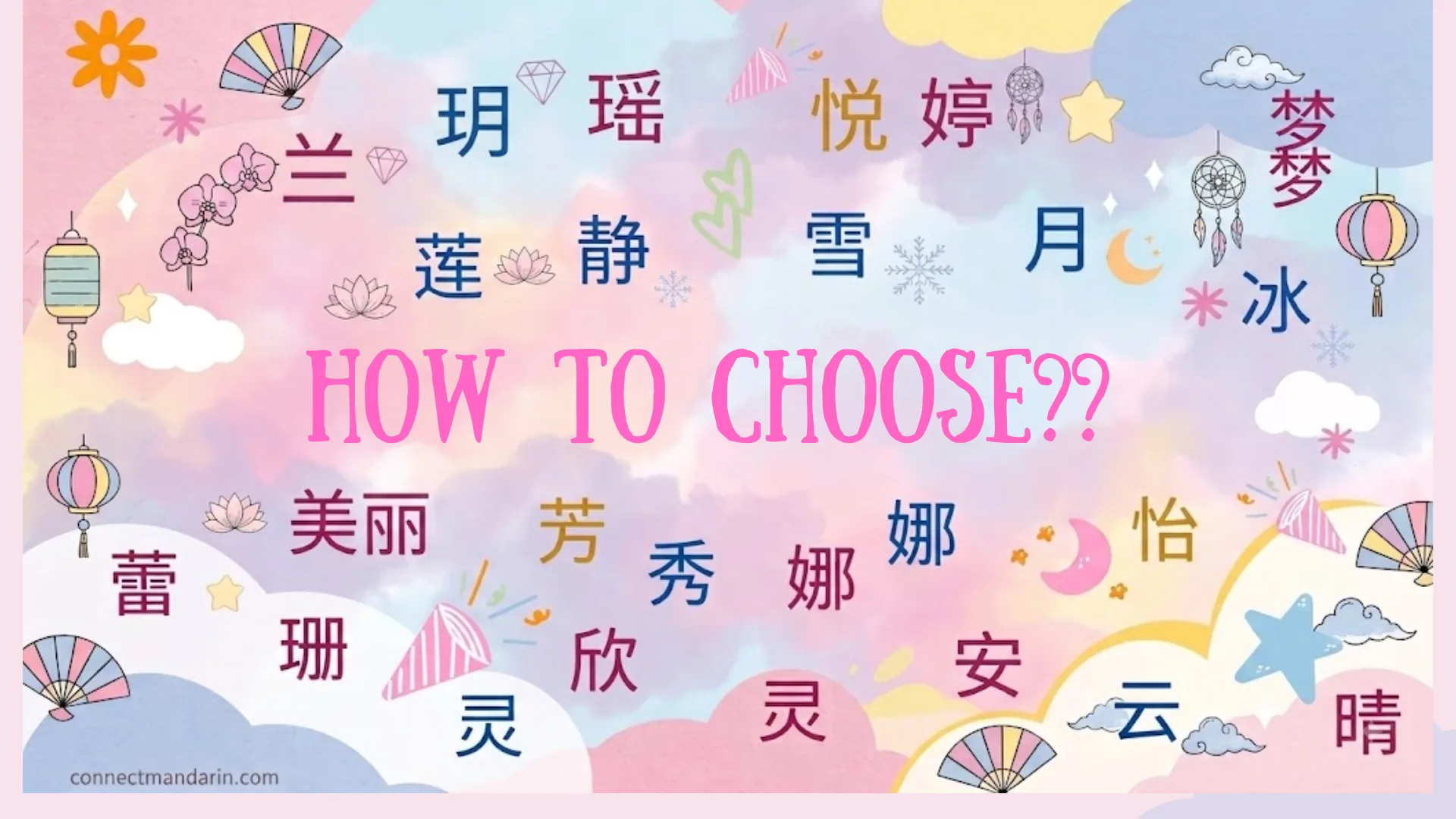
Chinese parents usually weigh two things about equally when choosing a given name: what the characters mean, and how the whole name sounds when spoken out loud.
On the meaning side, certain qualities show up again and again in girls' names: beauty (美, 丽), grace and elegance (雅, 婷), intelligence (慧, 敏), gentleness (婉, 柔), and imagery pulled from nature: flowers, jade, moonlight, clouds, gemstones. Characters like 兰 (orchid), 玥 (a mythical pearl), and 瑶 (a fine jade) are popular partly because they combine a pleasant sound with an image of natural beauty.
On the sound side, the goal is a name that flows. That means no jarring tone combinations, no accidental homophones with unfortunate words, and a rhythm that feels natural said out loud next to the surname. A name that reads beautifully on paper can still sound clumsy spoken, which is why it's worth testing it out loud, syllable by syllable, with someone fluent before settling on it.
One-Character Chinese Girl Names with Meanings
Single-character given names are common, feel modern, and are easy to pair with a second character of your own choosing if you'd like to build a two-character name.
| Character | Pinyin | Meaning |
|---|---|---|
| 兰 | Lán | Orchid, a symbol of elegance and refinement |
| 玥 | Yuè | A mythical pearl said to be a gift from the moon |
| 瑶 | Yáo | A precious, fine-grained jade |
| 悦 | Yuè | Joy, delight |
| 婷 | Tíng | Graceful, lovely in bearing |
| 静 | Jìng | Calm, tranquil |
| 雪 | Xuě | Snow, evoking purity and freshness |
| 月 | Yuè | Moon, quiet brightness |
| 梦 | Mèng | Dream |
| 冰 | Bīng | Ice, evoking clarity and coolness |
| 莲 | Lián | Lotus, purity rising from mud |
| 慧 | Huì | Wisdom, intelligence |
| 美 | Měi | Beautiful |
| 丽 | Lì | Beautiful, elegant |
| 芳 | Fāng | Fragrant, associated with good character |
| 秀 | Xiù | Refined, elegant |
| 娜 | Nà | Graceful, delicate |
| 怡 | Yí | Happy, at ease |
| 蕾 | Lěi | A flower bud, symbolizing potential |
| 珊 | Shān | Coral, valued for its rarity |
| 欣 | Xīn | Joyful, thriving |
| 安 | Ān | Peace, stability |
| 灵 | Líng | Clever, spirited |
| 云 | Yún | Cloud, freedom and lightness |
| 晴 | Qíng | Clear skies, sunny |
Two-Character Chinese Girl Names with Meanings
Two-character given names give you more room to combine two ideas, for example a nature image with a virtue, or a feeling with a texture. Several of the names below are also currently among the most-registered names for baby girls in mainland China.
| Characters | Pinyin | Meaning |
|---|---|---|
| 雨桐 | Yǔtóng | Rain on the parasol tree; currently one of the most popular girls' names nationally |
| 沐瑶 | Mùyáo | Bathed in the light of fine jade |
| 汐玥 | Xīyuè | Evening tide paired with the mythical moon pearl |
| 书瑶 | Shūyáo | Books and learning paired with fine jade |
| 锦汐 | Jǐnxī | Brocade, meaning richness or honor, paired with evening tide |
| 欣怡 | Xīnyí | Joyful and at ease |
| 诗涵 | Shīhán | Poetic, with inner depth |
| 心怡 | Xīnyí | A happy, contented heart |
| 雅婷 | Yǎtíng | Elegant and graceful in bearing |
| 语嫣 | Yǔyān | Charming, beautiful in speech |
| 梦瑶 | Mèngyáo | Dreamlike, precious as jade |
| 思琪 | Sīqí | Thoughtful, like a fine jade stone |
| 若曦 | Ruòxī | Like the first light of morning |
| 佳怡 | Jiāyí | Excellent and joyful |
| 婉清 | Wǎnqīng | Gentle and pure |
| 晓萱 | Xiǎoxuān | Dawn light paired with the day lily, a flower linked to easing worry |
| 雨薇 | Yǔwēi | Rain paired with a small flowering vine |
| 一诺 | Yī Nuò | A single promise; trustworthiness and integrity |
| 昕玥 | Xīnyuè | Early morning light paired with the mythical moon pearl |
| 梓涵 | Zǐhán | Catalpa tree, a classic and once hugely popular character, with inner depth |
| 嘉欣 | Jiā Xīn | Auspicious and joyful |
| 雨萱 | Yǔxuān | Rain paired with the day lily |
| 芷若 | Zhǐruò | A fragrant herb, used to suggest gentle elegance |
| 婧怡 | Jìngyí | Capable and graceful, paired with joy |
| 沁怡 | Qìnyí | A refreshing feeling, paired with joy |
Names and Characters to Avoid
Not every character or combination that sounds nice on its own makes a good name. A few things to watch for:
- Avoid characters that are also everyday, unglamorous words. 灯 (dēng, "lamp") or 蔬菜 (shūcài, "vegetable") are perfectly fine words on their own, but they read as strange, even comical, as a name.
- Watch out for existing words hiding inside a two-character combination. 明天 (Míngtiān) is built from two lovely characters, 明 (bright) and 天 (sky), but together they simply mean "tomorrow," which most parents would rather avoid, however elegant the characters are individually.
- Check for unwanted homophones. A name can sound identical, or close to it, to an unrelated word with a negative or awkward meaning once tones and neighboring sounds come into play. This is one of the easiest mistakes to make without a native speaker's ear.
- Be thoughtful with gendered characters. Some characters, like 美 (měi, "beautiful"), are used almost exclusively for girls, while others, like 明 (míng), lean toward boys' names without being off-limits for girls. There's no hard rule here, but checking convention avoids an accidental mismatch.
If you already speak some Mandarin and want to use a character that isn't on this list, it's worth checking it against these points, or simply asking a native speaker, before it becomes a permanent name.
Trending Chinese Girl Names in 2026
Naming trends in China shift noticeably year to year, and recent national and regional newborn-registration data show a clear move away from names that dominated a decade ago, like 子涵 and 梓涵 (both Zǐhán), toward softer, nature-inspired names. According to household-registration reports covering multiple provinces, 雨桐 (Yǔtóng, "rain on the parasol tree") was the single most-registered girls' name nationally in 2025, followed closely by 锦汐 (Jǐnxī), 书瑶 (Shūyáo), 沐瑶 (Mùyáo), and 汐玥 (Xīyuè). All of these are built from imagery of water, jade, and light.
The pattern across these reports holds up consistently. Single-character names such as 玥 (Yuè) and 瑶 (Yáo) are gaining ground for their simplicity and depth, two-character names increasingly lean toward dreamy, natural imagery rather than the bold, ambition-driven characters common a generation ago, and names built around water and moon imagery (汐, 玥, 雨) are especially strong right now. Exact rankings vary somewhat by city and province (the reports above draw largely from Sichuan and other provincial registries), so if you want a name that feels distinctly current in Beijing specifically, it's worth checking in with someone teaching and living in the city day to day. Local taste can run a step ahead of or behind the national data.
How a Native Mandarin Teacher Can Help You Choose the Right Name
A list like this one is a strong starting point, but a name is something a person carries for life, and getting it exactly right benefits from more than a dictionary. A native Mandarin teacher can:
- Confirm the tones are pronounceable and pleasant together, not just correct on paper
- Flag any accidental homophones or double meanings a non-native speaker would likely miss
- Suggest character pairings tailored to a specific surname, birth month, or family tradition
- Explain the cultural weight or literary reference behind a character, if it has one
At Connect Mandarin, our Beijing-based instructors work with students and families on exactly this kind of naming project as part of broader personalized Mandarin lessons in Beijing, whether you're picking a name for a child, choosing a Chinese name for yourself as a learner, or just want to understand what your existing name means. If you're preparing for a certification alongside your studies, our HSK exam preparation program covers vocabulary, including naming characters, in real depth. Families visiting the city can pair a lesson with Beijing cultural experiences or our summer camps in Beijing to see the language and culture in context.
FAQs
What does a Chinese girl's name mean?
Chinese girl names are built from characters chosen for their meaning and sound. Common themes include beauty, grace, intelligence, and nature imagery like flowers, jade, and moonlight. Most Chinese given names aren't picked from a fixed list; they're custom combinations chosen character by character for each child.
How do I choose a Chinese name for my daughter?
Start by picking characters with meanings you like. Beauty, wisdom, and nature are common choices. Then say the full name, surname included, out loud to check the tones flow well together. Avoid characters that are ordinary everyday words, and ask a native Mandarin speaker to check for unwanted homophones.
What are the most popular Chinese girl names right now?
Recent newborn-registration data shows 雨桐 (Yǔtóng), 锦汐 (Jǐnxī), 书瑶 (Shūyáo), 沐瑶 (Mùyáo), and 汐玥 (Xīyuè) among the most-registered girls' names in 2025, reflecting a broader trend toward names built from water, jade, and light imagery.
Can a Chinese girl's name have a boy character in it?
Yes. While some characters, like 美 (měi, "beautiful"), are used almost exclusively for girls, most Chinese characters aren't strictly gendered, and there's no rule against using a traditionally masculine-leaning character, like 明 (míng), in a girl's name.
About the Author
Connect Mandarin Team
We are built by a team of native-speaking teachers and language educators who focus on real, usable Chinese - not just textbook phrases. With 15+ years of combined teaching experience.
Continue Reading

Hakka People: History, Language, and Culture Explained
The Hakka people (客家人) are a Han Chinese subgroup known for their own language, fortified earthen homes, and a cuisine built around preserved ingredients. Here's where they came from, how they live today, and what their story teaches Mandarin learners.

Famous Chinese People: 20 Figures Who Shaped History and Culture
Learn about 20 famous Chinese people who shaped China's history and culture, from Confucius to Jack Ma, with Hanzi, pinyin, and how to say each name.
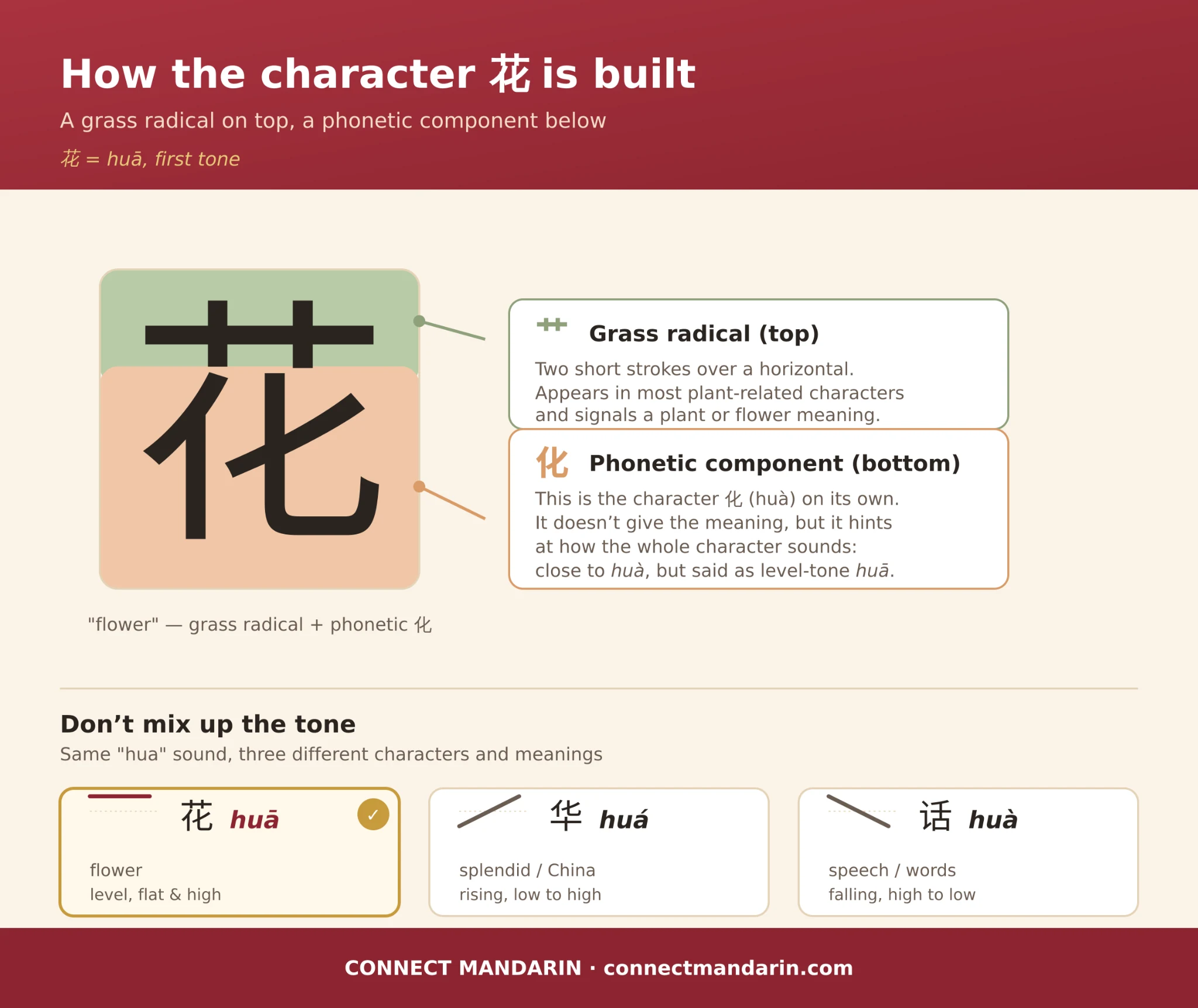
Flowers in Chinese: Names, Meanings, and Culture (花 huā)
Learn Chinese flower names like 玫瑰 (rose) and 牡丹 (peony), their cultural meanings, and how 花 shows up in idioms and Chinese New Year customs.