Traditional VS Simplified Mandarin
Why do Simplified and Traditional characters look different, where did they come from, and which is better? A light, friendly tour—no textbook required.
你好! Nǐ hǎo
Today we're talking about something super familiar but rarely explained clearly: Simplified and Traditional Chinese. Ever wondered why they look different? Where did they come from? Or which one is "better"? Let's break it down in a light, fun way—no boring textbooks!
A Quick History of Simplified Chinese
Believe it or not, simplified characters are not new at all! Ancient roots: they started way back in the Northern and Southern Dynasties as casual, easy-to-write "folk" scripts. The printing press: they spread widely during the Song Dynasty thanks to the invention of printing. Official use: by the Ming Dynasty, they even appeared in official documents. Standardization: in 1956, China officially standardized 2,238 simplified characters to boost literacy and education. The takeaway: Simplified Chinese isn't "cutting culture"—it's ancient folk wisdom made official.
A Quick History of Traditional Chinese
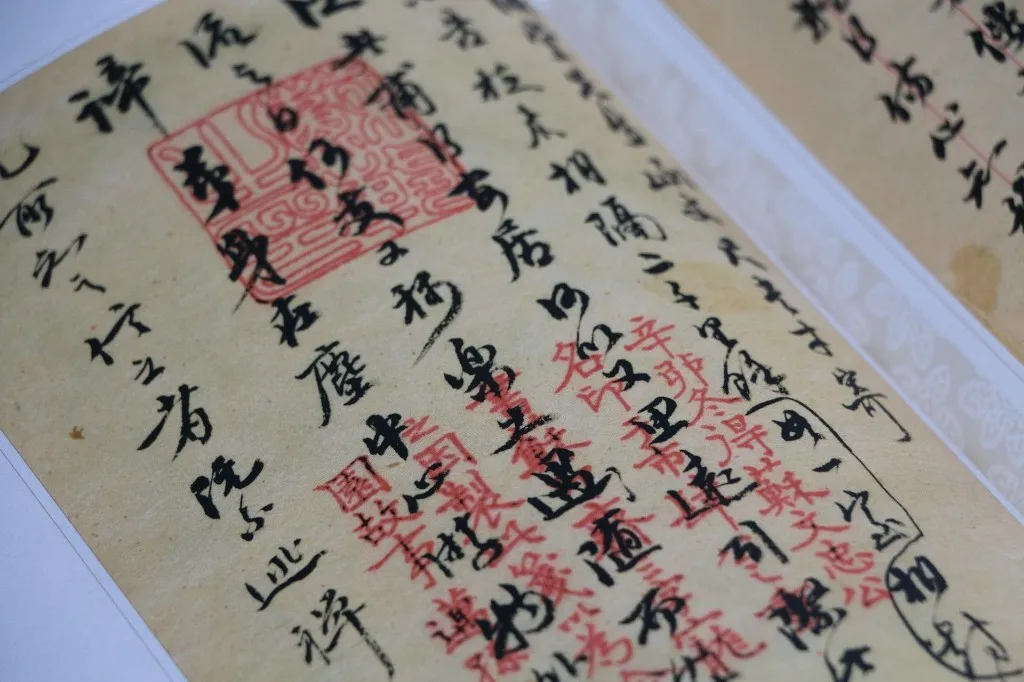
Traditional Chinese is the classic version of Chinese characters—that's why it's called "Traditional." The beginning: it started with oracle bone script during the Shang and Zhou dynasties. Evolution: it evolved through seal script and clerical script, maturing into "regular script" (kaishu) during the Tang Dynasty. Standardization: Song Dynasty printing helped fully standardize the forms we see today. Today: for over 2,000 years, it was the official writing system across China. Today, it is still used in Hong Kong, Macao, and Taiwan. In short: Traditional Chinese = 2,000 years of living history.
Simplified vs. Traditional: A Clear Comparison
| Feature | Simplified | Traditional |
|---|---|---|
| Strokes | Fewer strokes; quick to write | Full, structured, and elegant |
| Learning | Very beginner-friendly | Clear logic; reveals meaning |
| Vibe | Modern & efficient | Classic & cultural |
| Usage | Mainland China, Singapore | HK, Macao, Taiwan, calligraphy |
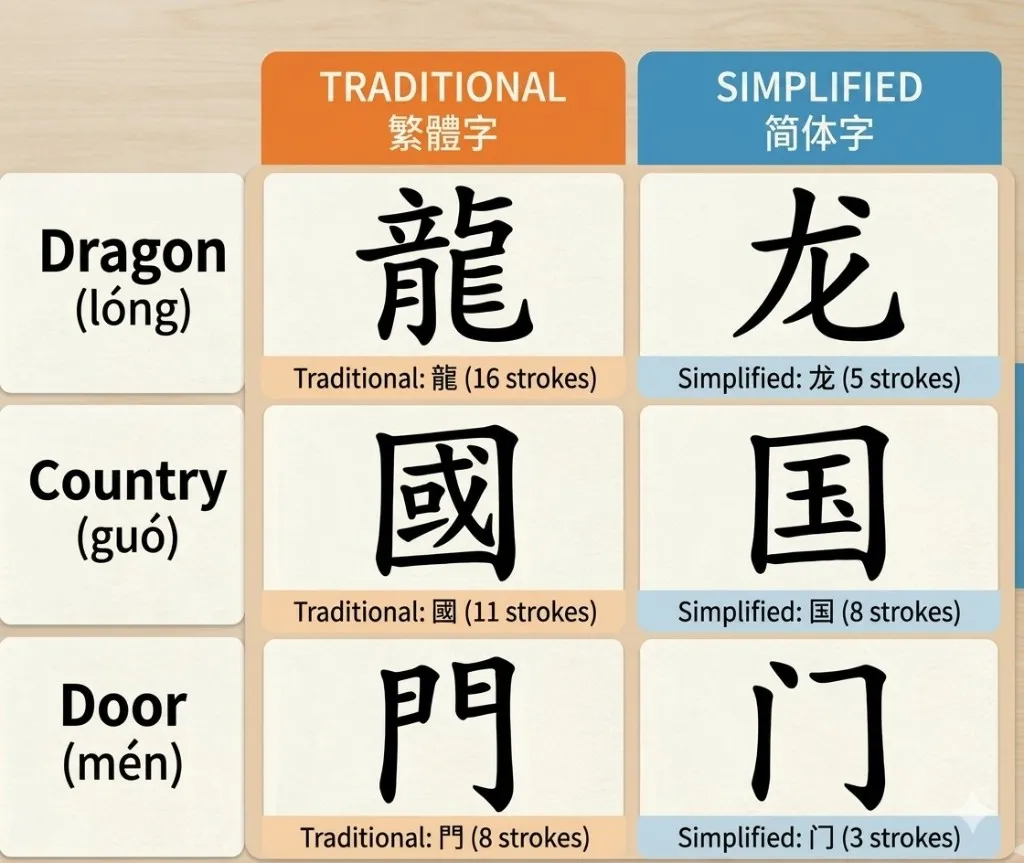
Fun examples: 爱 (Simplified) → 愛 (Traditional has a "heart" 心 inside!); 礼 → 禮 (the traditional version shows the link to ancient rituals).
Visual secret: look at 网 (Simplified) vs 網 (Traditional). They both mean "net." The simplified version looks like a literal fishing net, while the traditional one adds the "silk" radical on the left. Both tell the same story!
Why Simplify? And Why Keep Traditional?
Why simplification was inevitable: faster writing saves time in daily life; easier learning is great for spreading education to everyone; social progress means simple writing helps more people read and write quickly.
Why Traditional Chinese is irreplaceable: cultural heritage stores thousands of years of Chinese civilization; the heart of art—almost all classic calligraphy and scrolls use traditional characters; a "living fossil" that shows the original logic of how characters were created.
Did you know? (The magic trick)
Most people who read Traditional Chinese can understand Simplified quite easily, and many who use Simplified can guess the meaning of Traditional characters through context! Once you learn one, you're already halfway to knowing both.
Wrap Up
Simplified and Traditional Chinese are not enemies—they're just two wonderful versions of Chinese characters suited for different times. Simplified helps us communicate fast, while Traditional connects us to history and beauty. Which one do you like more? Is there a traditional character you think looks extra beautiful? Drop a comment below!
Frequently Asked Questions
Q1. What is the main difference between Simplified and Traditional Chinese?
Simplified Chinese uses fewer strokes per character, introduced by mainland China in the 1950s to improve literacy rates. Traditional Chinese retains the original, more complex characters still used in Taiwan, Hong Kong, and Macau. Same spoken language, different written forms.
Q2. Which one should I learn as an American beginner?
It depends on your goal. If you're interested in business with China, studying in mainland China, or passing the HSK exam, learn Simplified. If you're drawn to Taiwanese culture, classical texts, or older diaspora communities in US Chinatowns, go with Traditional.
Q3. Is Simplified Chinese easier to learn than Traditional?
Generally, yes—fewer strokes means less to memorize early on. That said, many learners find Traditional characters more visually intuitive, as their components often hint at meaning. Either way, the grammar, vocabulary, and pronunciation are identical.
Q4. If I learn one script, can I read the other later?
Yes. Since the spoken language is the same, the transition is manageable. Most learners who master Simplified can get comfortable reading Traditional within a few months of exposure and vice versa.
Q5. Which script is more useful for business and careers?
Simplified Chinese is the standard for business with mainland China—the world's second-largest economy. For work with Taiwan or Hong Kong, Traditional is more relevant. For most US professionals entering the Chinese market, Simplified is the practical starting point.
About the Author
Connect Mandarin Team
We are built by a team of native-speaking teachers and language educators who focus on real, usable Chinese - not just textbook phrases. With 15+ years of combined teaching experience.
Continue Reading
What Countries Speak Mandarin? Official Languages and Where It Is Spoken Worldwide
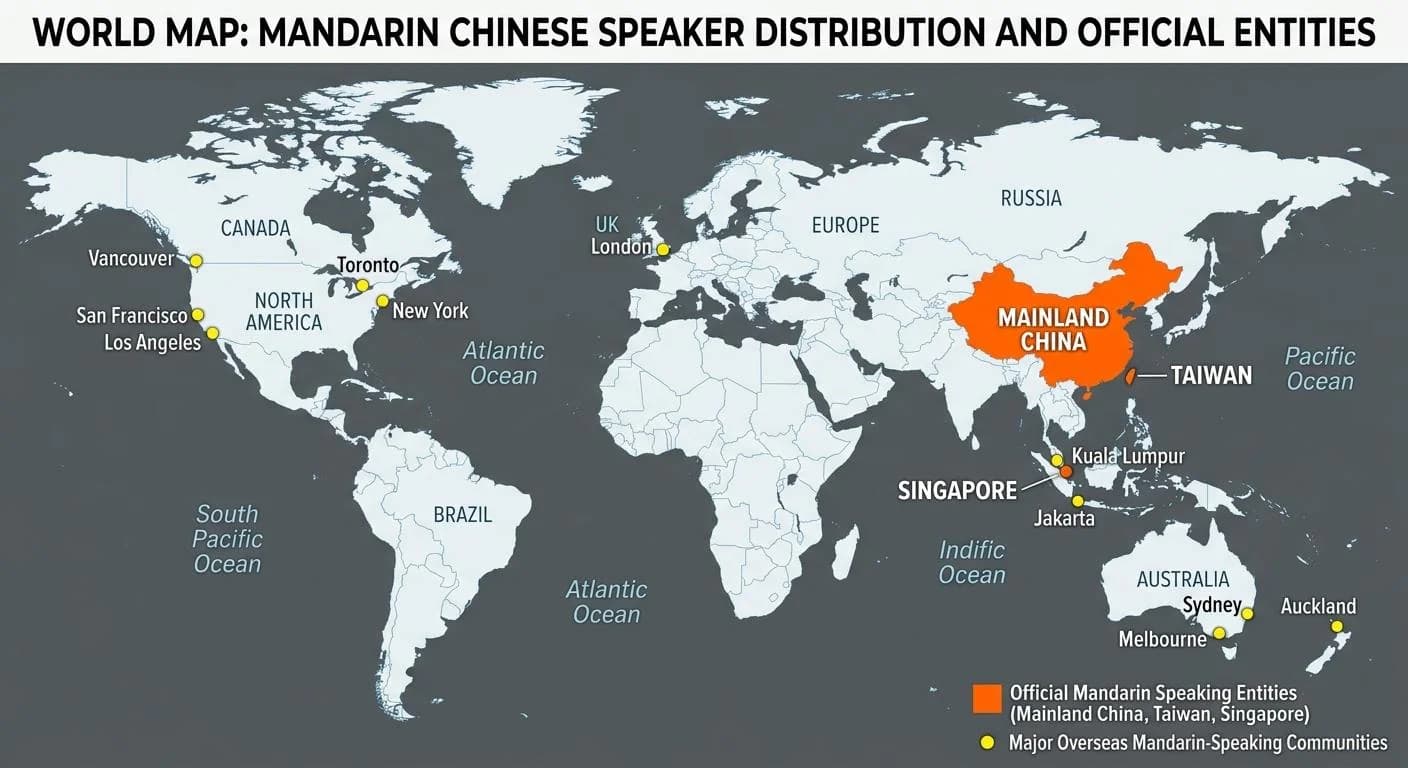
Which countries speak Mandarin? See where it's official (China, Taiwan, Singapore), where it's widely spoken, and which version to learn first.

What Are You Doing in Chinese? 你在做什么 (Nǐ Zài Zuò Shénme) Explained
Learn how to say "what are you doing" in Chinese, from the textbook-standard 你在做什么 to the casual Beijing favorite 你在干嘛, with pinyin, tone tips, and real dialogues.

Where Are You From in Chinese? (5 Natural Ways to Ask in Mandarin)
Learn 5 natural ways to ask "where are you from" in Chinese, from the everyday nǐ shì nǎlǐ rén to the formal nǐ láizì nǎlǐ, with pinyin and real conversation examples.